
The Return of the Children’s Forest
The return of the Children’s Forest, known on Isabela Island as the “Bosque de los Niños”, marks the revival of a vision imagined more than three decades ago. The forest was first identified and established in 1993 by Jacinto Gordillo—affectionately known as Don Jacinto. He first arrived in Isabela in 1952 as a priest for the island’s penal colony, and later became an environmental educator with the Charles Darwin Foundation (CDF). His work with the Charles Darwin Research Station led him to join botanical expeditions on the islands, and one of the 15 species of the genus Scalesia, endemic to San Cristóbal, was named in his honor: Scalesia gordilloi.
Archivo
Mara Speece / CDF
During those expeditions on Isabela, he identified a small plot in the agricultural zone with a remnant forest of Scalesia cordata. He knew the species needed protection—its numbers dwindling rapidly, especially in the agricultural area. Currently, less than 1% of the original S. cordata population persists, underscoring the critical need for its conservation. Scalesia cordata is an endemic plant found only in the southern region of Isabela Island.
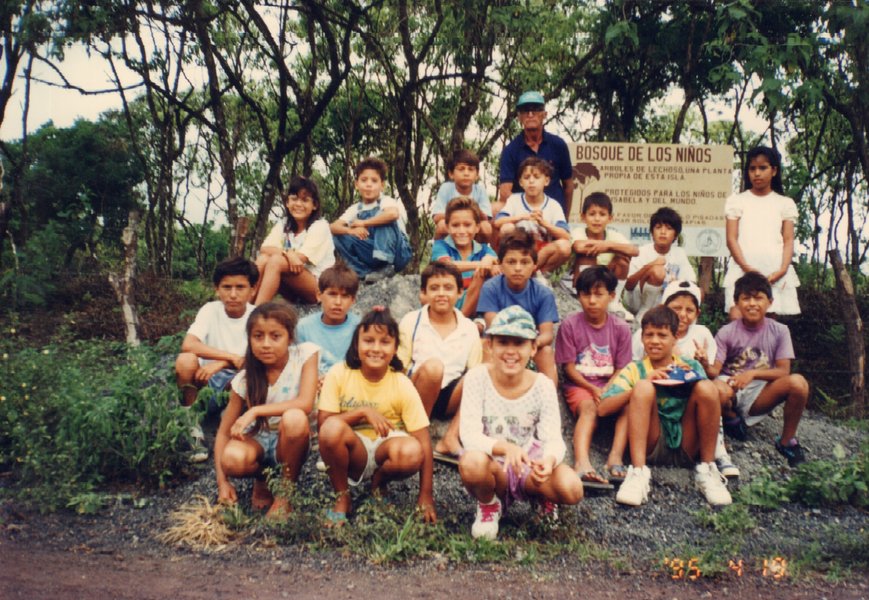
With the intention of preserving this small forest, Don Jacinto—together with CDF’s Director at the time, Dr. Chantal Blanton, and the organization Tree Amigos—arranged the purchase of the land, where the Scalesia cordata population was found. From that moment, the circa 0.2 ha site became a space for conservation and environmental education activities, especially for children aged 8 to 12 from Club Renacer, who made their first visit to the forest on August 27, 1993.
Mara Speece / CDF
Gabriela Rivadeneira, a former member of Club Renacer, recalls that time:
“I was part of the club when I was 10 years old. We would go on walks to identify the endemic flora and fauna. We gathered at the Children’s Forest, and from there, initiatives would emerge. It was a space for learning and connection. When I later passed by and saw the invasive plants, I felt nostalgic. Now I want to help restore this space for future generations.”
As Don Jacinto aged and retired, the area stopped hosting educational activities, and invasive species spread throughout the forest.
A Forest Coming Back to Life
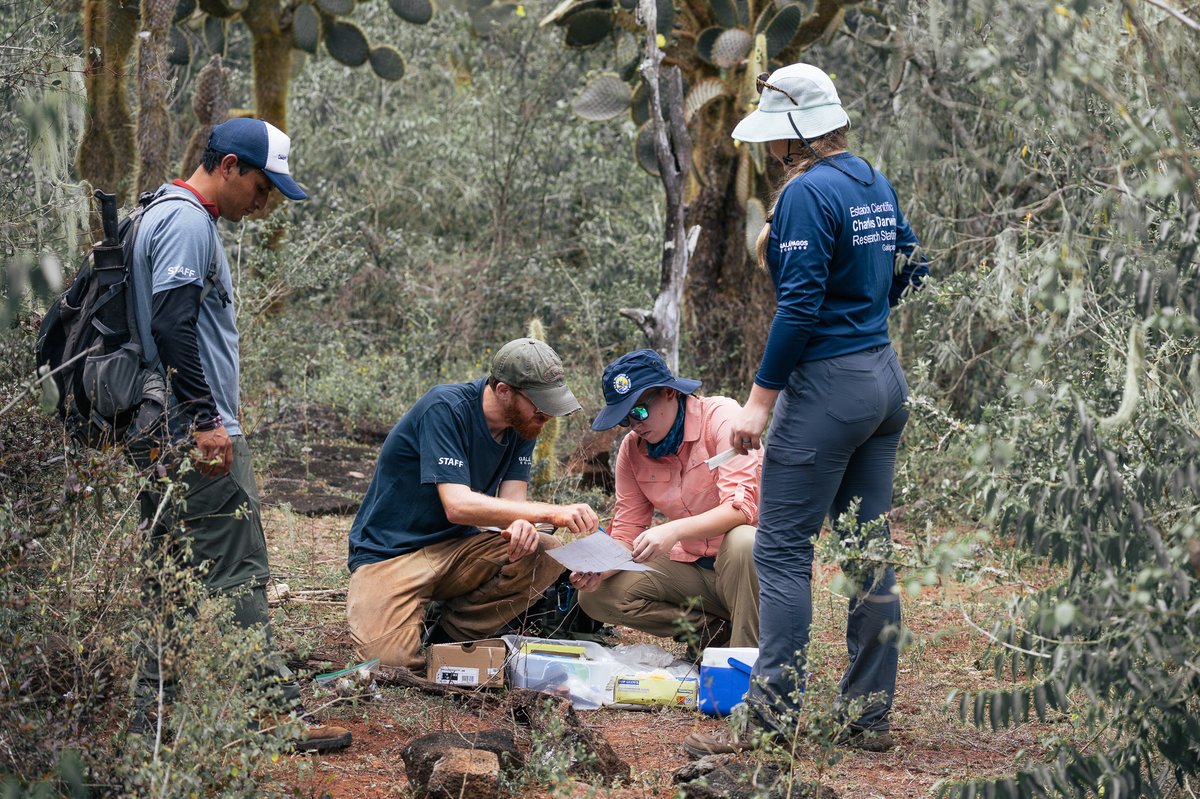
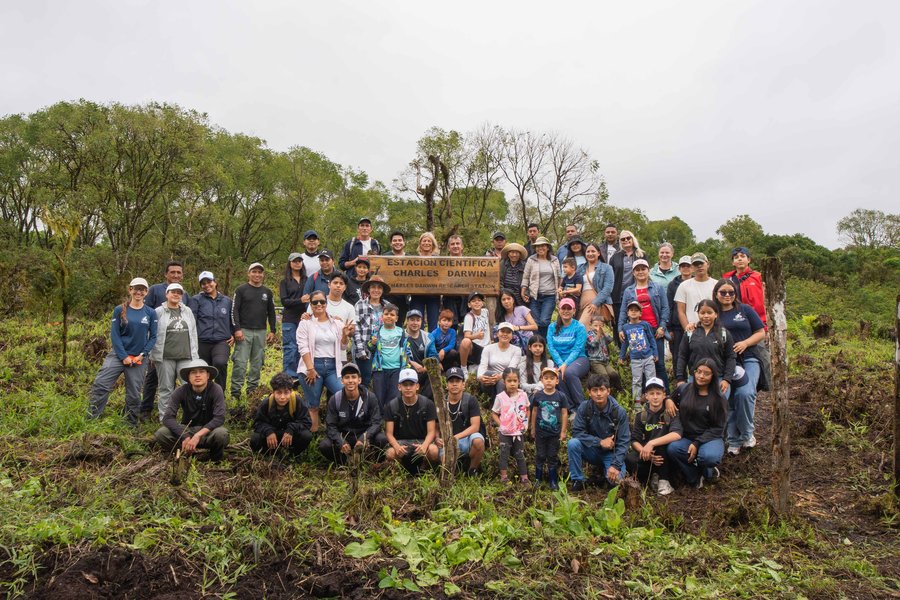
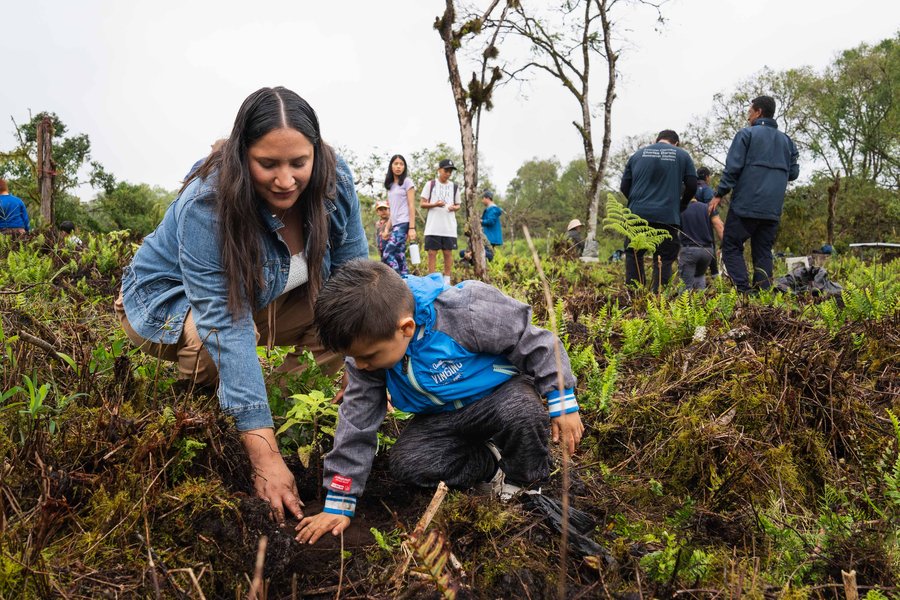
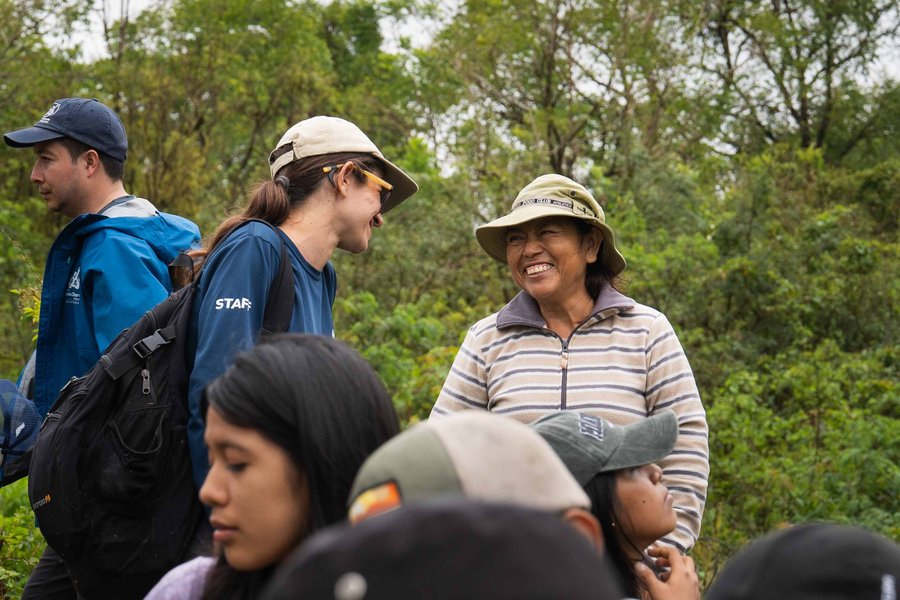
A decade after the passing of Jacinto Gordillo, the forest is once again welcoming the community. The first planting of over 80 Scalesia cordata seedlings was marked by the reunion of former Club Renacer members—now adults—who returned with their families. They were joined by Don Jacinto’s descendants, including his granddaughter Estefanía Gordillo, as well as community members, students from Odilo Aguilar School and the CDF Science Club, park rangers, and the Charles Darwin Foundation’s team. Together, they honored the memory of Don Jacinto and the educational activities that onces brought the Children’s Forest to life.
The restoration project aims to recover this community space, plant more Scalesia cordata and other endemic plants, and once again offer a place for environmental education—helping the island’s children learn about and care for Isabela’s endemic species, especially the endangered Scalesia cordata.
Mara Speece / CDF
Miriam San José, a researcher working on CDF’s Scalesia restoration project, explains her connection to the site:
“In 2021, shortly after arriving at CDF, I learned about this place and its history. When I first visited, it was completely overrun by invasive plants, and not a single Scalesia tree remained. That’s why we began this project: to restore the forest and the community space it represents.”
The restoration plan will unfold over several years of work, transforming the area into an interpretive forest where Scalesia cordata can thrive once again. It is envisioned as a place where the community of Isabela can reconnect with nature, learn about the importance of the Scalesia genus, and understand the ecology of this critically endangered species—and of the many species of flora and fauna that depend on this unique habitat. Using land owned by CDF ensures stability, allows for long-term planning, and facilitates fundraising to expand restoration efforts.
“While the forest is restored, we plan to build a cabin for educational activities with local schools and hopefully in the future establish a small nursery that will allow the community to participate in growing Scalesia cordata”, says Miriam San José.