Natural History Collections
The Charles Darwin Research Station is home to the largest Natural History Collections of endemic, native and introduced species of the Galapagos Islands in Ecuador.
Discover our work conserving key marine species in Galapagos and the Eastern Tropical Pacific.
View our Ocean Programs Deep-ocean exploration & conservation Mangrove Ecology and Climate Change Marine biodiversity research Marine bird conservation Ocean governance Sea turtle conservation Shark ecology and conservationExplore our efforts to safeguard and restore the Galapagos Islands' iconic land-based fauna and flora.
View our Land Programs Conservation of threatened plant species Control of the avian vampire fly Floreana Ecological Restoration Project Giant tortoise conservation Landbird conservation Restoration of Arid Zones Scalesia forest restorationUnderstand how our work is grounded in the benefits nature provides to the people of Galapagos.
View our people programs Education and Community Outreach Sustainable fisheries Sustainability for Conservation Urban and rural restoration
Make a lasting impact in Galapagos. Donate to support our mission and our work.
Donate Give monthly Adopt a speciesThere are a number of other ways you or your organization can contribute to our work.
Leave a legacy gift Become a corporate donor Fundraise for GalapagosThe impact you make in Galapagos is part of a larger footprint. Get involved today.
Meet our donors Become a CDF Ambassador Become a volunteer Send a free e-card! Sign up to our newsletter
Discover how our science and conservation programs are making a difference for the future of Galapagos.
View moreThe latest news releases from the Charles Darwin Foundation and its Research Station.
View moreExplore firsthand accounts from our researchers, staff, and collaborators in Galapagos.
View more
When you travel to Galapagos, you become part of a global effort to protect these iconic islands.
About Galapagos Travel tips How to pack for Galapagos Frequently Asked Questions Galapagos National Park Rules
Discover our work conserving key marine species in Galapagos and the Eastern Tropical Pacific.
View our Ocean Programs Deep-ocean exploration & conservation Mangrove Ecology and Climate Change Marine biodiversity research Marine bird conservation Ocean governance Sea turtle conservation Shark ecology and conservationExplore our efforts to safeguard and restore the Galapagos Islands' iconic land-based fauna and flora.
View our Land Programs Conservation of threatened plant species Control of the avian vampire fly Floreana Ecological Restoration Project Giant tortoise conservation Landbird conservation Restoration of Arid Zones Scalesia forest restorationUnderstand how our work is grounded in the benefits nature provides to the people of Galapagos.
View our people programs Education and Community Outreach Sustainable fisheries Sustainability for Conservation Urban and rural restoration
Make a lasting impact in Galapagos. Donate to support our mission and our work.
Donate Give monthly Adopt a speciesThere are a number of other ways you or your organization can contribute to our work.
Leave a legacy gift Become a corporate donor Fundraise for GalapagosThe impact you make in Galapagos is part of a larger footprint. Get involved today.
Meet our donors Become a CDF Ambassador Become a volunteer Send a free e-card! Sign up to our newsletter
Discover how our science and conservation programs are making a difference for the future of Galapagos.
View moreThe latest news releases from the Charles Darwin Foundation and its Research Station.
View moreExplore firsthand accounts from our researchers, staff, and collaborators in Galapagos.
View more
When you travel to Galapagos, you become part of a global effort to protect these iconic islands.
About Galapagos Travel tips How to pack for Galapagos Frequently Asked Questions Galapagos National Park Rules
Discover our work conserving key marine species in Galapagos and the Eastern Tropical Pacific.
View our Ocean Programs Deep-ocean exploration & conservation Mangrove Ecology and Climate Change Marine biodiversity research Marine bird conservation Ocean governance Sea turtle conservation Shark ecology and conservationExplore our efforts to safeguard and restore the Galapagos Islands' iconic land-based fauna and flora.
View our Land Programs Conservation of threatened plant species Control of the avian vampire fly Floreana Ecological Restoration Project Giant tortoise conservation Landbird conservation Restoration of Arid Zones Scalesia forest restorationUnderstand how our work is grounded in the benefits nature provides to the people of Galapagos.
View our people programs Education and Community Outreach Sustainable fisheries Sustainability for Conservation Urban and rural restoration
Make a lasting impact in Galapagos. Donate to support our mission and our work.
Donate Give monthly Adopt a speciesThere are a number of other ways you or your organization can contribute to our work.
Leave a legacy gift Become a corporate donor Fundraise for GalapagosThe impact you make in Galapagos is part of a larger footprint. Get involved today.
Meet our donors Become a CDF Ambassador Become a volunteer Send a free e-card! Sign up to our newsletter
Discover how our science and conservation programs are making a difference for the future of Galapagos.
View moreThe latest news releases from the Charles Darwin Foundation and its Research Station.
View moreExplore firsthand accounts from our researchers, staff, and collaborators in Galapagos.
View more
When you travel to Galapagos, you become part of a global effort to protect these iconic islands.
About Galapagos Travel tips How to pack for Galapagos Frequently Asked Questions Galapagos National Park Rules
The Charles Darwin Research Station is home to the largest Natural History Collections of endemic, native and introduced species of the Galapagos Islands in Ecuador.
Our Natural History Collections consist of four sub-collections comprising more than 137,000 specimens from over 7,500 species. The Collections are housed in the Wijnand Pon Natural History Collections building, a purpose-built facility dedicated to preserving and providing long-term access to Galápagos’ most extensive scientific records. Galápagos is recognized as the world’s first UNESCO World Heritage site, and these collections serve as a foundational resource for research and conservation.
As custodians of the Collections for the Government of Ecuador, we are dedicated to the maintenance and improvement of this unique resource.
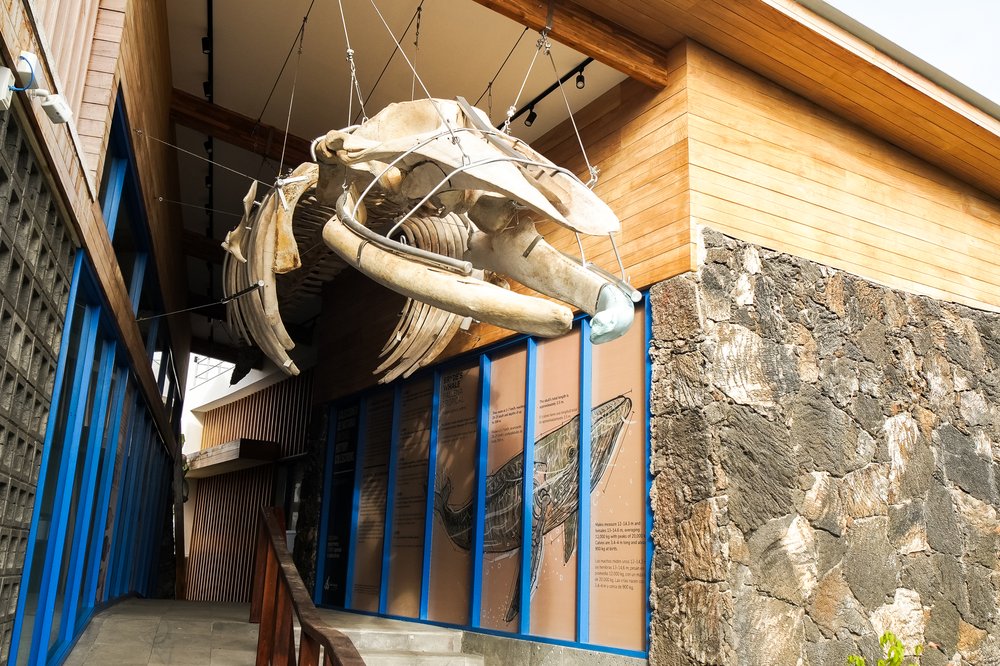
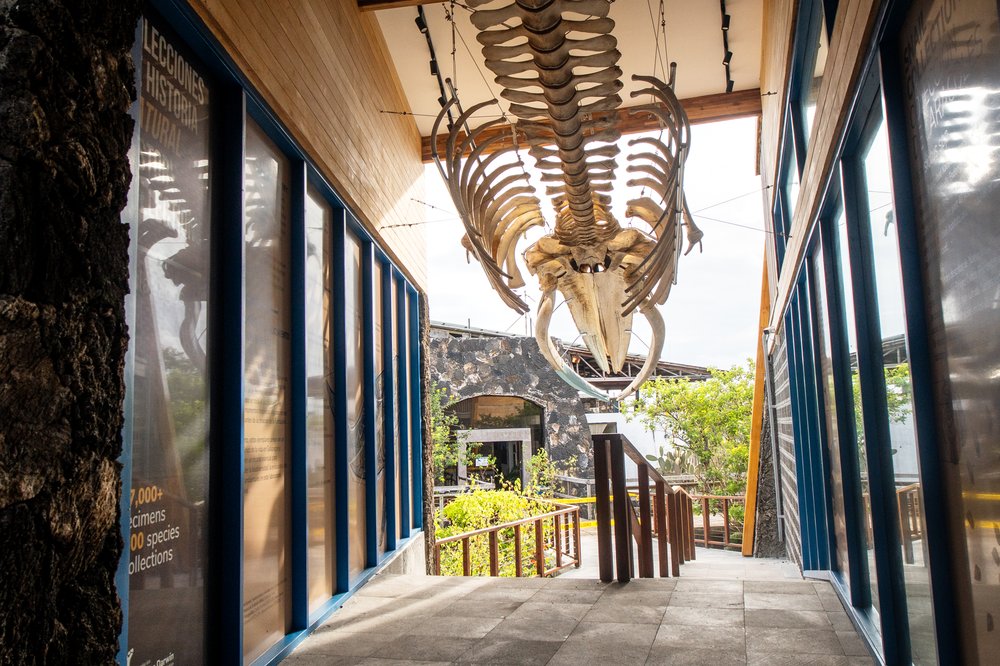
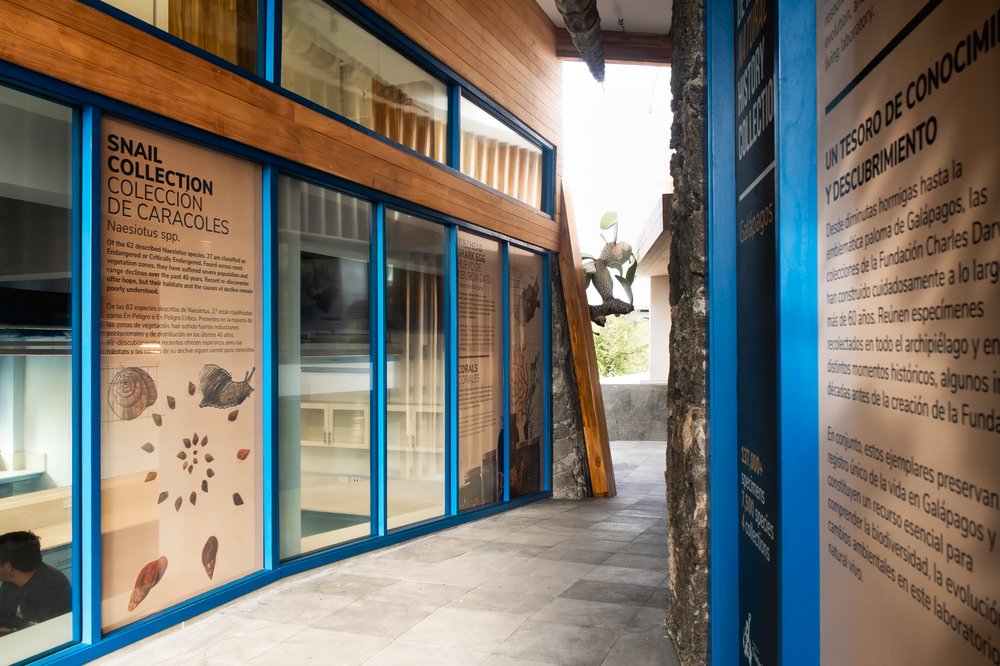
Visitors to the Charles Darwin Research Station can view the Natural History Collections through a public observation corridor in the new Collections building. Visits are free of charge and without a guide, the corridor provides direct visibility into the scientific collections that support conservation in Galápagos.
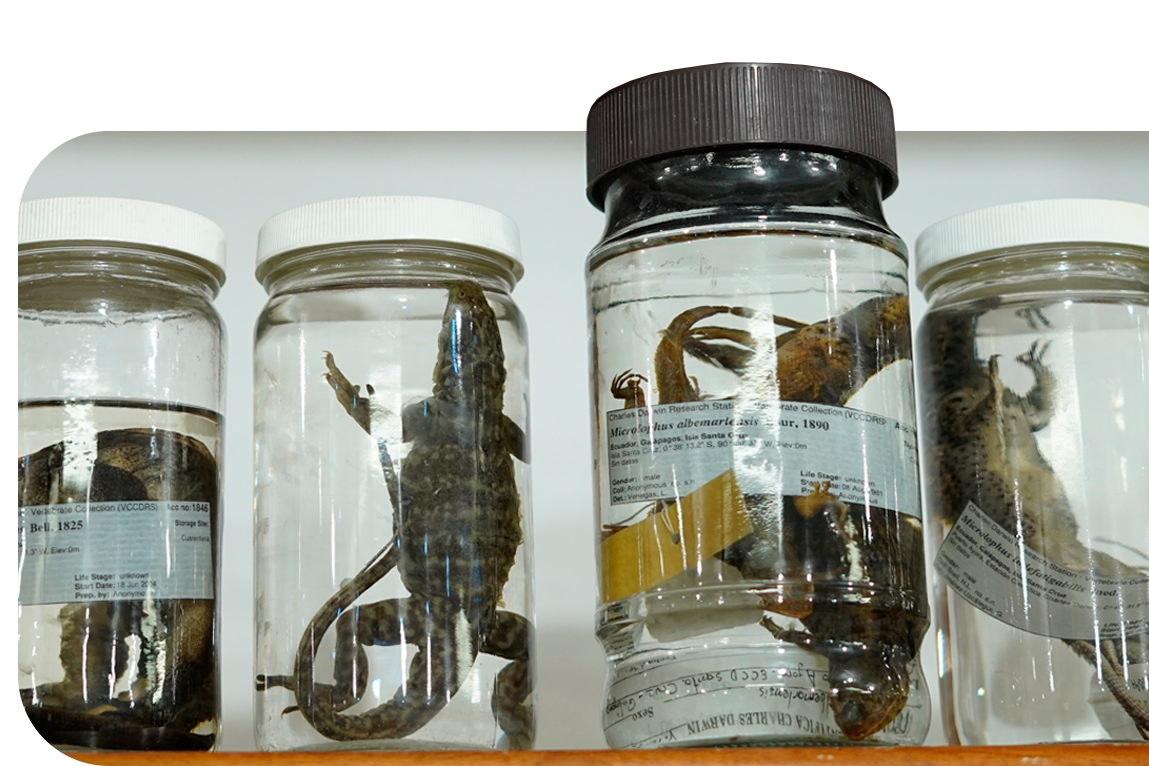
In addition to supporting scientific research, the Charles Darwin Research Station (CDRS) now provides broader public visibility into the Collections. A selection of specimens continues to be showcased in the Charles Darwin Exhibition Hall, and traveling exhibits bring collections directly to schools across the archipelago.
Special non-researcher access to the broader Collections continues to be available through Special and VIP visits, which can include behind-the-scenes tours with curators or scientists.
The Herbarium is home to the world’s largest botanical collection of the Galapagos with over 47,000 specimens and 3,600+ species. Each year, around 1,000 new specimens are added.
The majority of these specimens are native to the Galapagos Islands. However, the Herbarium also includes invasive species that are now a part of the Galapagos flora, and specimens of plants from the Ecuadorian mainland which are a resource for studies of diversity and can aid in identification.
The study of older specimens, especially species that are now extinct, provides many insights including how climate change is reflected in the phenology of plants.
More about the Herbarium Collection in the Research Hub.
The Vertebrate Collection consists of over 2,500 specimens from 170+ species, including amphibians, reptiles, birds and mammals.
Specimens include the bones of Lonesome George, penguins and albatrosses. The Collection also preserves extinct species such as one of Darwin's finch species, the Large Ground Finch from Floreana Island, as well as giant tortoises from Pinta, Floreana and Santa Fe islands.
Cataloging of vertebrates is limited as the collection of vertebrate specimens can only occur if an organism is found dead or is injured and unable to be rehabilitated. All specimens are collected with prior authorization from the Galapagos National Park.
More about the Vertebrate Collection in the Research Hub.
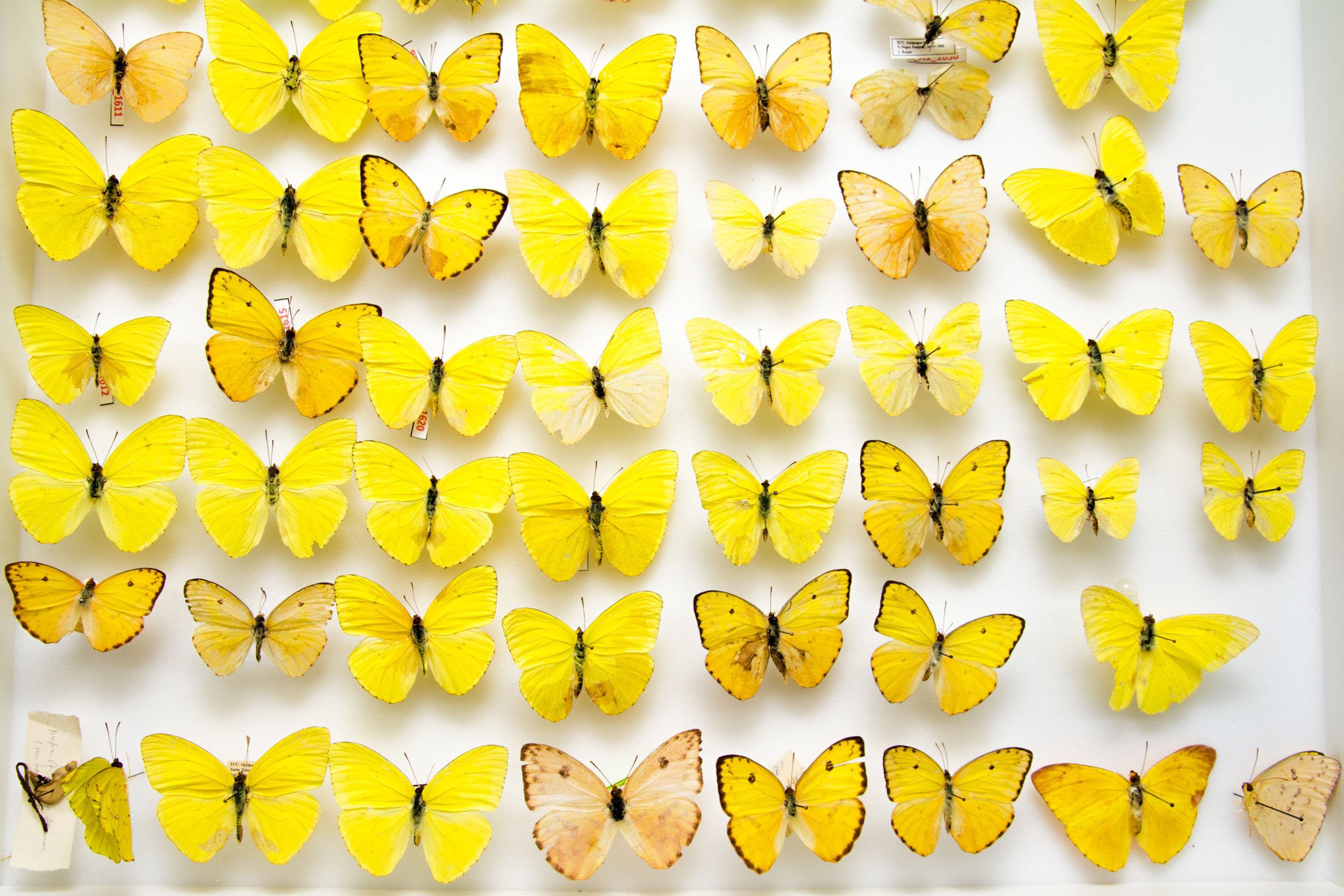
51% of the biodiversity in the Galapagos consists of insects, so it is no surprise that the Terrestrial Invertebrate Collection is the largest of the Natural History Collections. It contains over 75,000 specimens from 1,700+ species, of which the Lepidoptera (butterflies and moths) and Formicidae (ants) form the largest part of the collection.
Because of the delicacy and age of the specimens, some 50 years old or more, the collection is maintained under strict temperature and humidity controls.
More about the Terrestrial Invertebrate Collection in the Research Hub.

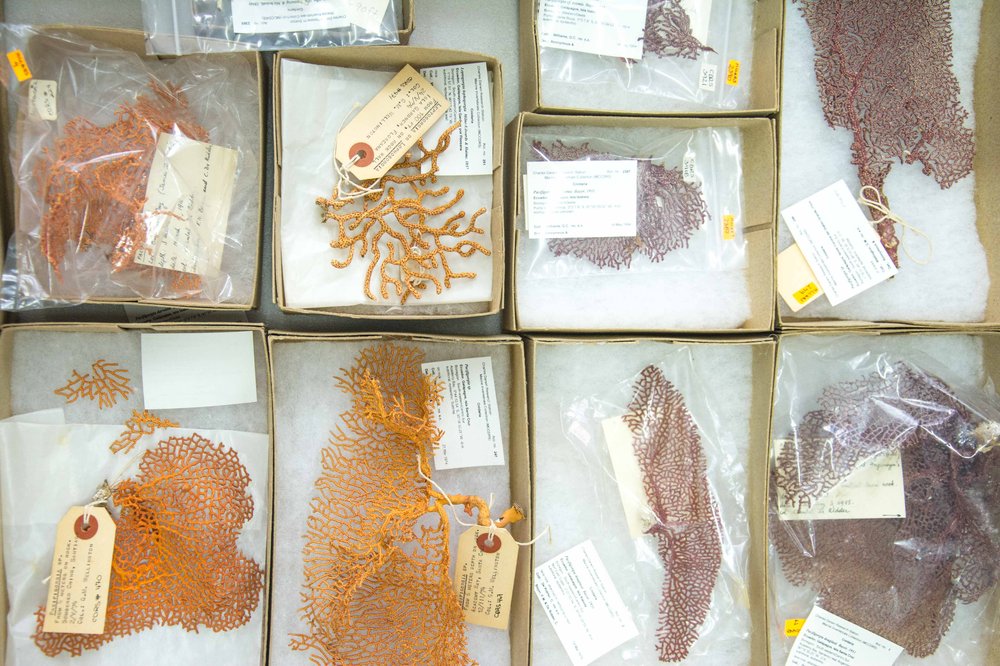
Initiated in 2008, the Marine Collection is the youngest of the Natural History Collections, and currently has over 12,300 specimens and 1,900+ species of marine organisms.
Specimens are added in the course of field work by staff of CDRS and associated organizations. Some of the newest specimens in the collection have been added from recent explorations of seamounts within the Galapagos Marine Reserve and include several species suspected to be new to science; the identification process is underway.
Collected fossil coral for past climate change studies to model future climate change patterns. Specimens of the deep sea coral reef found in the Reserve in April 2023.
More about the Terrestrial Invertebrate Collection in the Research Hub.
You can visit the Natural History Collections through special behind-the-scenes tours offered as part of our Special and VIP visiting packages in exchange for a donation.
These visits can include a guided tour of the new Collections building, curator talks, or discussions with scientific staff. Donation packages vary by visit type.
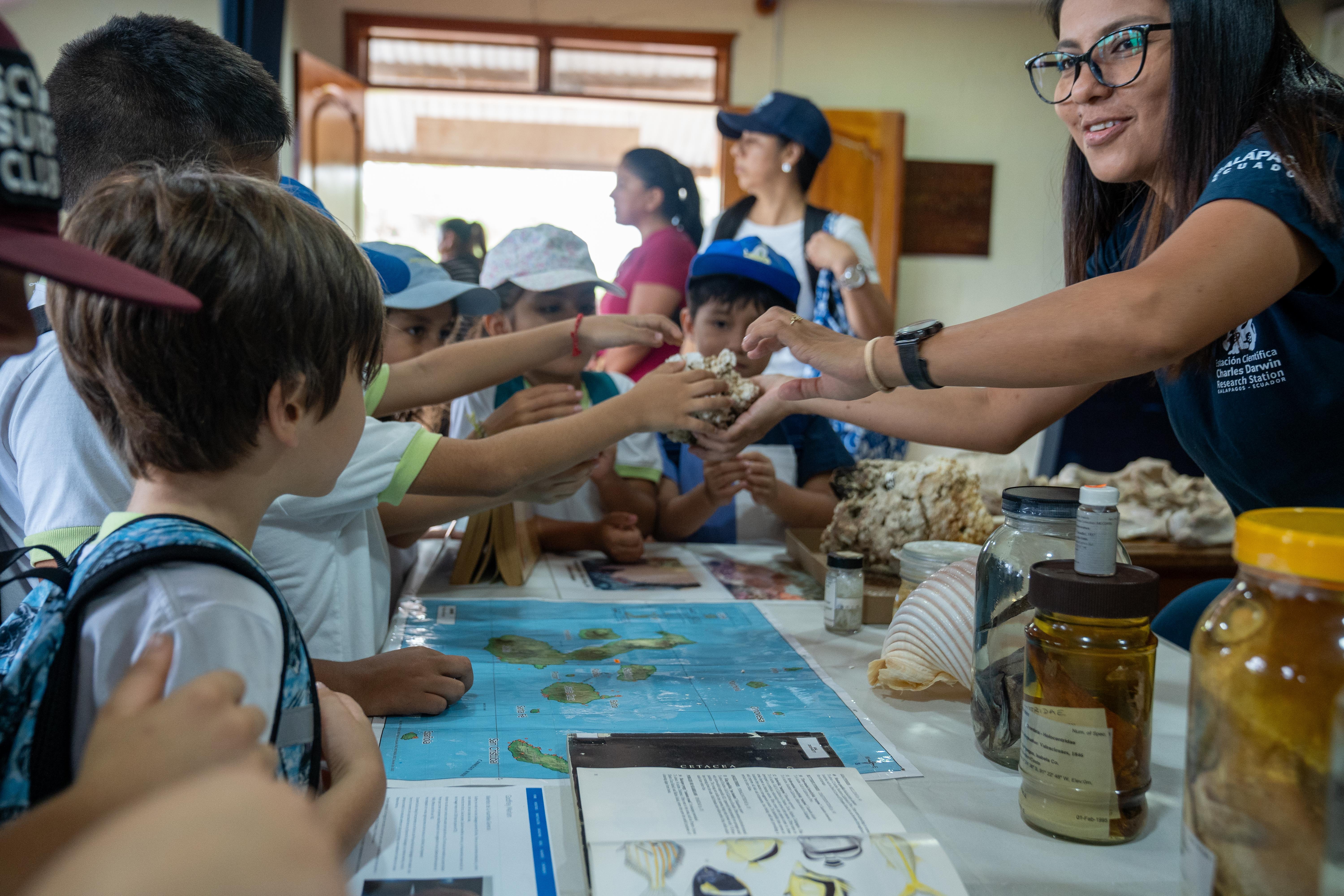
As stewards of the Galapagos Islands' most extensive Natural History Collections, it is our responsibility to share this invaluable resource with our local community.
In 2023, we initiated a program to take our collections directly to schools through engaging educational activities. Our aim is to ignite curiosity about science, and foster a deeper understanding of the conservation of their unique home.
The impact you make on this small ecosystem of enormous biodiversity is part of a larger footprint you are leaving for the world's future. Join us on our mission to safeguard one of our planet’s most important natural treasures through science and conservation action by making a donation today. Thank you for making an impact with us.