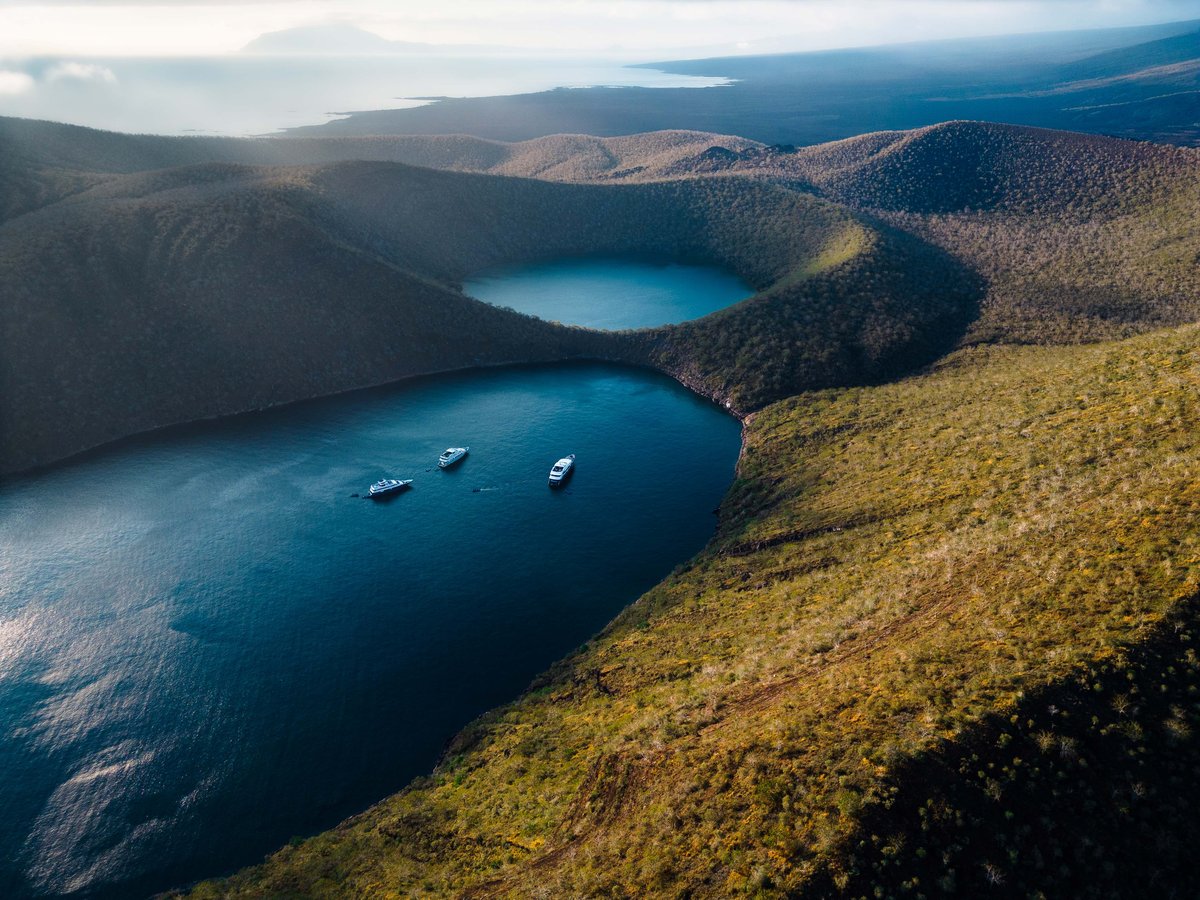
158 Endangered Tortoises Released onto Floreana Island, Galápagos for First Time in over 180 Years
The first of 12 native species to be reintroduced under the Floreana Ecological Restoration Project, the largest restoration effort ever undertaken in Galápagos
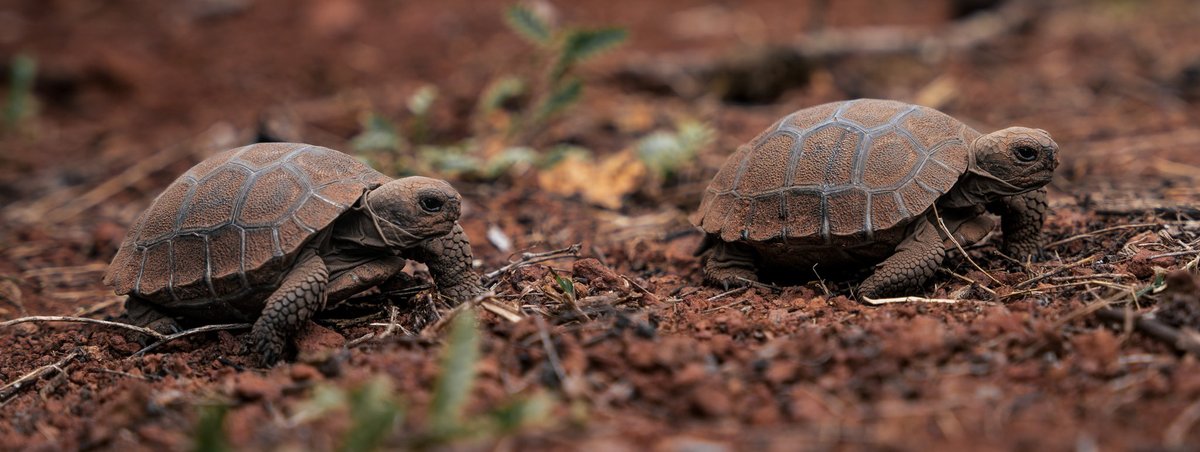
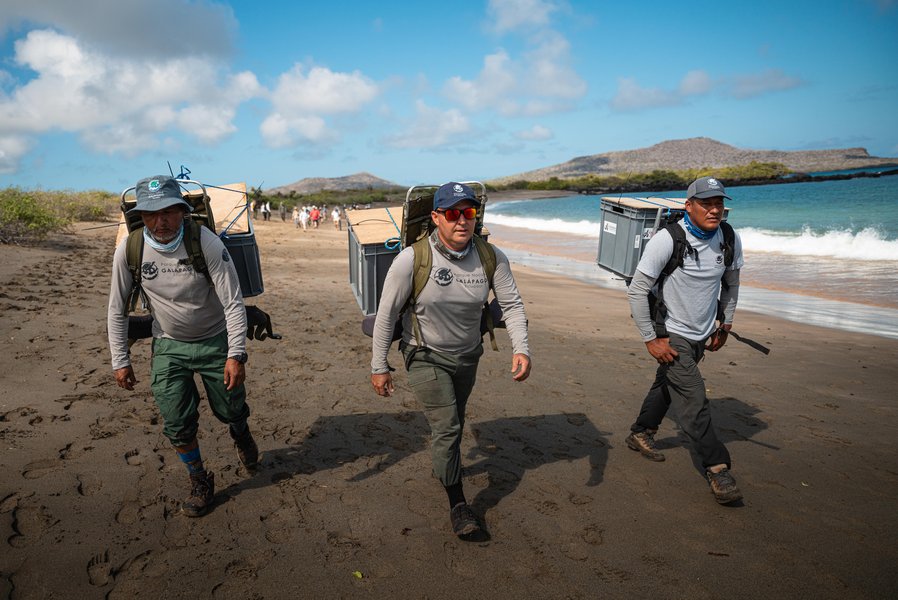
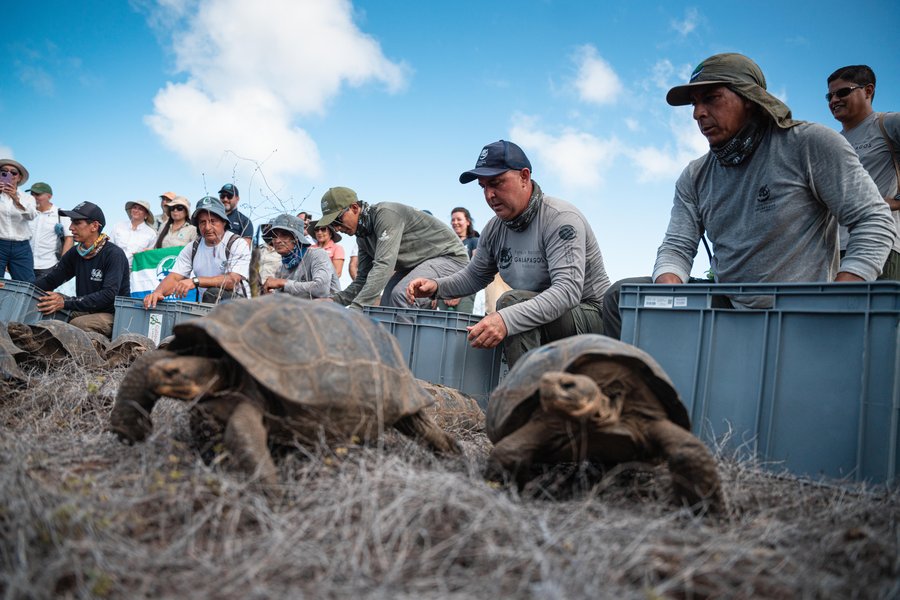
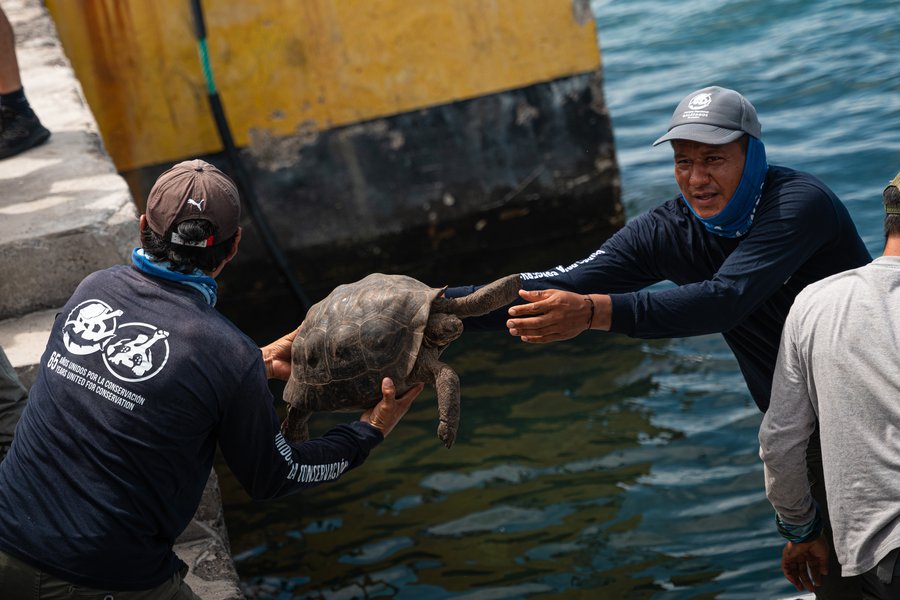
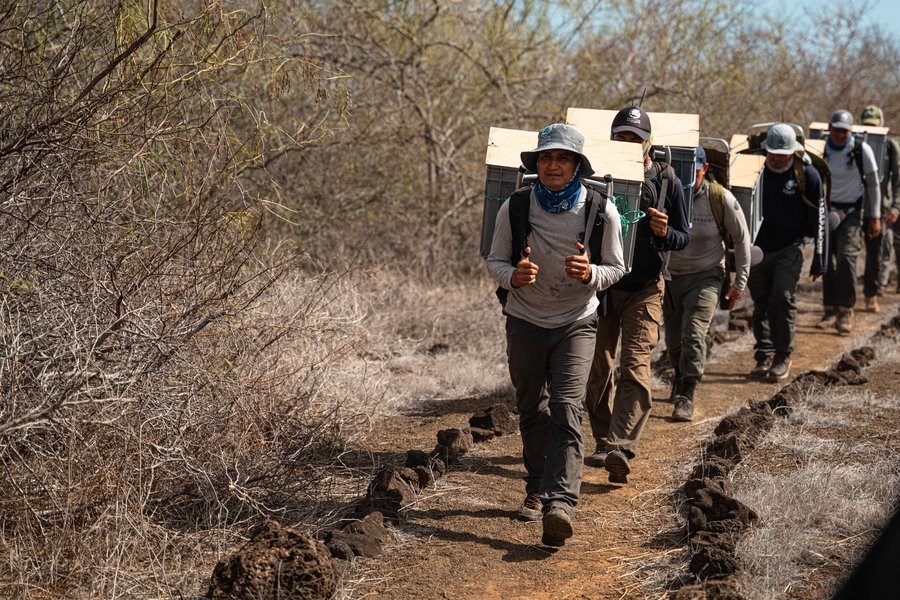
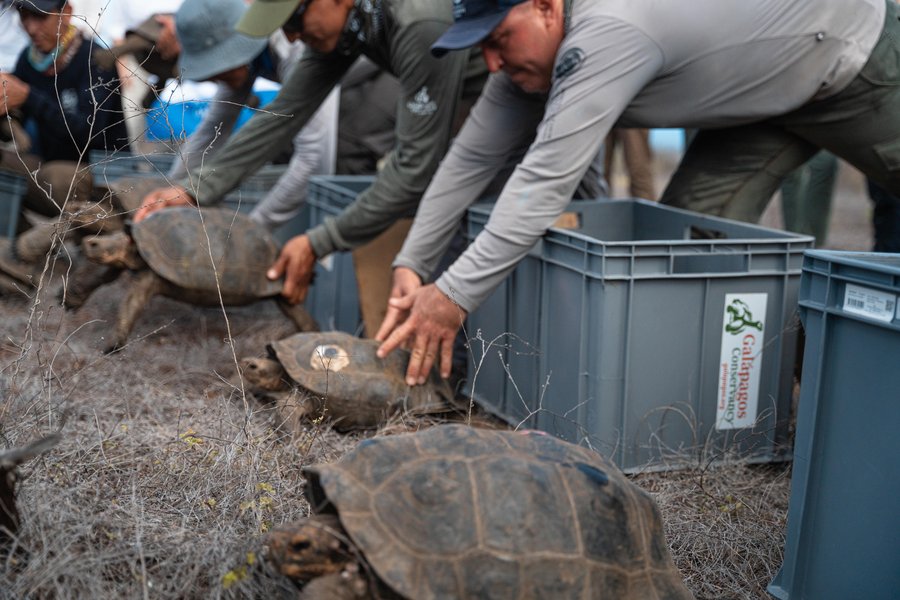
Floreana Island, Galápagos | 20 February 2026 — For the first time in more than 180 years, giant tortoises are once again walking the landscapes of Floreana Island. This week, 158 juvenile giant tortoises of Floreana lineage were released into their ancestral habitat, marking a historic milestone for ecological restoration in Galápagos, and for Floreana’s community.
Driven to extinction in the mid-1800s, the Floreana giant tortoise (Chelonoidis niger niger) had been absent from the island for generations. Its return signals a major turning point for Floreana and the beginning of a new phase of rewilding under the Floreana Ecological Restoration Project — one of the most ambitious ecosystem recovery initiatives ever undertaken in the archipelago
A complex initiative, with the community at its heart
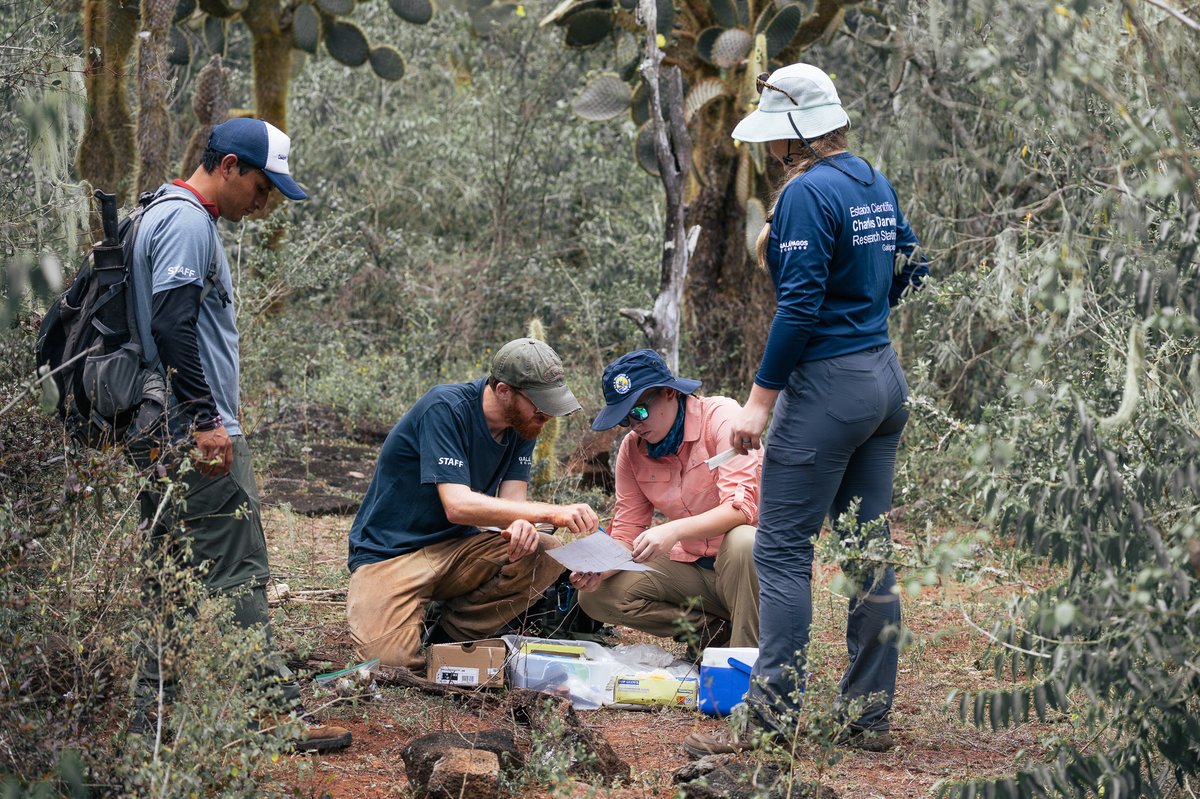
Supporting the island’s approximately 160 residents, the Floreana Ecological Restoration Project is grounded in a community-first vision, developed with and for the people of Floreana and focused on the long-term wellbeing of both the island’s ecosystems and livelihoods. The project is led by Ecuador’s Ministry of Environment and Mines through the Galápagos National Park Directorate (GNPD) and the Galápagos Biosecurity and Quarantine Agency (ABG), and co-executed by Fundación Jocotoco, the Charles Darwin Foundation, and Island Conservation, with support from Galápagos Conservancy on the giant tortoise reintroduction, as well as many others.
Carlos Espinosa/CDF
“The Floreana Ecological Restoration Project represents one of the greatest challenges undertaken by the Galápagos National Park,” said Lorena Sánchez, Director of the Galápagos National Park. “After several years of sustained, science-based work—requiring rigorous studies and patience to implement on an inhabited island—the return of the giant tortoises reflects a long-term restoration vision focused on progressively restoring the ecological functionality of Floreana’s ecosystems.”
“For generations, Floreana existed without its giant tortoises,” said Verónica Mora, Community Representative from Floreana Island. “Their return shows what is possible when a community leads and many partners come together with a shared purpose. This moment marks an important step toward a future where conservation and community wellbeing go hand in hand — because our livelihoods, from tourism to agriculture and fishing, depend on the health of this island.”
The Floreana community has been deeply involved in achieving this milestone, from participating in planning workshops to supporting biosecurity measures and long-term ecological monitoring. Community engagement has already contributed to notable conservation successes, including the rediscovery of the Galápagos Rail (Laterallus spilonota), locally known as the Pachay, a rare bird that had not been recorded on the island since Charles Darwin’s first visit to Galápagos.
Carlos Espinosa/CDF
Bringing back a lost lineage
The tortoises released this week are the result of decades of scientific research led by the GNPD and collaborating institutions. Genetic studies conducted in the early 2000s revealed that some tortoises living on Wolf Volcano, to the North of Isabela Island, carried ancestry from Floreana — the last living descendants of a lineage long believed to be lost, likely due to historical whaling practices that involved offloading animals before long sea voyages.
Through a carefully managed breeding program, these individuals were raised to form a population that is genetically as close as possible to the original Floreana giant tortoise.
“Today’s release represents the culmination of years of genetic research and conservation collaboration,” said Hugo Mogollón, President and CEO of Galápagos Conservancy, which has led the Floreana tortoise release alongside the Galápagos National Park. “By identifying tortoises on Wolf Volcano with Floreana ancestry and breeding their descendants, we are returning this species to its island in a form that closely reflects the original lineage—laying a critical scientific foundation for the restoration of Floreana’s ecosystems and the future reintroduction of additional native species.”
From species return to ecosystem recovery
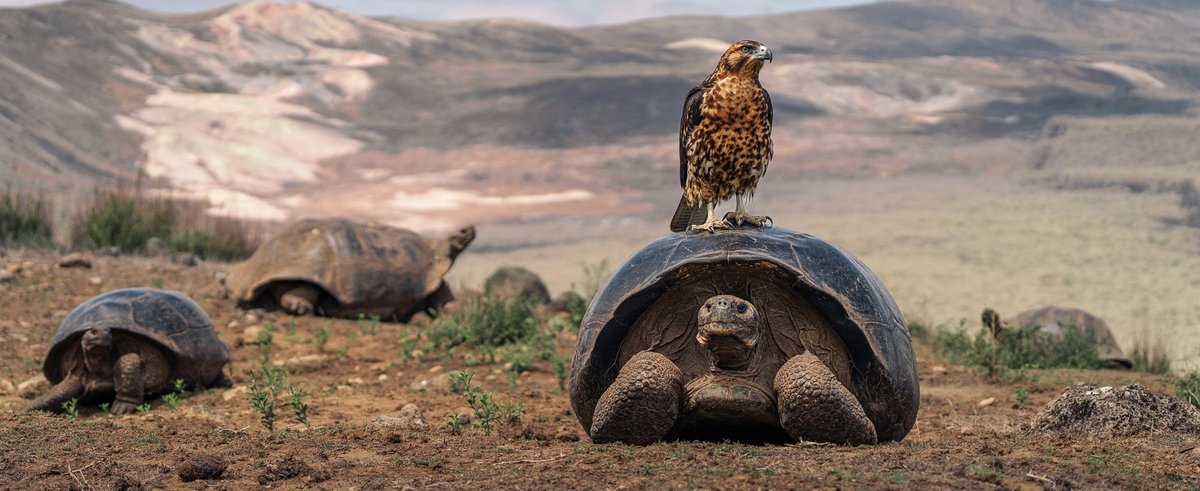
As keystone species, tortoises help maintain open habitats, promote native plant growth, and create conditions that allow entire ecosystems to function. Their absence on Floreana altered ecological processes for nearly two centuries. Their return is expected to help restore those processes naturally and drive natural regeneration processes that support a wide range of native plants and animals.
“Habitats are the foundation for biodiversity--the home that allows species to move, live and evolve naturally over time,” said Rakan Zahawi, Executive Director of the Charles Darwin Foundation. “Giant tortoises are a critical part of this system. By dispersing seeds, shaping vegetation, creating micro-habitats such as their well-known wallows, and influencing how landscapes regenerate, they help rebuild ecological processes that many other species depend on.”
The return of giant tortoises is also expected to strengthen Floreana’s land–sea connections. By dispersing seeds and opening habitats, tortoises help improve nesting and feeding conditions for birds, including species slated for future reintroduction. Healthy seabird populations, in turn, contribute nutrients that support surrounding marine ecosystems, including coral reefs and fisheries.
Carlos Espinosa/CDF
Carlos Espinosa/CDF
Carlos Espinosa/CDF
A global example providing hope for the future
Once fully restored, Floreana will stand as the largest ecological restoration project ever undertaken in the Galápagos, a global example of how restoring nature can go hand in hand with strengthening local livelihoods
“This decade of collaborative work now yields a result that couldn’t be possible without all of the partners working together. We restore islands so native species and human communities can thrive together,” said Dr. Penny Becker, CEO of Island Conservation. “Seeing tortoises walk freely on Floreana once again after more than 180 years shows what’s possible when local partners, global experts, and the community share a vision for recovery.”
With the first species successfully reintroduced, project partners will continue to evaluate conditions for the next phase of rewilding, which includes iconic species such as the Floreana Mockingbird, Floreana racer snake, Vegetarian Finch, and the Little Vermilion Flycatcher.
“Reaching this moment has taken more than 15 years of dedicated work, coordination, and long-term planning,” said Eliécer Cruz, Director of Fundación Jocotoco’s Galápagos Program. “This release is the result of sustained collaboration with the Floreana community, government partners, scientists, and conservation organizations, working step by step to make ecological recovery possible. Seeing giant tortoises return to Floreana confirms that long-term commitment and collective action can restore ecosystems that once seemed lost.
-ENDS-
Media Contacts:
Island Conservation
Sally Esposito, Senior Communications Director
sally.esposito@islandconservation.org
Charles Darwin Foundation
Ambre Tanty-Lamothe, Communications Director and Strategic Affairs
Galápagos Conservancy
Rasa Dawson, VP of Advancement
rasa@galapagos.org+1.804.502.1032
Fundacion Jocotoco
Isabel Grijalva, Communications Coordinator, Fundación Jocotoco
isabel.grijalva@jocotoco.org.ec
About Floreana Island
Floreana Island is one of the oldest islands in the Galápagos Archipelago and home to a community of approximately 160 residents. Once rich with unique wildlife, Floreana experienced dramatic ecological decline following the introduction of invasive mammals in the 18th and 19th centuries. The island is historically significant for its role in early human settlement in the Galápagos and is recognized today as a priority site for global biodiversity recovery.
About the Floreana Island Ecological Restoration Project
The project is led by Ecuador’s Ministry of Environment and Mines through the Galápagos National Park Directorate (GNPD) and the Galápagos Biosecurity and Quarantine Agency (ABG). It is co‑executed by Fundación Jocotoco, the Charles Darwin Foundation, and Island Conservation, with the support of several partner organizations, including Galapagos Conservancy, which is leading on the tortoise release.
Working closely with the Floreana community and local and international allies, the project aims to achieve the island’s full ecological restoration through the eradication of three invasive mammal species, the restoration of habitats, and the reintroduction of 12 endemic species, restoring the ecological functionality and resilience of this unique island ecosystem.
Countless individuals and the following organizations generously supported this monumental project along the way: Bell Laboratories, Inc., Blue Action Fund, Global Environmental Facility, Charities Aid Foundation Canada, Conservation International Foundation, Corporacion Andina de Fomento (Development Bank of Latin America), Durrell Wildlife Conservation Trust, Ecoventura, Fondation Ensemble, Fondo Especies Invasoras Galápagos,Fundación Galápagos, Galápagos Conservation Trust, Global Environment Facility, Konrad Lorenz Research Center – Vienna University, Kreditanstalt für Wiederaufbau (German Development Bank), Lindblad Expeditions-National Geographic Fund, The Mohamed bin Zayed Species Conservation Fund, Once Upon a Time Foundation, Scripps Institution of Oceanography, Silversea Cruises, Texas Parks and Wildlife Foundation, The Conservation Foundation, The David and Lucile Packard Foundation, The International Galápagos Tour Operators Association, The Leona M. and Harry B. Helmsley Charitable Trust, the U.K. Government (through The Darwin Initiative), Tourism Cares, Re:wild, The Raptor Center, Unigalapagos, Willow Grove Foundation, and other anonymous donors.
About the Collaborators
Island Conservation’s mission is to restore islands for nature and people worldwide. We are a United States–based 501(c)(3) charitable organization with a globally distributed team—often made up of local islanders who bring deep knowledge and connection to the places where we work. Together, we collaborate with local communities, government management agencies, and conservation organizations to holistically restore islands by bringing back biodiversity, the foundation of all healthy ecosystems. We do this by removing a primary threat (introduced, damaging invasive species) and accelerating the return of native plants and animals. We utilize innovative technology and techniques to work more efficiently and showcase the many benefits of holistically restored islands for biodiversity, climate resilience, ocean health, and sustainable development across the globe.
Fundación Jocotoco is an Ecuadorian conservation organization dedicated to protecting the country’s most threatened ecosystems and species through science-based conservation, habitat restoration, and strong local leadership. Since its founding in 1998, Jocotoco has established and manages a network of protected areas across mainland Ecuador and the Galápagos Islands, safeguarding critical habitats for endemic and endangered species.
In the Galápagos, Fundación Jocotoco plays a key role in large-scale restoration initiatives, including the Floreana Island Ecological Restoration Project, working closely with local communities, government authorities, and national and international partners. Through long-term planning, research, and community engagement, Jocotoco supports the recovery of ecological processes that sustain both biodiversity and human well-being. For more information please visit: https://jocotoco.org.ec/
Charles Darwin Foundation: The Charles Darwin Foundation for the Galápagos Islands (CDF) is an international non-profit organization that has operated in Galapagos since 1959 under a special agreement with the Government of Ecuador. Its mission, and that of its Research Station, is to address the greatest threats and challenges facing Galapagos through scientific research and conservation actions, to protect one of the world’s most important natural treasures. Today CDF supports more than 25 research, conservation, and education projects across land and sea, and is the custodian of over 137,000 specimens in its Natural History Collections. Its diverse team of more than 140 scientists, educators, and support staff is composed primarily of Ecuadorian citizens, with over 60% from Galápagos.
For more information, please visit: www.darwinfoundation.org
Galápagos Conservancy: Galápagos Conservancy is a U.S.-based nonprofit organization dedicated exclusively to the conservation of the Galápagos Islands. Working in partnership with Ecuadorian authorities, research institutions, and local communities, the organization supports science-based conservation, habitat restoration, and long-term protection efforts across the archipelago. Galápagos Conservancy helps advance collaborative initiatives that protect biodiversity and strengthen the resilience of Galápagos ecosystems and communities.
For more information, visit www.galapagos.org