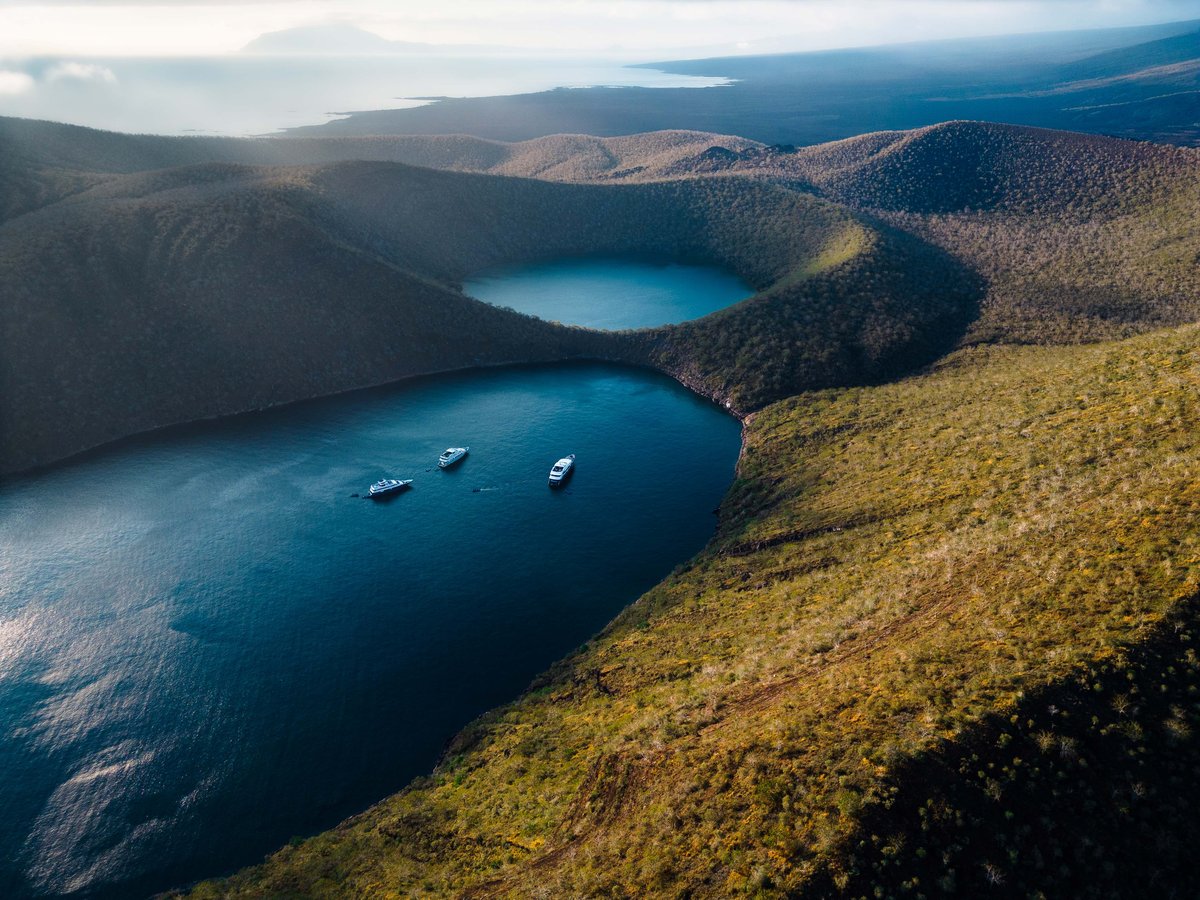

Cold Currents, Big Predators: The Seasonal Pulse of Predatory Fish and Sharks in the northern Galápagos Islands of Darwin and Wolf
The northern Galápagos Islands of Darwin and Wolf are often described as one of the sharkiest places on Earth. A recent scientific study led by the Charles Darwin Foundation reveals that life beneath the waves here undergoes dramatic seasonal fluctuations. During the cold season, total fish biomass—the combined weight of all fish within a community—around Darwin and Wolf Islands is more than three times higher than in the warm season. Central to this seasonal surge is an iconic ocean traveller: the scalloped hammerhead shark.
Diving into the Data
I first arrived at the Galápagos Islands as a master’s student in Marine Biology in January 2024, tasked with analysing data collected in 2017—a climatically neutral year that offered a rare opportunity to study seasonal patterns with reduced confounding effects of El Niño or La Niña, climatic phenomena that alter water temperature and, in turn, shape community dynamics. The dataset had been collected by the Shark Ecology & Conservation team, whose researchers use underwater cameras to study sharks in the Galápagos. By comparing predatory reef fish community during the peak of the warm season (March) and the cold season (August), my analysis captured a snapshot of how dramatically life beneath the ocean surface can shift with changing seasonal conditions.
Even on paper, the patterns were striking.
The Hammerhead Effect
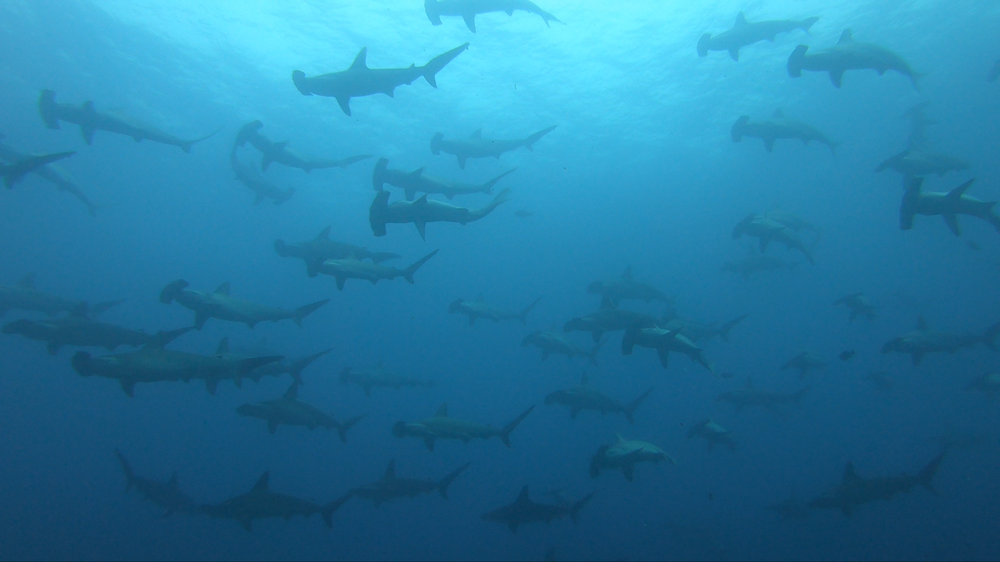
Scalloped hammerhead sharks (Sphyrna lewini) showed the most pronounced seasonal differences of all the species recorded. During the warm season, hammerhead biomass averaged about 5 tonnes per hectare. In the cold season, that figure skyrocketed to 21 tonnes per hectare. For a diver, this shift is unmistakable: in the cold months, hammerheads seem to fill the water column, gliding past in every direction, whereas in the warm season they appear only sporadically, an occasional silhouette passing through the blue.
This dramatic difference likely reflects the seasonal migration of pregnant females. During the cold season months, large numbers of female hammerheads aggregate around Darwin and Wolf when cooler waters and increased productivity likely support higher prey availability, turning these islands into a stronghold for feeding, swimming, and visiting cleaning stations. This provides the energy reserves needed to undertake long-distance migrations of nearly 6,000 km during the warm season, as females travel to nursery areas to give birth to the next generation. Classified as Critically Endangered on the IUCN Red List of Endangered Species, my findings suggest that vast numbers of scalloped hammerheads likely migrate through a minefield of fishing vessels during the warm season, underscoring the Galápagos Islands as critical cold-season refuges for the future of the species in the region.
Billy Bensted-Smith / CDF
The more I worked through the numbers, the more the surrounding waters of Darwin and Wolf came alive in my mind—a world I could only imagine, 26 hours of at-sea navigation away from my desk at the Charles Darwin Research Station.
Inti Keith / CDF
From Spreadsheets to Scuba
By the time I finished my data analyses, I had almost made peace with the idea that I might never actually see my study site. Then, against all odds, and thanks to the openness and generosity of the broader research station community, an unexpected opportunity appeared: I was invited to join the Subtidal Ecological Monitoring Program and travel to Darwin and Wolf in May 2025. After months of studying these islands on a computer screen, finally seeing them in person felt both surreal and strangely familiar.
Life onboard revolved around early mornings, long monitoring dives, and the steady rhythm of the sea. Between surveys, there was time to absorb the scale of the place—its isolation, its wildlife, and the sense that these islands operate on ecological rules far larger than any single species.
Underwater, the data came alive. Schools of fish moved through the water column, sharks patrolled reef edges, and it was remarkable to see the species and behaviours I had analysed in data moving and interacting in real time.
Why this matters
Darwin and Wolf are more than an iconic tourist destination in the Galápagos. They are dynamic, seasonally changing ecosystems that play a crucial role in sustaining migratory marine species, particularly scalloped hammerhead sharks. The exceptionally high reef fish biomass recorded during the cold season underscores their global conservation value and the importance of protecting not just places but understanding the ecological processes that sustain them.
For me, my work at the Charles Darwin Research Station bridged the gap between analysis and experience. It was a reminder that behind every dataset lies a real ecosystem—and sometimes, if you are lucky, the chance to dive into it yourself.
Billy Bensted-Smith / CDF