Following the trail of a natural enemy
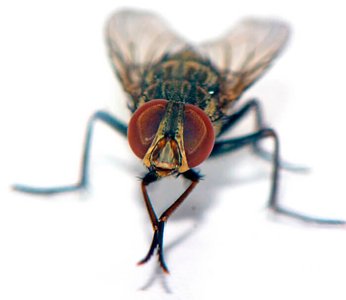
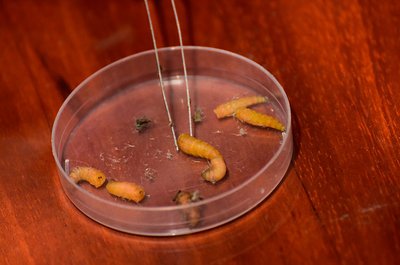
In Galapagos, every endemic bird has a unique story of evolution. But now, many of these species face a silent threat: the avian vampire fly, Philornis downsi, an invasive fly whose larvae parasitize nestlings, drastically reducing their chances of survival. In response to this challenge, sciencists have embarked on a long and arduous path in search of a viable and long-lasting solution. That path is known as biological control.
When science seeks lasting solutions
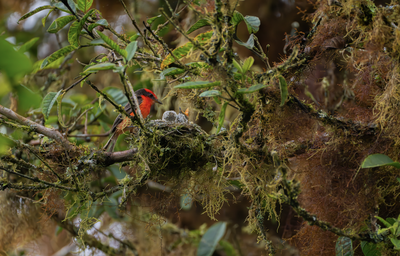
Over the last 12 years, scientists have developed stop-gap methods to reduce the impact of the avian vampire fly in nests. These methods have helped save nestlings of threatened bird species, such as the Little Vermilion Flycatcher, and have generated valuable knowledge. However, they are not scalable or sustainable over time for an ecosystem as fragile and vast as the Galapagos archipelago.
Biological control offers a different approach. Rather than constantly reacting to the threat, it seeks to restore natural balance through the use of natural enemies that have a close ecological relationship with the fly and can regulate its population safely and permanently, allowing nature’s own control mechanisms to function again.
Carlos Espinosa/CDF
Returning to its origin to find the answer
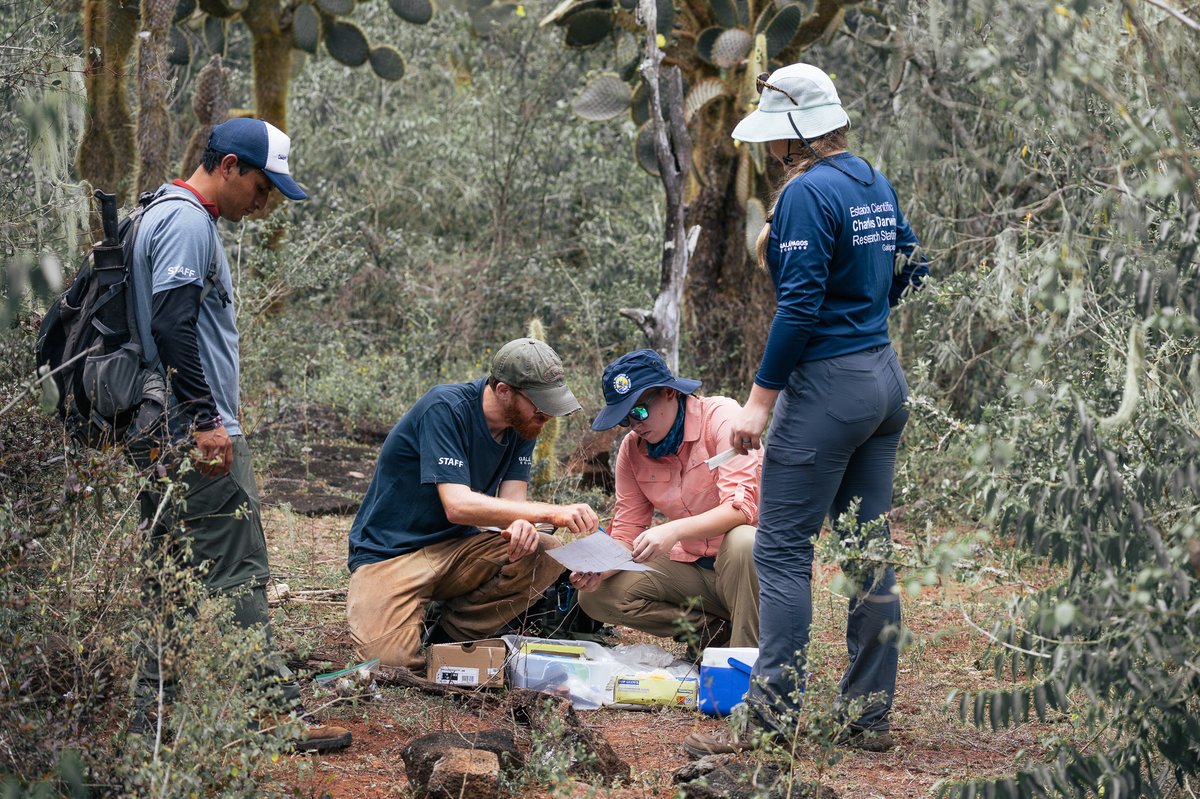
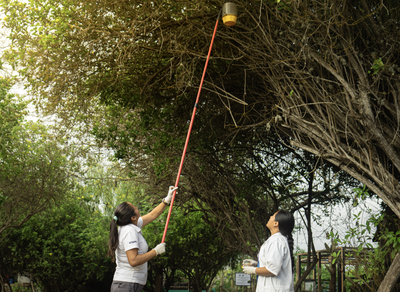
Science, like nature, does not rush. To find a natural enemy of the avian vampire fly, researchers have followed its trail back to its place of origin on the mainland of Ecuador. There, where this fly is part of a balanced ecosystem, other species naturally regulate its population.
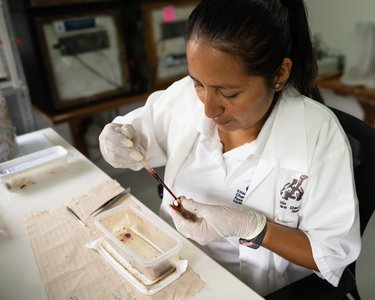
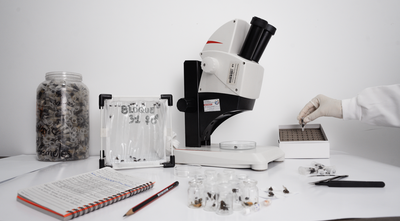
Identifying these natural enemies is no simple task. It requires years of observation, experimentation, and testing under highly controlled conditions. Every step is guided by a key question: Is this solution completely safe for Galapagos?
Before taking any step forward, science pauses to evaluate. Researchers rigorously analyze whether the organism is highly specialized in feeding on the invasive species, how it behaves, what its life cycle is, and what effects it could have on other species. In a unique ecosystem like Galapagos, precaution is non-negotiable—it is the ethical and scientific foundation of every decision.
When nature offers answers
The story of biological control does not begin here. A classic—and successful—example is the use of the ladybug (Novius cardinalis), employed in different parts of the world, including in Galapagos, to control the cottony cushion scale, a pest of citrus and many other plants. Instead of pesticides, a natural enemy was chosen to do the job efficiently and sustainably.
This experience shows that, when applied with solid scientific foundations, biological control can become a powerful conservation tool. In the Galapagos Islands, the approach is even more cautious: every step is evaluated with extreme rigor and scientific evidence to ensure the solution is safe for endemic species.
Science that opens new avenues of opportunity
The search for a natural enemy of the avian vampire fly is not merely an academic exercise; it is a race against time to protect Darwin’s finches, Little Vermilion Flycatchers, and other endemic birds found nowhere else on Earth.
Every scientific study, every genetic analysis, and every laboratory test brings us closer to a solution that could mark a turning point in the conservation of the Galapagos Islands.
“This is not about a quick fix, but about the right solution. Biological control allows us to think long-term and to restore the natural balance that Galapagos birds need to survive.” Charlotte Causton, Principal Investigator – Avian Vampire Fly Control Program, Charles Darwin Foundation
Because when science and patience come together, even in the face of complex threats, hope also evolves.
This project is jointly led by the Galápagos National Park Directorate and the Charles Darwin Foundation, with the support of partner institutions.
Carlos Espinosa/CDF
Camilo Cruz / CDF
Carlos Espinosa/CDF