
How conservation began in Galápagos
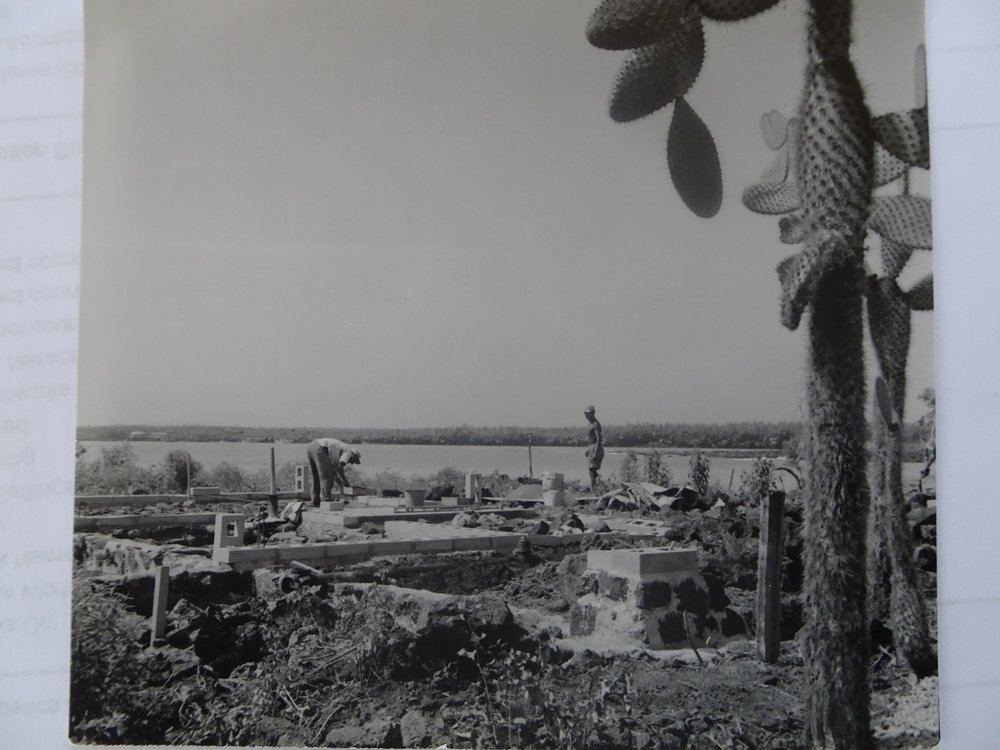
Between 1952 and 1959, conservation in Galápagos began to take shape as scientists issued a growing call to action to protect the archipelago’s unique biodiversity. Through field research and international collaboration, they documented both the extraordinary scientific value of Galápagos and the emerging threats posed by introduced species and environmental change. Their findings transformed scientific concern into a coordinated international effort, leading to the creation of the Charles Darwin Foundation and the Galápagos National Park in 1959. This period marks the origin of modern conservation in Galápagos, grounded in science and driven by a shared responsibility to safeguard one of the world’s most unique natural systems.
Early scientific research in Galápagos
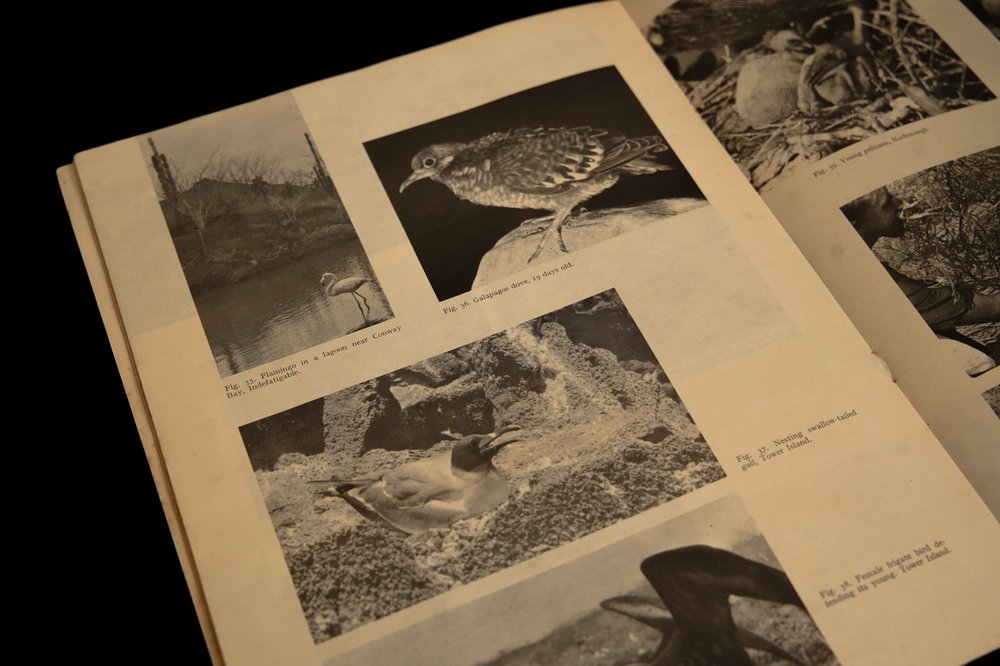
One of the earliest contributions came from American ornithologist Robert I. Bowman, who began research in Galápagos in 1952. His work focused on the archipelago’s birds, particularly Darwin’s finches. From his observations across different islands, Bowman documented how variations in beak size and shape were linked to the food sources available in each environment. In one of his studies, he noted that “the Galápagos finches constitute one of the clearest examples of adaptive radiation among vertebrates.” This finding reinforced the idea that the archipelago represented a unique natural laboratory for studying evolution.
First signs of environmental threats
Bowman´s research also revealed signs of environmental deterioration. During his expeditions, he observed the widespread presence of introduced animals such as goats and pigs, which were altering native vegetation and disrupting habitats essential for local fauna. These observations raised concern among scientists, as they suggested that the islands’ biodiversity could be seriously compromised without systematic studies and protective measures.
Alma Suárez / CDF
International concern for Galápagos biodiversity
Between 1953 and 1954, Austrian zoologist Irenäus Eibl-Eibesfeldt conducted an expedition across several islands to assess the state of fauna and ecosystems. His observations confirmed that introduced species were having significant impacts on native flora and fauna. Goats and pigs damaged vegetation, while cats and dogs posed serious threats to endemic birds and reptiles.
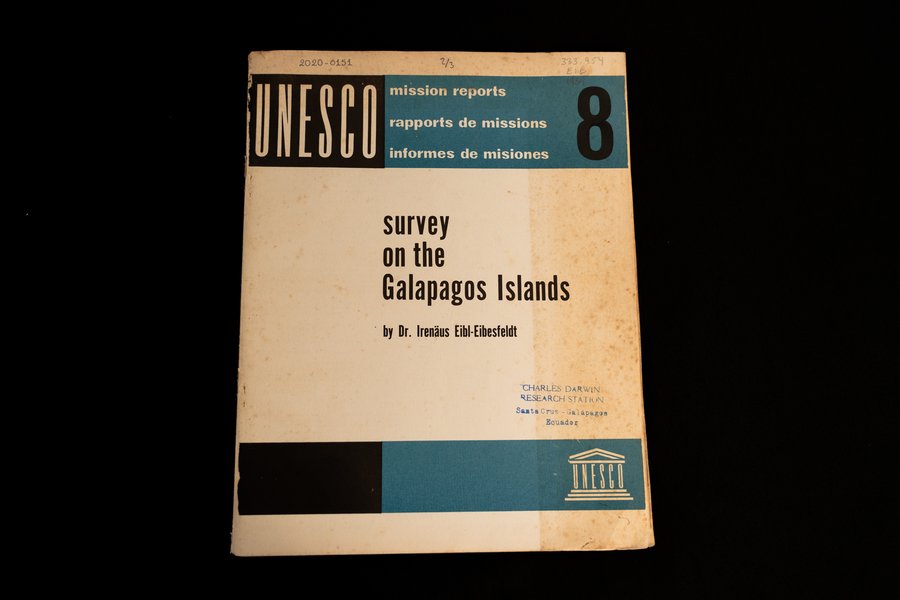
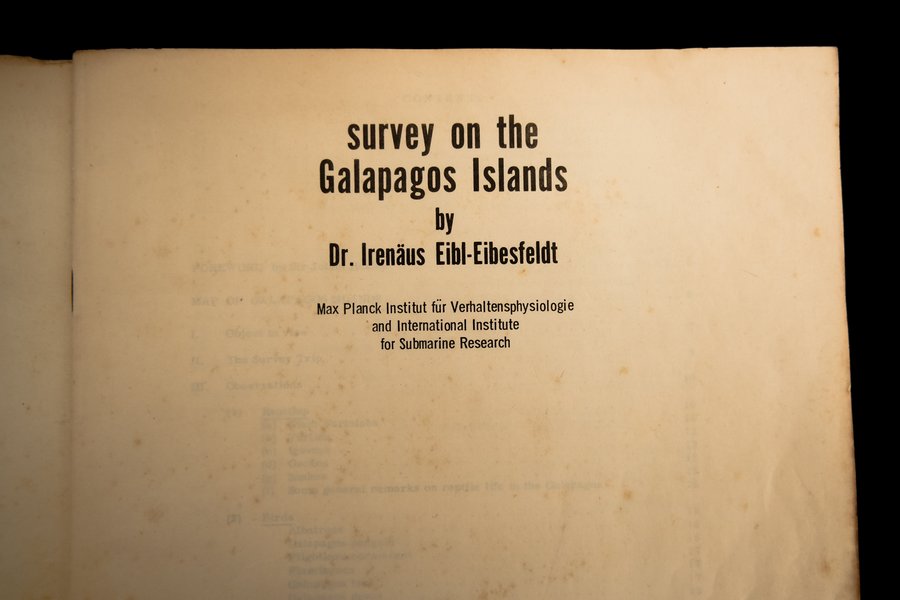
Upon returning to Europe, Eibl-Eibesfeldt prepared a report for UNESCO, later published as Survey on the Galápagos Islands. In this document, he emphasized that “immediate measures must be taken to preserve the unique wildlife of Galápagos.” His assessment warned that the islands’ scientific value could be compromised unless a permanent scientific presence was established to study and monitor ecological changes.
A global call for conservation in Galápagos
These conclusions circulated within the international scientific community, particularly through the International Union for Conservation of Nature (IUCN). In this context, the proposal to create an international scientific station to coordinate research and support conservation efforts gained traction.
Alma Suárez / CDF
Alma Suárez / CDF
The proposal for a permanent research station
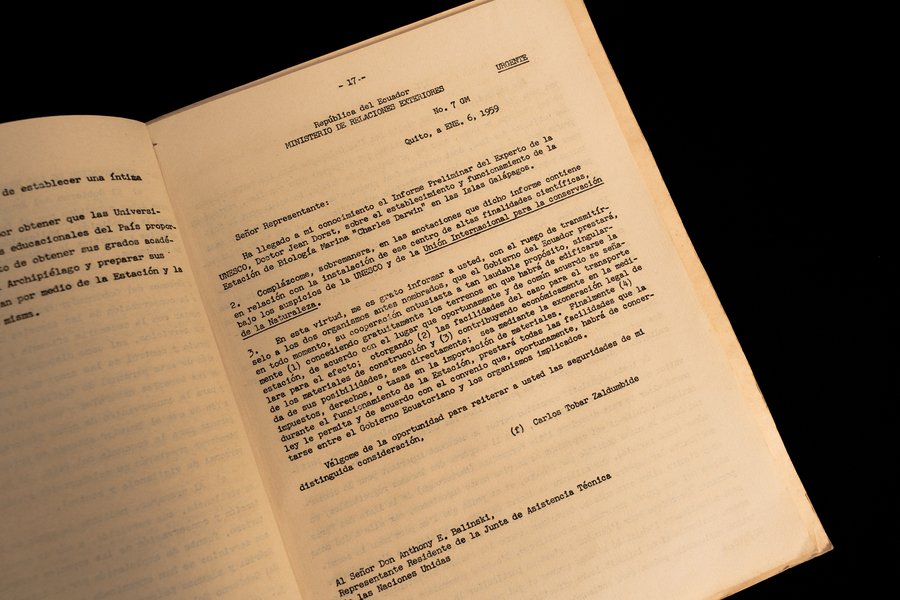
To evaluate this proposal, a technical mission was entrusted to French zoologist Jean Dorst, a researcher at the National Museum of Natural History in Paris. In his report, Dorst analyzed the scientific and logistical conditions necessary to establish a research station in the archipelago. He stressed that Galápagos held exceptional scientific value, offering opportunities to study fundamental processes of evolution and island ecology. At the same time, he warned that these ecosystems were fragile and could be rapidly altered without proper management. For this reason, he recommended establishing a permanent scientific station to facilitate research and support biodiversity conservation. His report stated that “the establishment of a permanent research station in Galápagos would greatly facilitate both scientific investigation and the protection of the islands’ unique fauna and flora.”
Alma Suárez / CDF
The recommendations from these studies were presented to international organizations and discussed in scientific forums. The UNESCO report included a preface by British biologist Julian Huxley, one of the most influential figures in biology and conservation at the time. In his introduction, Huxley emphasized the global scientific importance of the archipelago, stating that “the Galápagos Islands constitute one of the world’s most unique natural laboratories for the study of evolution.” This reinforced the argument that protecting the islands was not merely a national issue but a responsibility of the international scientific community.
The body of research conducted during those years generated a growing consensus on the need to act. The Galápagos Islands represented a natural heritage of universal value and, at the same time, a vulnerable ecological system requiring continuous research and evidence-based conservation policies. The creation of a permanent scientific station appeared to be the most appropriate mechanism to achieve both objectives.
The creation of the Charles Darwin Foundation
This process culminated in 1959 with the establishment of the Charles Darwin Foundation, an international organization dedicated to promoting scientific research and supporting conservation in the archipelago. That same year, just a few weeks before, the government of Ecuador created the Galapagos National Park, protecting 97% of the islands’ terrestrial territory.
The beginning of conservation in Galápagos
From a historical perspective, the period between 1952 and 1959 marks the moment when the international scientific community responded to the first signs of environmental deterioration in Galápagos. Bowman’s research demonstrated the extraordinary evolutionary value of its fauna. Eibl-Eibesfeldt’s studies documented concrete threats to its ecosystems. Dorst’s report transformed these concerns into a viable institutional proposal. And the discussions promoted within organizations such as UNESCO consolidated the call to establish a permanent scientific station to study and protect one of the planet’s most unique natural systems.