
Regulating the international shark trade on the Silk Road
A historic meeting for wildlife trade regulation
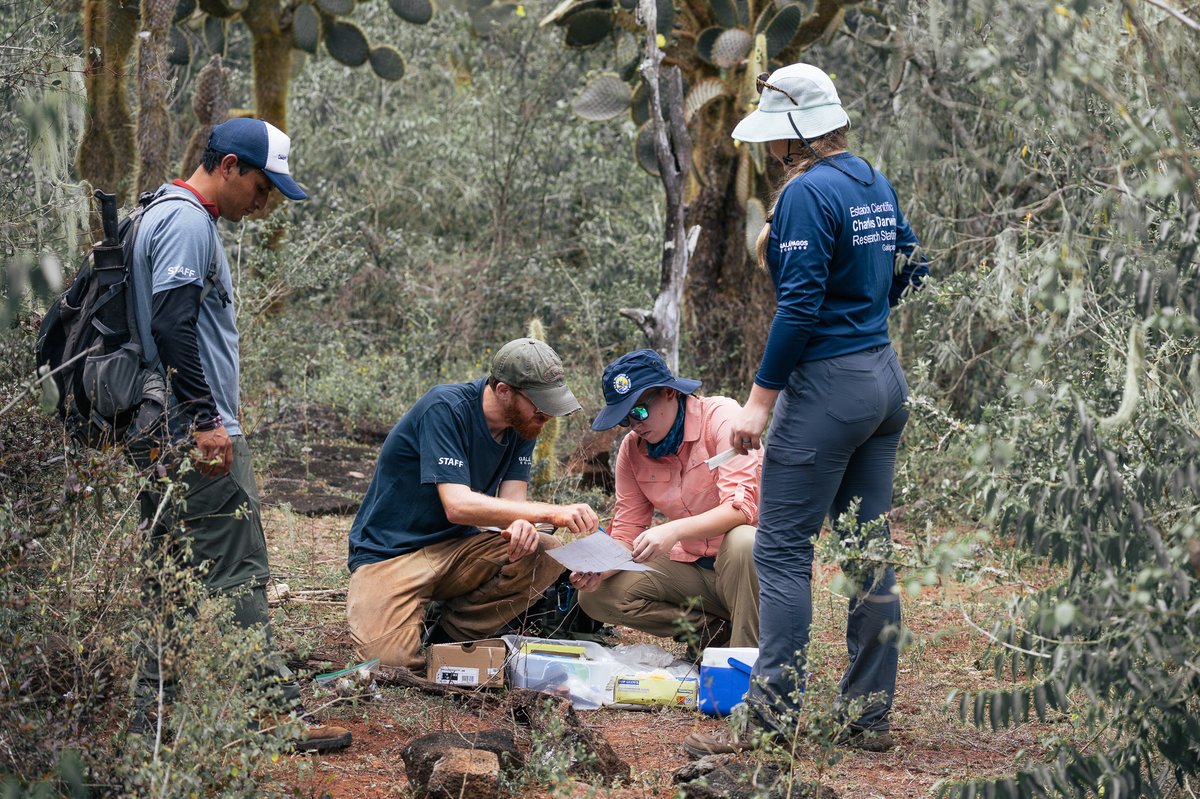
Last December, scientists from the Charles Darwin Foundation attended the 20th Conference of the Parties (COP20) of the Convention on International Trade in Endangered Species of Wild Fauna and Flora (CITES), which took place in Samarkand, a historical city on the Silk Road. The CITES COP is the global forum where more than 180 countries come together to regulate the international species trade to make sure it is legal, sustainable and traceable.
Over two weeks, governments, NGOs, and scientists debated the trade of plants and animals ranging from endangered trees and exotic pets to elephant ivory. COP20 was particularly significant for marine conservation, strengthening trade regulations for more than 70 species of sharks and rays.
A first-ever ban on the trade of a commercially important shark
This COP was historic for another reason: for the first time, CITES prohibited the international trade of a shark species that was once commercially important. For the oceanic whitetip, the species in the spotlight, this regulation is long overdue.
Oceanic whitetips are true ocean wanderers and were once among the most abundant oceanic shark species, inhabiting tropical oceans around the world. Industrial fisheries targeting tuna and swordfish have taken a devastating toll on the species. Some populations have been reduced to just 5% of their 1960s abundance. This dramatic decline is an emblematic reminder of what fishing driven by international trade can do to a species if it is not properly regulated.
Sadly, oceanic whitetips are not an exception. Over one third of all shark and ray species are threatened with extinction due to overfishing, with entire groups, such as oceanic sharks, declining by more than 70% in recent decades.
Pelayo Salinas/CDF
More sharks and rays under protection
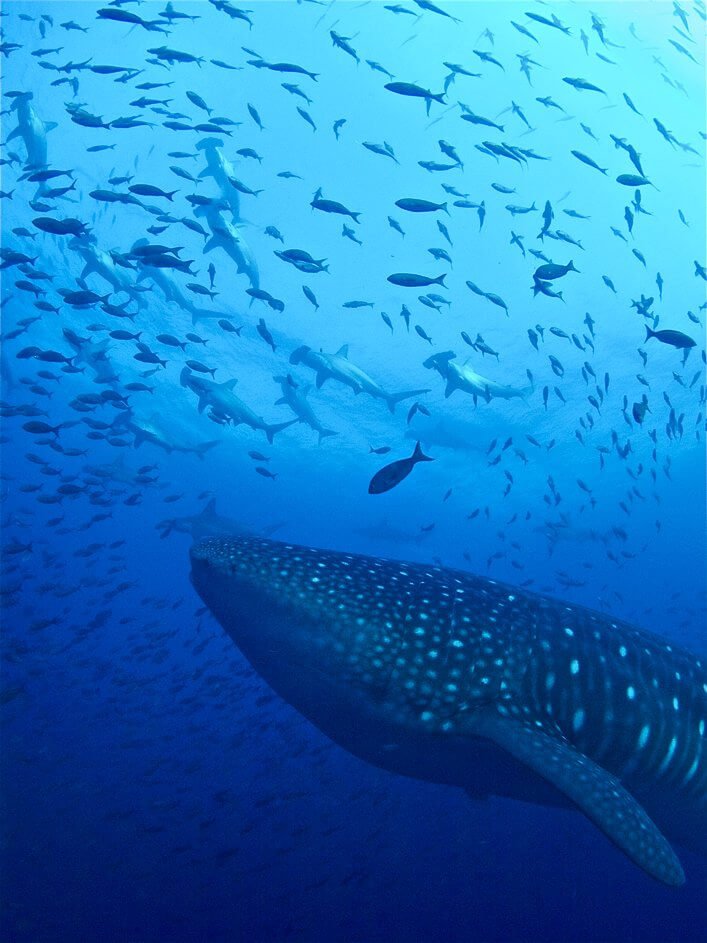
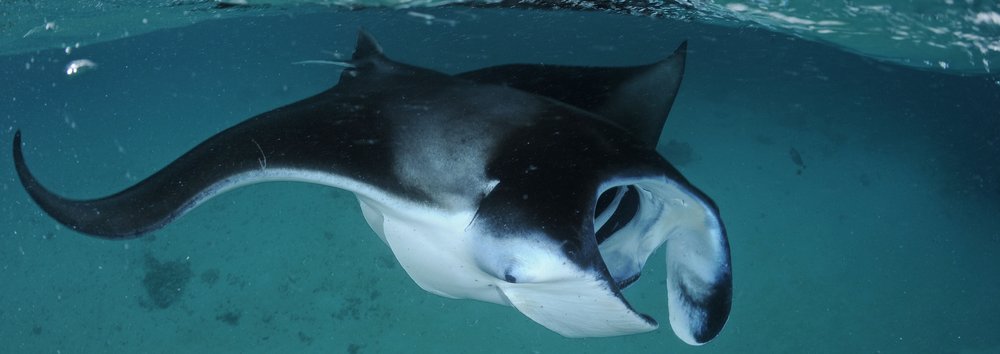
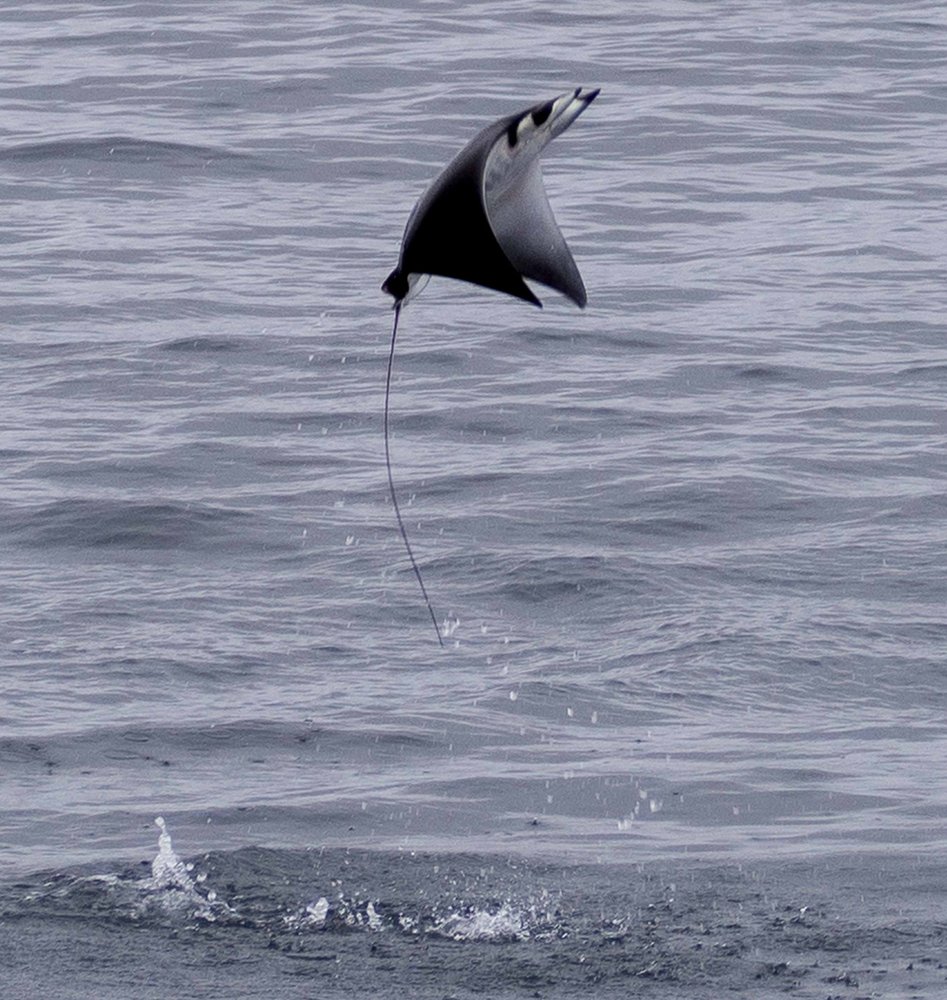
Back on the Silk Road, other charismatic species of sharks and rays were also in the spotlight. Whale sharks, manta and devil rays received full CITES protection and can no longer be traded internationally.
Manta and devil rays have been heavily impacted by fisheries targeting their meat, and in particular their gill plates, which can fetch prices of up to $450/kg on international markets supplying China. Whale sharks, while not commonly targeted for their meat, have suffered severe population declines as bycatch in other fisheries. There is also evidence suggesting that their large fins still appear in globally relevant markets.
Beyond these high-profile species, international trade regulations tightened for many other smaller sharks. These include the tope shark, very commonly sold for its meat (next time you are in a restaurant, ask what “fish” you are eating); and gulper sharks, which are deep-sea species commonly traded for their liver oil (check for “squalene” in your beauty products). From now on, these species can only be traded internationally if sufficient evidence shows that such trade will not harm wild populations.
Thomas P. Peschak
The victory is also a warning
So, how much should we celebrate these regulations? Prohibiting the international trade of threatened species such as oceanic whitetips, manta rays, and whale sharks, and regulating the trade of other species is clearly an important step in the right direction. However, the growing number of sharks and rays listed under CITES over the years tells a more worrying story: more and more species are being overfished.
This trend signals that fisheries management is failing to ensure the sustainable use of sharks and rays at local and regional scales. As a result, pressure is mounting for stronger international measures through CITES. The global trade bans adopted at COP20 are a direct response to the fact that the conservation status of these species (listed as Critically Endangered and Endangered on the IUCN Red List) has not improved under previous, less restrictive trade regulations.
Beyond international trade: a complex socio-ecological challenge
CITES provides a legal framework to ensure international trade does not threaten species survival, but it has no authority over national or local fisheries management. For sharks and rays, this means CITES listings will only be effective when fishing is driven by export markets, which is no longer always the case.
A few decades ago, sharks were mainly caught to supply the Chinese shark fin market, while the meat was often discarded or sold cheaply. Today growing demand for affordable protein has created strong domestic markets for shark meat in many countries. Shark fishing has become deeply linked to livelihoods and food security, particularly for many low-income communities around the world. Overfishing is no longer just an international trade problem, it is a complex socio-ecological issue.
Rashid Cruz/CDF
Local solutions for global conservation
CITES’ new trade regulations are a wake-up call for countries to reassess how they manage species that are considered both wildlife and extractive resources. In developing countries, shark and ray conservation will only succeed if alternatives are created that reduce overfishing while improving local livelihoods.
Several pathways can be explored. Redirecting fishing effort toward species that better withstand fishing pressure, such as small pelagic fish like sardines and anchovies, can support more sustainable fisheries while providing healthier, more nutritious food. Improving seafood processing and storage may also open access to premium markets that reward quality and sustainability.
Additionally, many studies show that sharks and rays are worth far more alive than dead. When well-managed, shark-watching tourism can become a long-term pillar of local economies.
What comes next
These are just some of the options available to help addressing the local dimensions of the global shark conservation challenge. Success will depend on strong support from governments, industry, and NGOs committed to marine conservation and sustainable resource use.
CITES has sent a clear message: global shark and ray conservation must be taken more seriously than ever. Now it is up to decision-makers, industry, and society, including all of us, to act locally. One simple step is to be more conscious about seafood choices. So next time you order fish, ask what you are actually buying. You may be surprised by what is hidden on the menu.
To learn more about our Shark Ecology and Conservation, visit our program page:
Be part of the change.
By adopting a scalloped hammerhead shark, you will contribute to our mission to build a strong scientific foundation for developing effective management and conservation strategies that ensure its long-term protection.
Gabriel Vianna
Principal Investigator - Shark Ecology & Conservation
Protect Galapagos, Impact the World
The impact you make on this small ecosystem of enormous biodiversity is part of a larger footprint you are leaving for the world's future. Join us on our mission to safeguard one of our planet’s most important natural treasures through science and conservation action by making a donation today. Thank you for making an impact with us.