
Scalesia: Evolution and Survival
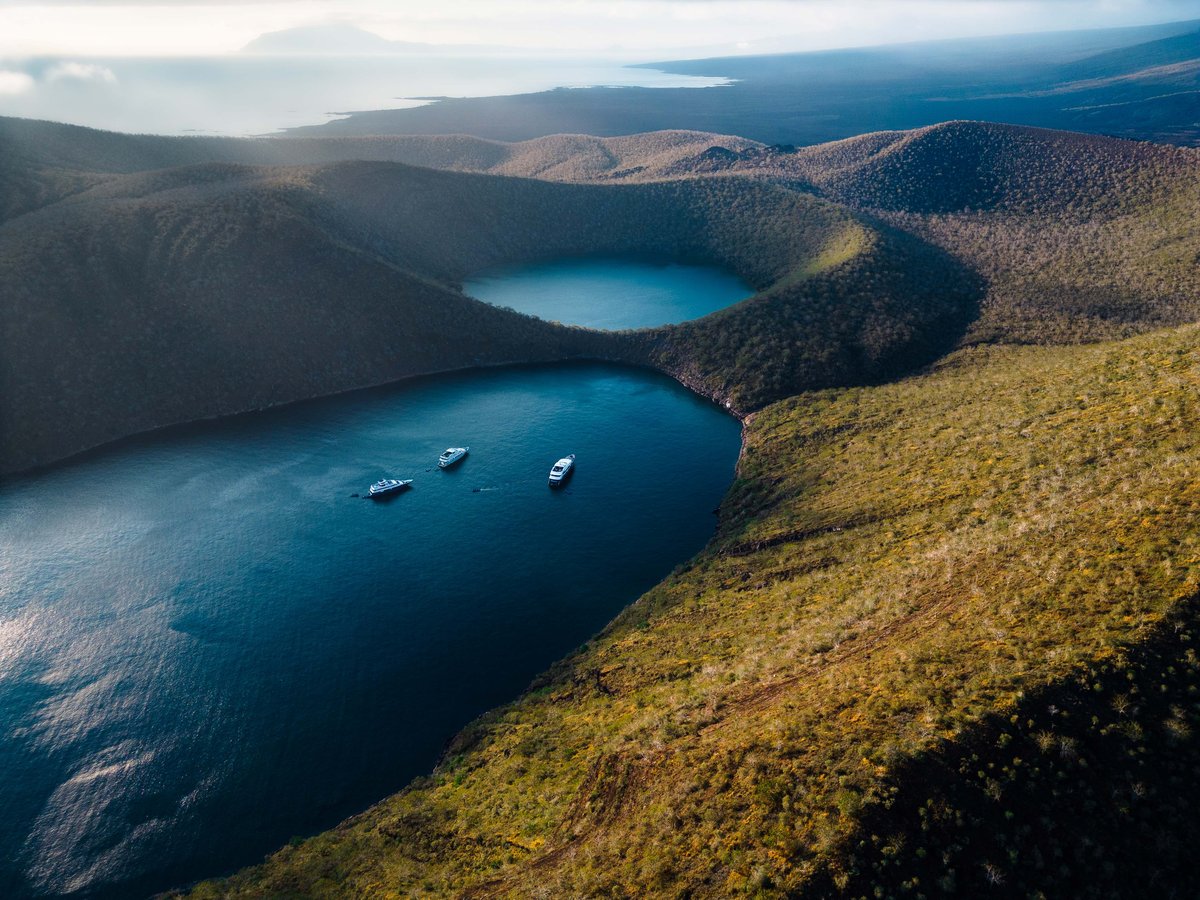
On the slopes of Santa Cruz Island, where mist appears and disappears within hours and the landscape shifts in just a few kilometers, a group of plants reveals a fundamental process: evolution in action. This is the genus Scalesia, known as “Darwin’s daisies,” which today includes 15 species known to science. In this environment, where conditions vary even over short distances, these plants, found nowhere else on earth, provide a concrete opportunity to understand how life responds to its surroundings.
The key to understanding them lies in their diversity. At first glance, clear differences emerge: some species reach tree-like heights, while others remain low and compact. Their leaves also vary in size, shape, and texture. These traits—height, structure, and leaves—are the starting point for reading what is happening. For example, Scalesia pedunculata can grow into a tree in the humid highlands, reaching several meters in height, while other species in drier zones remain much smaller and more compact, with thicker leaves that help reduce water loss.
These differences are not random. They respond to specific environmental conditions. Changes in altitude, humidity, temperature, or soil type directly influence how each plant grows. What we see externally is the expression of internal adjustments that allow each species to survive in a particular environment. Seeing these differences raises a natural question: why do they exist?
Observing these variations and asking why they exist connects directly with Charles Darwin’s approach. Although he did not study Scalesia in detail, the principle is the same: compare, identify patterns, and seek explanations. In this case, the answer lies in adaptive radiation, a process in which an ancestral species diversifies into several species, each adapted to different environmental conditions within the same geographic area.
In Galápagos, this process is evident. Scalesia has diversified to occupy different zones of the island, adjusting its form and function to the unique conditions of each place they are found in. They are not static plants; they have the capacity to respond. This diversification explains not only their presence in different habitats but also the differences observed even within a single island. Understanding this process is not only about the past—it also helps explain how these species may respond to the changes happening today.
Patricia Jaramillo
This capacity to respond has shaped their diversity over time. Yet this capacity to adapt has limits. The conditions these plants face today are changing at a much faster rate than those under which they originally evolved. The presence of invasive species, changes in land use, and climate variability are rapidly altering the ecosystems where they grow. The question is no longer just how they adapted, but whether they can keep pace with faster, less predictable changes that test their ability to adjust.
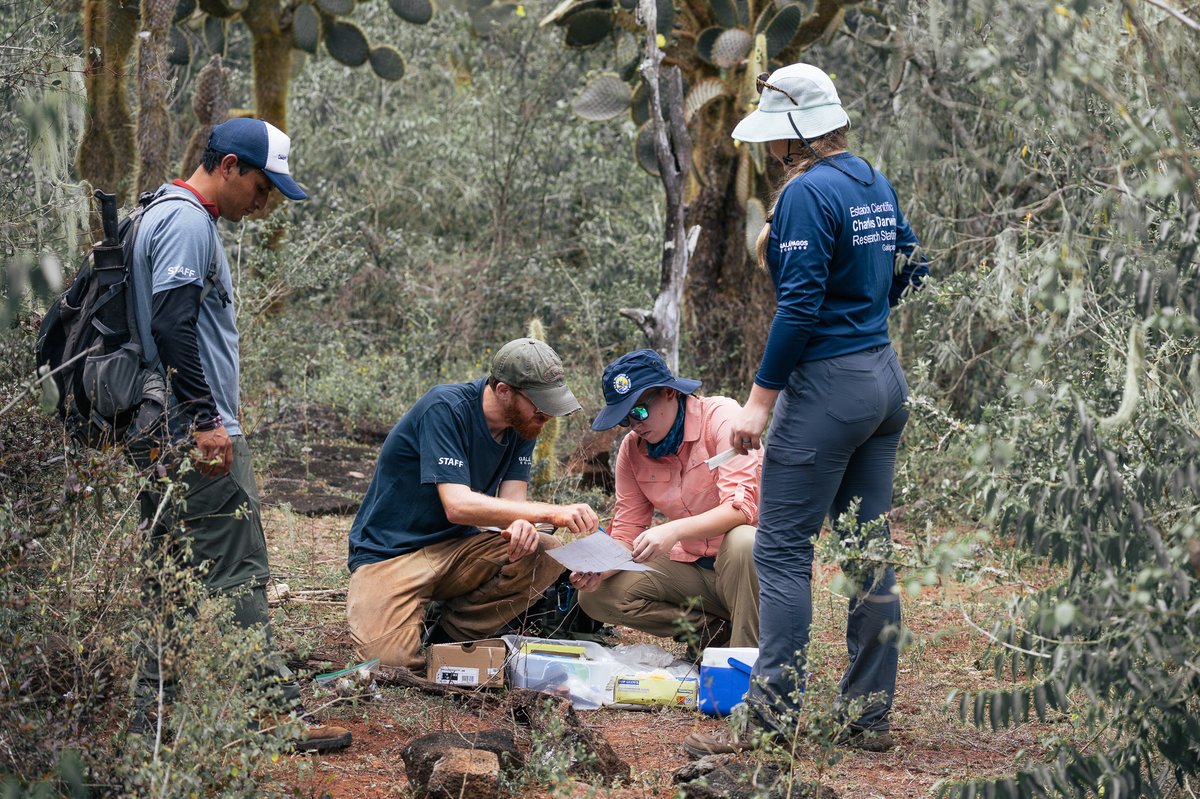
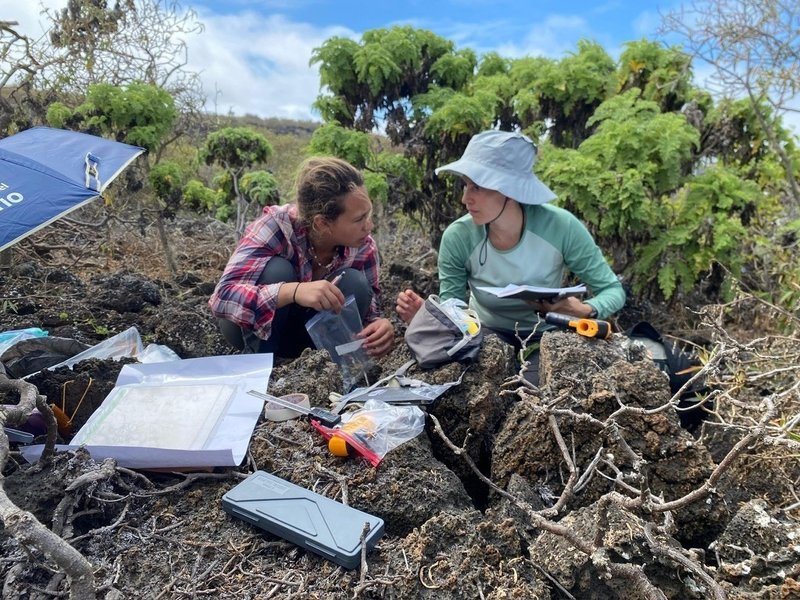
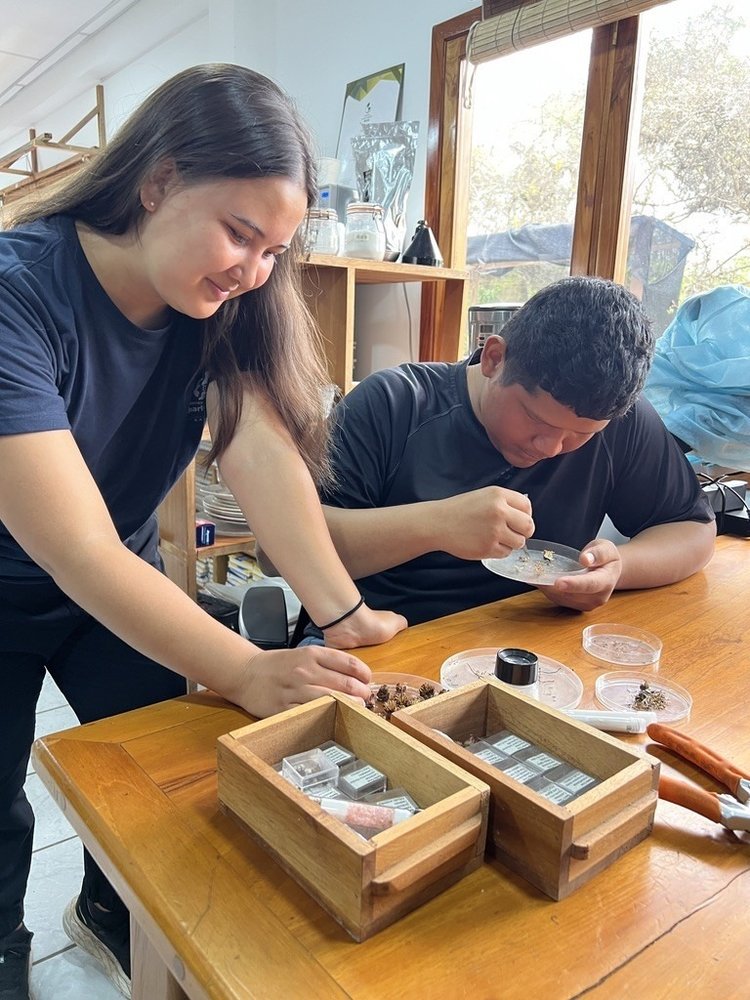
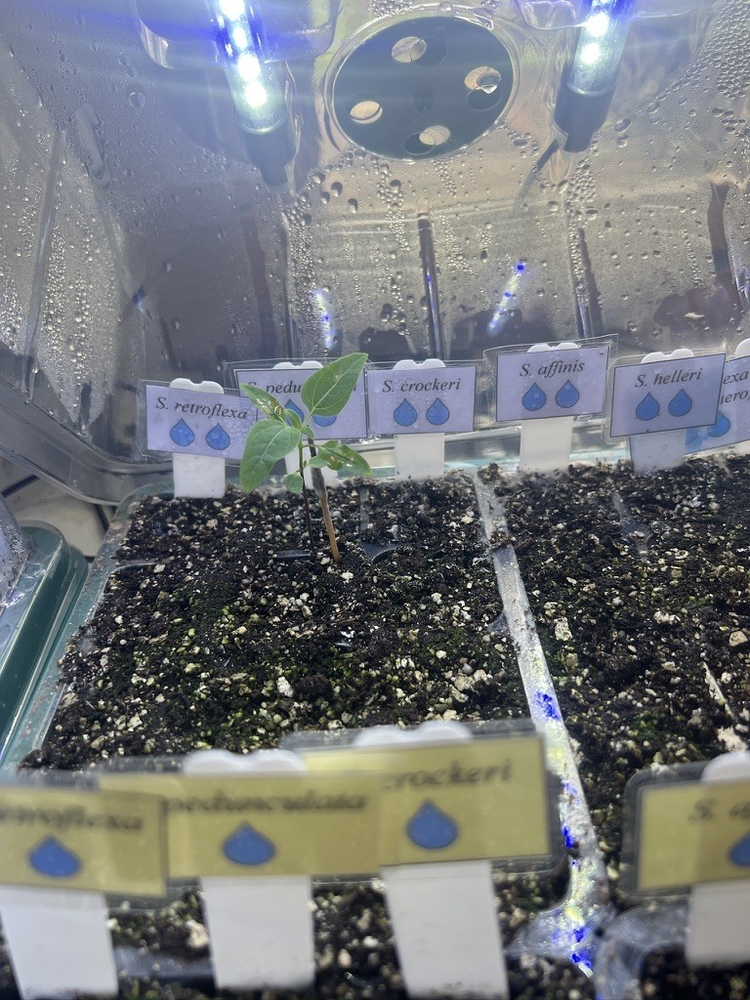
To answer this question, the Galápagos Verde 2050 Project (GV2050) of the Charles Darwin Foundation, together with Universidad de las Américas and Universidad del Rosario, analyzed five species of Scalesia: S. pedunculata, S. retroflexa, S. affinis, S. crockeri, and S. helleri. The study focused on evaluating how traits such as plant height, leaf size, and structural characteristics respond to temperature changes throughout the year in different parts of Santa Cruz Island.
Patricia Jaramillo
Paul Mayorga CDF
Paul Mayorga CDF
The results confirm what observation already suggested: these plants can adjust by modifying their leaf size, structure, and internal functioning. They are not passive organisms; they actively respond to their environment. This ability to adjust, though limited, is key to their persistence in variable environments.
But adaptation does not mean resistance to any change. When conditions become more extreme or shift more rapidly, that capacity may not be enough. Some species show greater flexibility, while others are more vulnerable. This is where the risk lies, especially in contexts where environmental pressures intensify.
That is why observation remains a central tool. Changes in the shape, size, or structure of a plant can be early signals that the environment is shifting. A laboratory is not always necessary to detect this; often, the plants themselves are already indicating it. In this sense, systematic field observation remains an irreplaceable foundation.
This type of research connects field observation with scientific evidence and translates into better decisions: more precise monitoring systems, better-directed restoration and conservation efforts, and clearer identification of species and areas requiring urgent attention.
The diversity of Scalesia is not only a biological trait; it also reflects how these plants respond to their environment—and where their limits lie. Paying attention to these patterns helps us better understand which species are more vulnerable and where conservation efforts are most needed.
The Galápagos Verde 2050 Project articulates this effort to generate key information that guides strategies for monitoring, conservation, restoration, and management of threatened plant species in the archipelago.
To learn more about the work of our ecological restoration specialists in the Galápagos, visit our different programs: