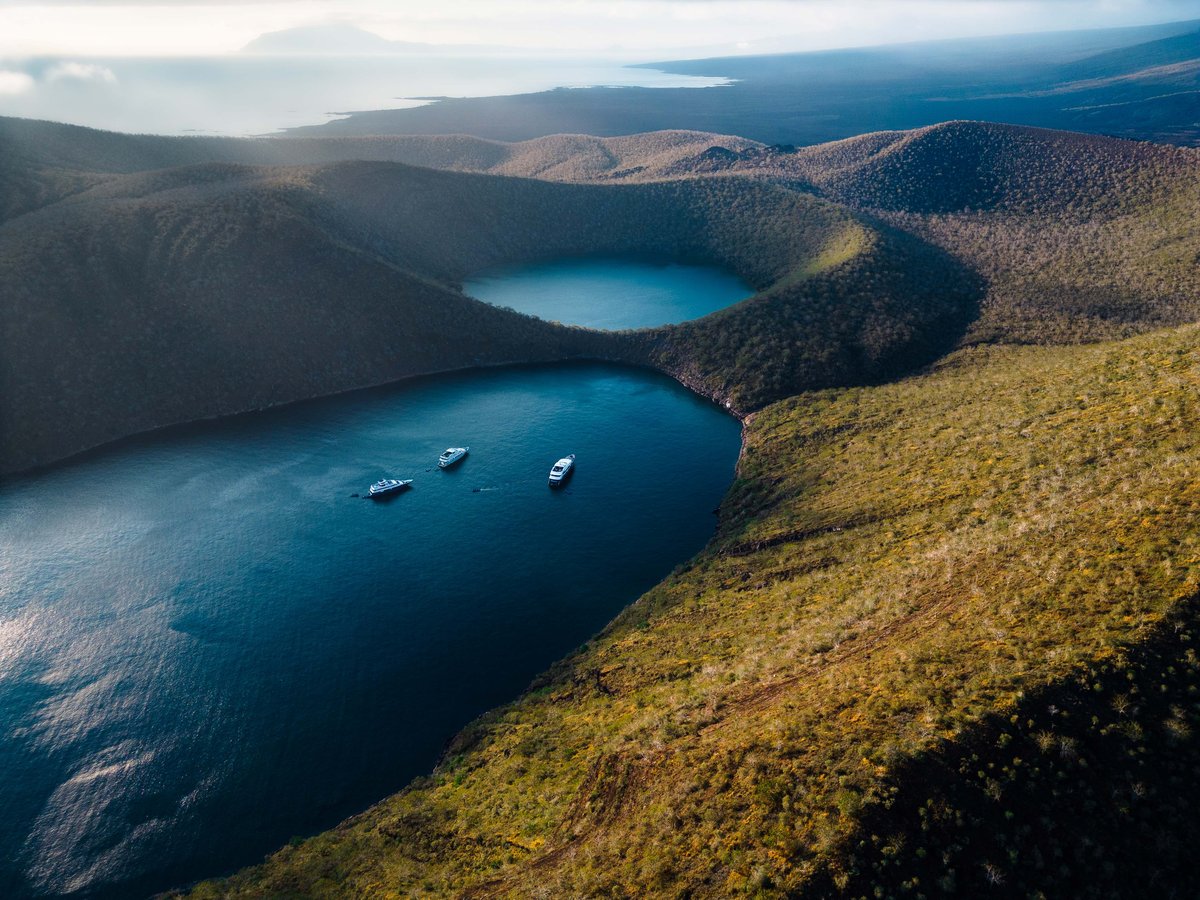
New DNA evidence reshapes understanding of the Galápagos Vermilion Flycatchers
At least eight long-isolated island lineages of Galapagos Vermilion Flycatchers belonging to the genus Pyrocephalus have been identified in ground-breaking study, with implications for conservation and taxonomy.
Galapagos, Ecuador, 15 January, 2026 | A new genetic study of the iconic Galapagos Vermilion Flycatchers (genus Pyrocephalus) reveals that this group is not a single, uniform population across the archipelago, but a collection of long-isolated island lineages shaped by hundreds of thousands of years of evolution. The findings reshape understanding of the birds colonization history in Galapagos and have direct implications for conservation planning, including island restoration efforts on Floreana and Santa Cruz.
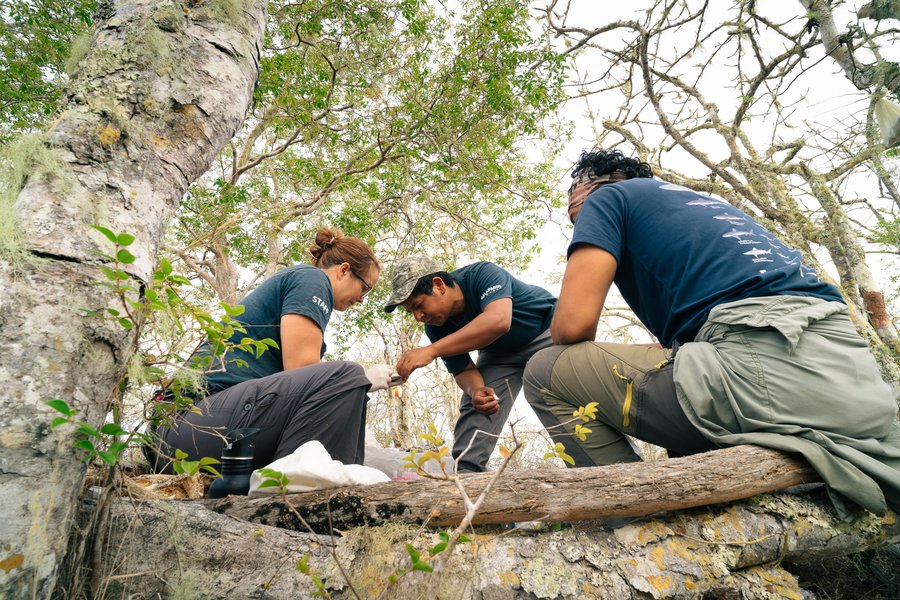
The study, led by researchers from the Charles Darwin Foundation, the California Academy of Sciences and the University of Vienna, analyzed whole-genome data from 53 birds, combining modern samples with historical museum specimens collected over the past century. The results indicate that vermilion flycatchers colonized Galápagos approximately 1.3 million years ago and subsequently diversified into at least eight genetically distinct lineages. These include the now-extinct San Cristóbal species, known as Least Vermilion Flycatcher (Pyrocephalus dubius), and seven island populations currently classified within the Little Vermilion Flycatcher (P. nanus).
The genetic data show strong and persistent separation among island populations, with little or no evidence of recent movement between islands, even where geographical distances are short. Divergence times indicate that several populations have been isolated for hundreds of thousands to more than a million year. These genetic patterns are supported by differences in male song, body size, and female plumage observed among some islands.
The Floreana population—now extirpated—was identified as the most genetically distinct lineage within P. nanus, having been isolated from other island populations for more than 1.2 million years. Other distinct lineages were identified on Santa Cruz; on Pinzón, closely related to Rabida; on Isabela, closely related to Fernandina; and on Santiago, Marchena, and Pinta. The findings show that each island population represents a separate evolutionary unit with its own history.
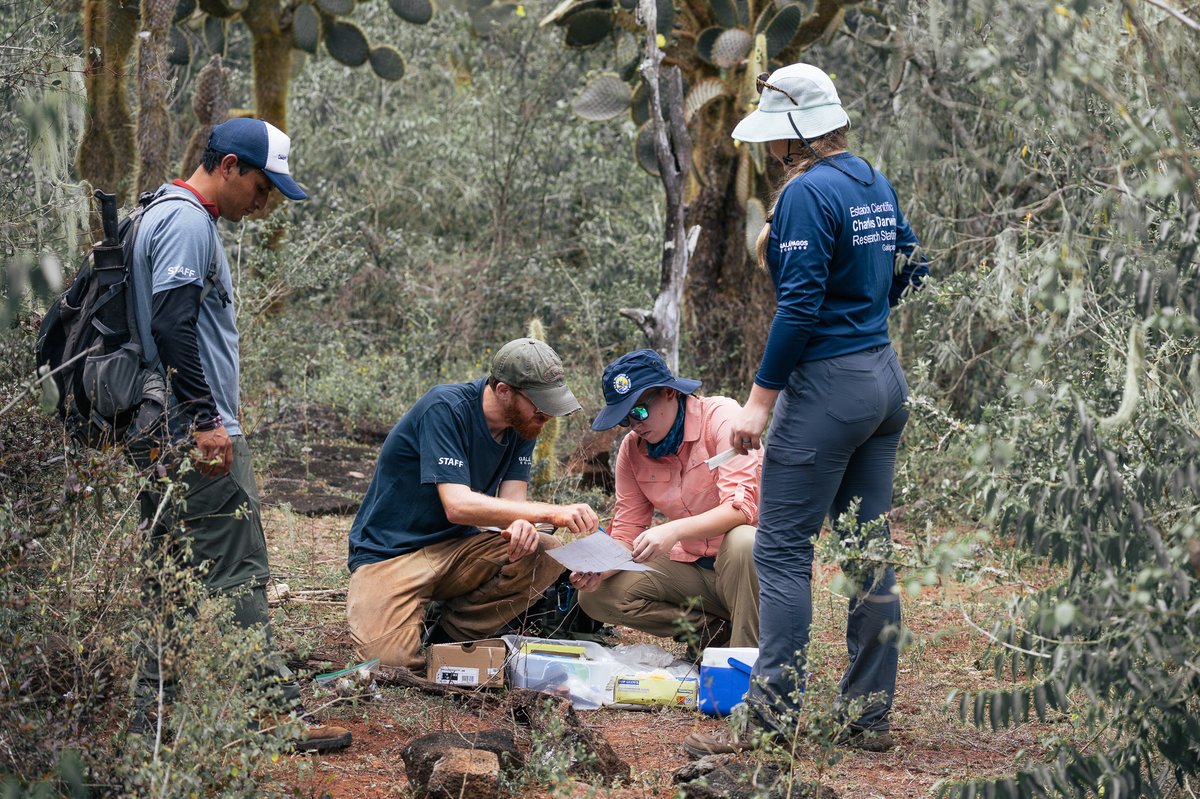
Mara Speece / CDF
“This study provides important information for conservation planning in Galápagos,” said David Anchundia, lead author of the study and researcher in the Charles Darwin Foundation’s landbird conservation project. “By showing that Galapagos Vermilion Flycatcher populations on different islands are genetically distinct, our research helps clarify how conservation actions should be approached at the island level. For Floreana, it shows that the original population was unique and that any future reintroduction would involve birds from a different lineage with ecological similarities to increase chances of successful establishment. For Santa Cruz, where the population is now very small, the findings highlight the urgency of protecting the remaining birds and their habitat to prevent the loss of a distinct evolutionary lineage that has been evolving independently for some 500,000 years—around the time Homo sapiens first appeared in Africa.”
To better understand recent population change, the researchers compared modern birds from Santa Cruz Island with museum specimens collected between 1905 and 1961. They found a significant reduction in genetic diversity in the present-day population, consistent with a rapid decline in numbers. Genetic estimates of effective population size closely matched field observations of approximately 30–40 remaining individuals, indicating that the small population size and reduced genetic diversity are associated with increased vulnerability since human colonization of the island.
At present, the Little Vermilion Flycatcher (Pyrocephalus nanus) is listed as Near Threatened on the IUCN Red List, following a reassessment from Vulnerable in 2023, reflecting relatively stable populations on some islands. However, the results of this study show that extinction risk varies substantially among island populations, and that severe declines in small, isolated populations may not be reflected in a single global species assessment. Although the Little Vermilion Flycatcher is one of the most recognizable birds in Galápagos, its evolutionary history and genetic structure across islands have until now remained poorly understood.
Beyond conservation management, the study also has implications for taxonomy. Based on the combined genomic, acoustic, and morphological evidence, the authors propose that the Little Vermilion Flycatcher complex includes multiple long-isolated lineages that may warrant recognition as separate species or subspecies. While formal taxonomic changes require evaluation by taxonomic authorities, the results suggest that current classifications underestimate diversity within this group.
“Conservation status is typically assessed at the species level,” said Jack Dumbacher, ornithologist at the California Academy of Sciences and co-author of the study. “When genetically distinct island populations are grouped together under a single name, very small and highly threatened lineages can be masked by healthier populations elsewhere. Our results show that some Galápagos vermilion flycatcher populations represent long-isolated evolutionary lineages. If taxonomic revisions recognize these lineages separately, it would allow their extinction risk to be evaluated more accurately, which is essential for understanding the true conservation needs of populations that now exist in very low numbers.”
Carlos Espinosa-CDF
Carlos Espinosa-CDF
Taken together, the findings show that the Little Vermilion Flycatcher is not a single, uniform population across Galápagos, but a group of long-isolated island lineages with distinct evolutionary histories and conservation needs. By combining genomic data with information on population size, historical distribution, and island-specific decline, the study provides a framework for assessing extinction risk at a scale that better reflects biological reality while demonstrating how genomic science can refine both taxonomic understanding and conservation assessment for island species.
“For the environmental authority, these results are highly relevant, as they will help guide—and, if necessary, adapt—management measures in a more targeted manner, taking into account the specific conditions of each population. In addition, these studies provide key information to assess the population status of these birds and lay the groundwork for further scientific research to better understand their evolutionary processes,” said Lorena Sánchez, Acting Director of the Galápagos National Park Directorate.
The study, titled ‘Phylogeny, Population Structure, and Conservation Genomics of Little Vermilion Flycatchers (Genus Pyrocephalus)’, is published in the journal Molecular Phylogenetics and Evolution. The research was carried out in collaboration with the Galápagos National Park Directorate and supported by the World Wildlife Fund; the California Academy of Sciences; the Galápagos Invasive Species Fund; Galápagos Conservation Trust; Galápagos Conservancy; Swiss Association of Friends of the Galápagos Islands; COmON Foundation; Re:wild; Lindblad Expeditions–National Geographic; Peter and Kris Norvig; and the Austrian Science Fund.
The results of this study were obtained following the procedures established by the Ecuadorian State for the collection and authorized transport of genetic samples.
Camilo Cruz-CDF
Juan Manuel Garcia-CDF
About the Little Vermilion Flyctacher
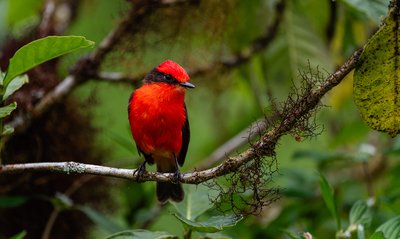
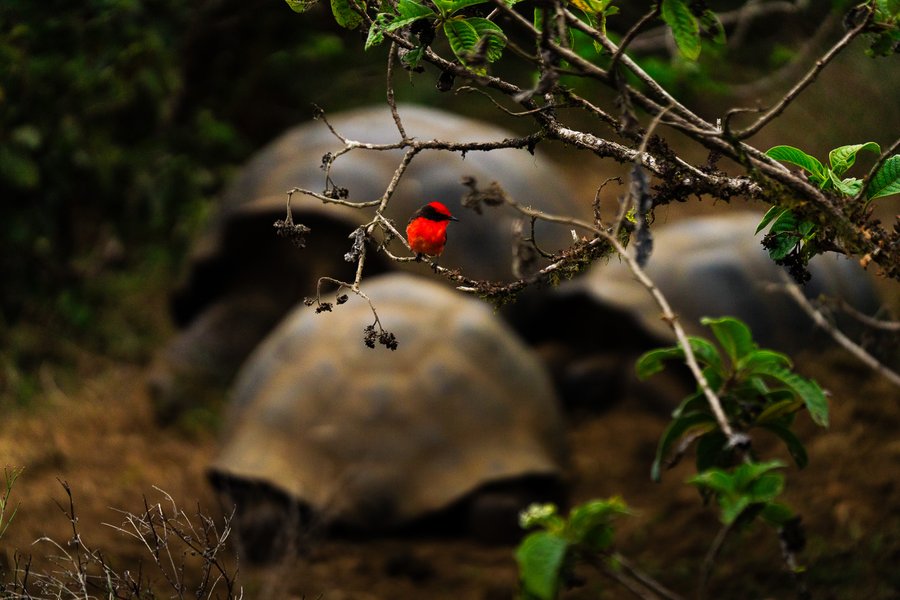
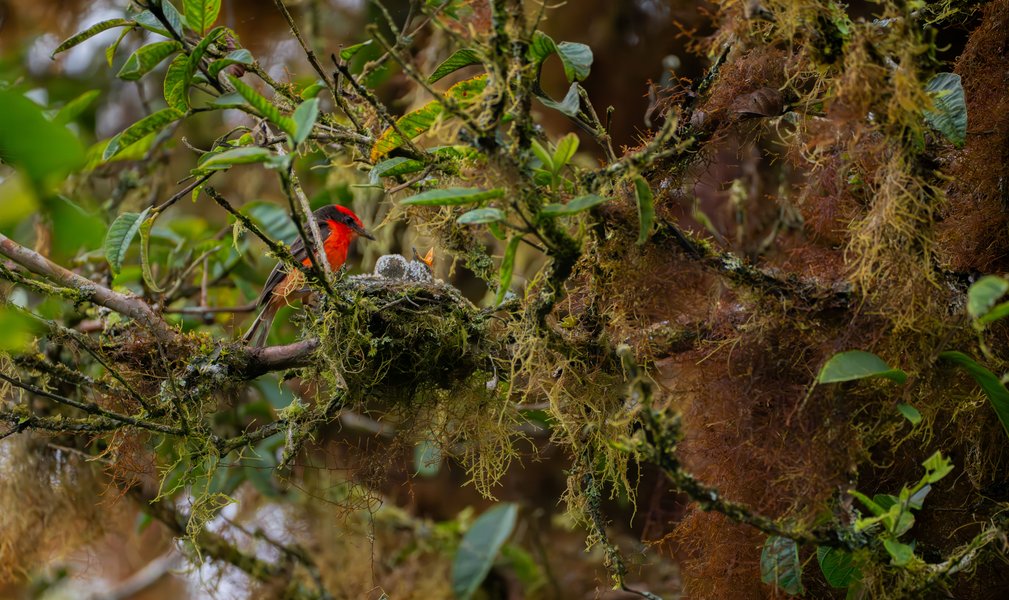
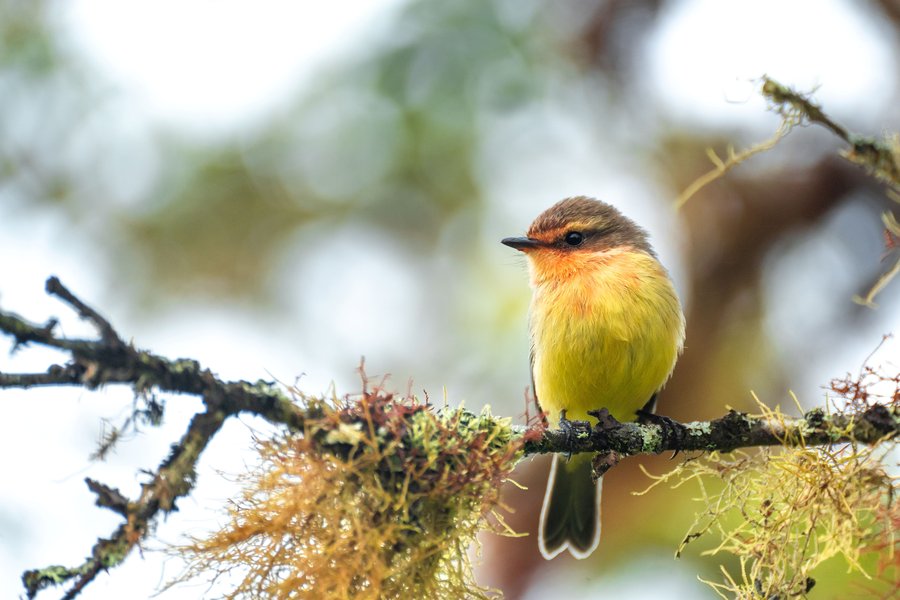
The Little Vermilion Flycatcher is a small bird endemic to Galápagos, easily recognized by the male’s bright red and black plumage. It is closely related to the widespread Vermilion Flycatcher (Pyrocephalus rubinus) found throughout the mainland Americas. In Galápagos, the species inhabits, arid and transition zones but with larger numbers on humid highland areas and is often associated with forests dominated by Scalesia trees. Historically, the Little Vermilion Flycatcher was recorded on at least twelve islands across the archipelago, but today is only found on ten, with severely declining populations on some islands. Like its mainland relative, it feeds primarily on insects, which it captures during short flights from perches. It can live up to the age of six years.
-- ENDS --
Learn more about our Landbird Conservation Program:
For media enquires please contact:
Charles Darwin Foundation
Ambre Tanty-Lamothe, Daniela Ibarra
comunicacion@fcdarwin.org.ec
California Academy of Sciences
Megan Ely
mely@calacademy.org
About the Charles Darwin Foundation
The Charles Darwin Foundation for the Galápagos Islands (CDF) is an international non-profit organization that has operated in Galapagos since 1959 under a special agreement with the Government of Ecuador. Its mission, and that of its Research Station, is to address the greatest threats and challenges facing Galapagos through scientific research and conservation actions, to protect one of the world’s most important natural treasures. Today CDF supports more than 25 research, conservation, and education projects across land and sea, and is the custodian of over 137,000 specimens in its Natural History Collections. Its diverse team of more than 140 scientists, educators, and support staff is composed primarily of Ecuadorian citizens, with over 60% from Galápagos.
For more information, please visit: www.darwinfoundation.org
About the California Academy of Sciences
The California Academy of Sciences is a renowned scientific and educational institution with a mission to regenerate the natural world through science, learning, and collaboration. Based in San Francisco’s Golden Gate Park, it is home to a world-class aquarium, planetarium, and natural history museum, as well as innovative programs in biodiversity science, environmental learning, and collaborative engagement—all under one living roof. Museum hours are 9:30 am – 5:00 pm Monday – Saturday, and 11:00 am – 5:00 pm on Sunday. Admission includes all exhibits, programs, and shows. For daily ticket prices, please visit www.calacademy.org or call (415) 379-8000 for more information.