Home

Results

Sargassum zacae Setchell
Species Database Sargassum zacae Setchell
Carlos Espinosa/CDF
Carlos Espinosa/CDF
Restoring an Island, One Ecosystem at a Time

Restoring Floreana isn’t about small plots—it’s about healing an entire island. Discover how large-scale habitat restoration underpins species recovery, why forests like Scalesia matter, and how science, patience, and collaboration are reshaping one of Galápagos’ most ambitious conservation projects—with lessons that could inform island restoration worldwide.

Carlos Espinosa/CDF
Billy Bensted-Smith/CDF
Rediscovered Coral Signals Hope for Galapagos Reefs

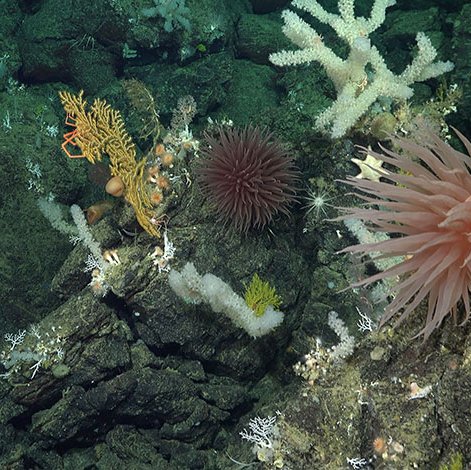
A scientific team led by the Charles Darwin Foundation (CDF) and the California Academy of Sciences (CAS), in collaboration with the Galapagos National Park Directorate (GNPD) has confirmed that Rhizopsammia wellingtoni—a solitary coral thought to be lost for a generation— is alive and clinging to Galapagos’ underwater cliffs.

Carlos Espinosa/CDF
Carlos Espinosa/CDF
Carlos Espinosa/CDF
Carlos Espinosa/CDF
Andrea Miniguano/CDF
Memories of a Shared Effort that Changed the Vision of Science and Conservation

A look back at the origins of the Charles Darwin Foundation and the key role of Cristóbal Bonifaz in shaping science and conservation in Galápagos, and how the recovery of his archives reconnects us with that shared legacy.

Field Notes from the Galápagos: My Time as a Collaborating Scientist at the Charles Darwin Foundation

Savanna Barry, a collaborating scientist joined the Charles Darwin Foundation to study invasive frogs, restore endangered Scalesia forests, and dive into coral reef research. From field transects to fish dissections, these field notes reveal the science, mentorship, and conservation challenges shaping the future of the Galápagos.

William Bensted-Smith-CDF
Marine biodiversity research

The introduction of alien species is arguably the most important driver of biodiversity loss for oceanic islands. Our work seeks to evaluate the effects of alien invasive species, climate change, and other anthropogenic pressures on the biodiversity of the Galapagos Marine Reserve and the Eastern Tropical Pacific in order to better sustain coastal communities and prevent marine species extinction.

Greenpeace
Ecuador, Costa Rica, Colombia and Panama urged to ratify the UN High Seas Treaty

18 NGOs and civil society organisations have today published a statement calling for the governments of Ecuador, Costa Rica, Colombia and Panama to ratify the UN High Seas Treaty in order to accelerate the protection of the oceans.

Elena Espín
Re-encountering Scalesia retroflexa at El Garrapatero

While kayaking along El Garrapatero Beach, a chance sighting led to the re-encounter of Scalesia retroflexa, one of Galápagos’ rarest plants. What began as a weekend outing became a pivotal moment for conservation. Discover how this unexpected find could reshape the future of an endangered species.

Carlos Espinosa/CDF