From Dream to Octagon
The Darwin Station Comes to San Cristóbal
A White Octagon in Puerto Baquerizo Moreno
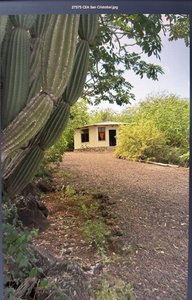
On February 14, 1989, in the middle of the province's anniversary celebrations, the Charles Darwin Research Station opened the doors of its first building outside Santa Cruz. It was a white, octagonal structure in Puerto Baquerizo Moreno, the capital of Galápagos. The date was no coincidence.
That day the institution was celebrating 25 years of work on Santa Cruz and the anniversary of the agreement between the Charles Darwin Foundation and the Government of Ecuador, which had just been renewed. The March 1989 issue of Carta Informativa noted that with this event the Station "begins a new stage in its institutional life."
What was new, in this case, was the facility, because the Station's presence on San Cristóbal had already existed for more than a decade, and it had a first and last name.
Jacinto Gordillo, the Station with a Name
Jacinto Gordillo was the Charles Darwin Research Station's representative on San Cristóbal. The official staff list of January 1, 1975, already records him as "Representative, Isla San Cristóbal." His work left its mark on science. Botanists honored him with Scalesia gordilloi, a species described in 1986 that bears his name.
Gunther Reck, director of the Station, remembered him as a patient, wise and tireless man who educated generations of young people on the island. That was perhaps his most lasting achievement. Gordillo made conservation a part of everyday conversation in a community that lived off the land and the sea. However, the Station had no home of its own on San Cristóbal. Its presence had a great capacity to build bridges with the island's residents.
The Dream of a Home of Its Own
Around 1986, Reck and Gordillo set out to change that. They wanted a Station building in Puerto Baquerizo Moreno, a place from which to share the Station's scientific programs and open its doors to the people of the island.
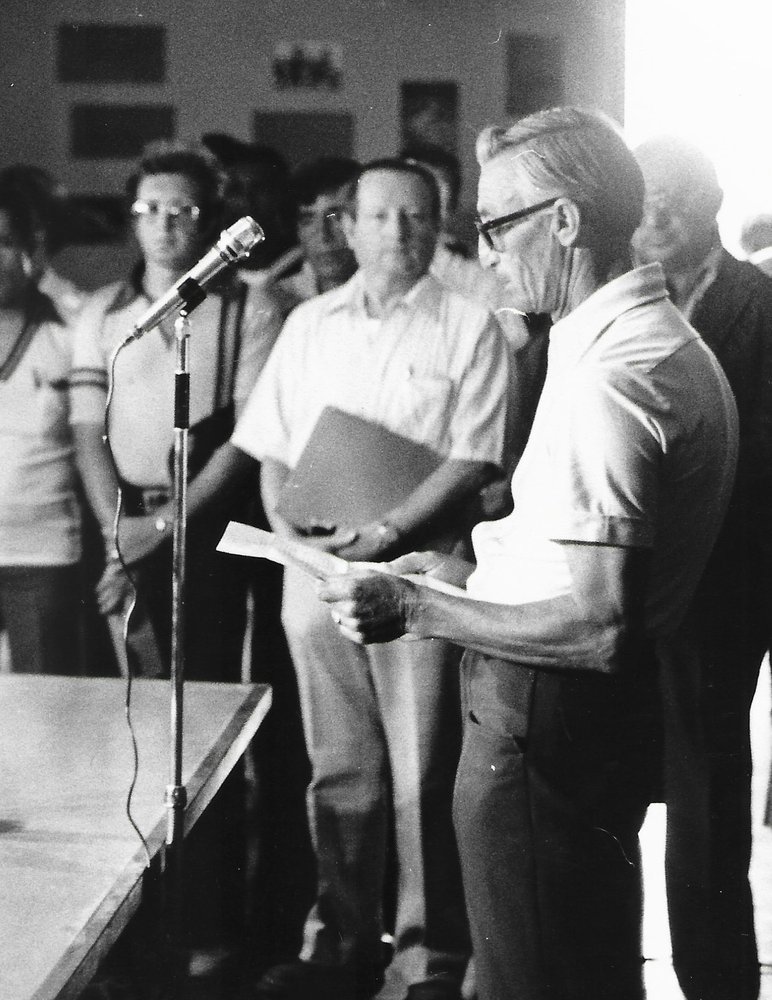
CDF Historical Archive, Iconographic Collection, Photographic Series
The dream took time to come true. Logistical problems and the difficulty of obtaining materials delayed construction again and again. Staff from the Station's workshops pushed the project forward, especially Roberto Jaya and Pablo Oyasa, a mason and a carpenter, along with several masons from Puerto Baquerizo Moreno who contributed their skills.
Gordillo did not get to see the building finished as representative. He retired during construction and was succeeded by Alfonso Quimbiulco, who devoted all his energy to completing the work. The building was finished in September 1988.
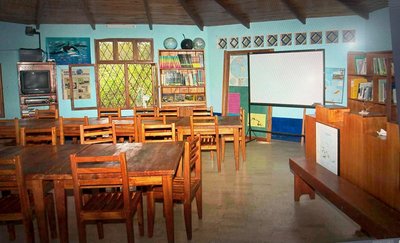
According to the report of Station director Daniel Evans, the World Wildlife Fund (WWF) funded part of the project. The design followed a clear idea. It would be a multipurpose space for lectures, seminars, exhibitions, film screenings and educational activities, as well as temporary housing for Station staff on the island.
What the Octagon Left Behind
The story continued. In May 1989, Quimbiulco returned to teaching, and Jorge Sotomayor took over as representative. He was an educator who had lived on San Cristóbal for more than six years and taught at the Alejandro Humboldt High School. In the early 1990s, Gordillo returned to Isabela, where he worked with the Station for more than 15 years.
The project's educational mission took shape years later. In 1998 the Foundation created its Environmental Education Centers (CEA), and the San Cristóbal center operated in the building. The new center gained ground in the community, with children as its main beneficiaries.
Archive CDF
Archive CDF
In July 2002 the center moved to a renovated space, and its number of visitors grew month after month. Starting that year, it hosted students from the Jaime Roldós school learned about introduced species, the Marine Reserve and nursery management, and in 2006 they produced a manual on native and endemic plants. The dream of Reck and Gordillo, a space for education on the island, had found continuity.
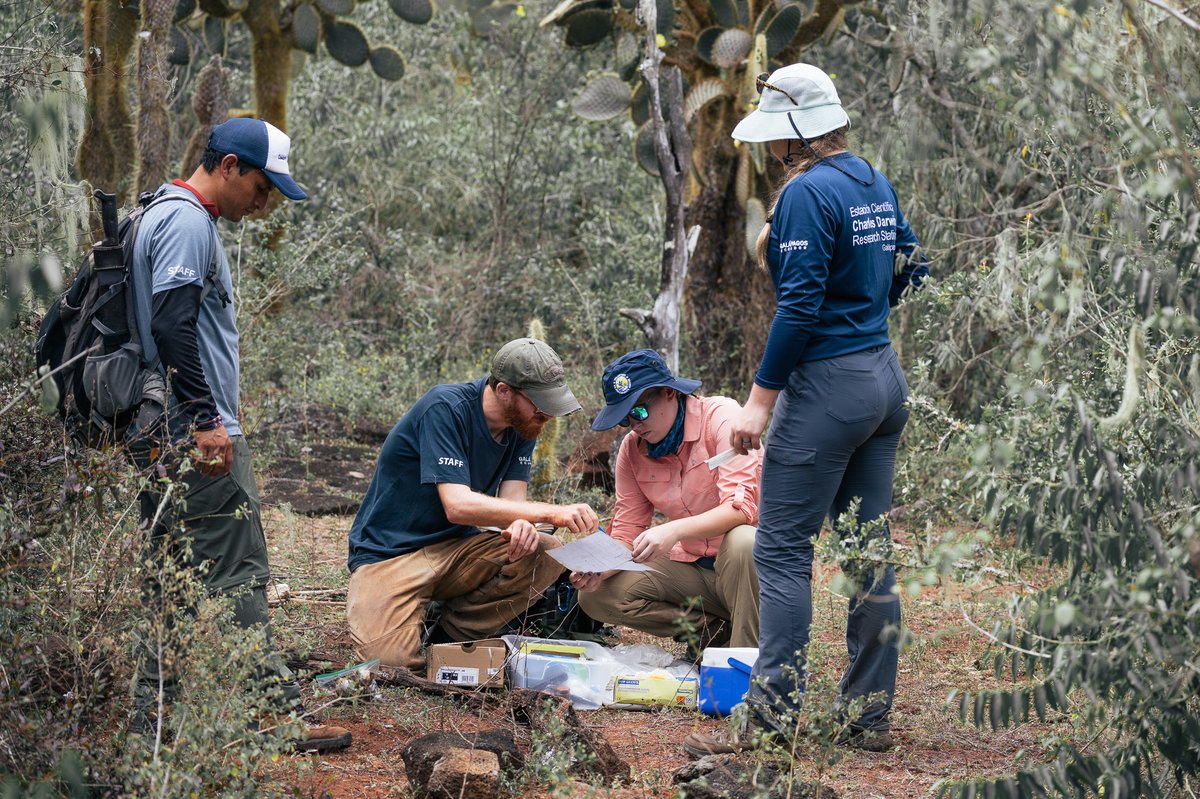
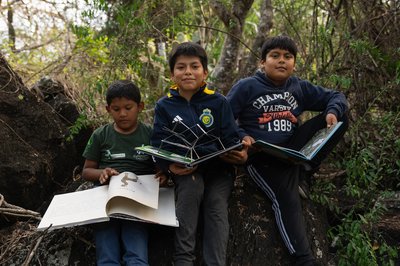
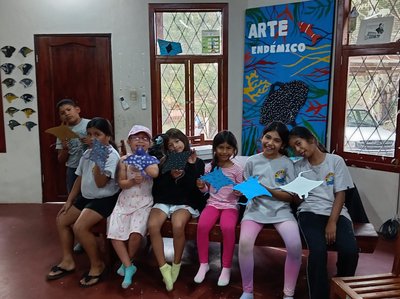
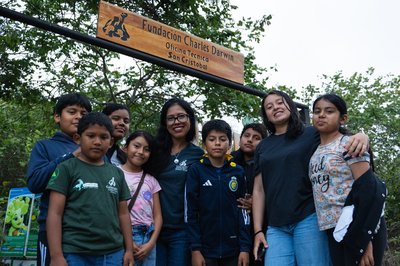
Today that seed continues to bear fruit. In 2025, the CDF created the Endemic Art Club on San Cristóbal, where teenagers explore conservation through creativity. The Foundation also brings reading facilitation programs to the island, and across three islands it engaged 615 young people in hands-on science activities such as bird counts and microplastics monitoring.
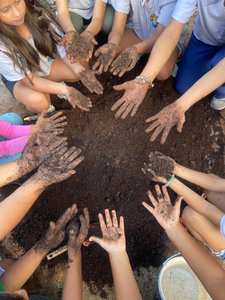
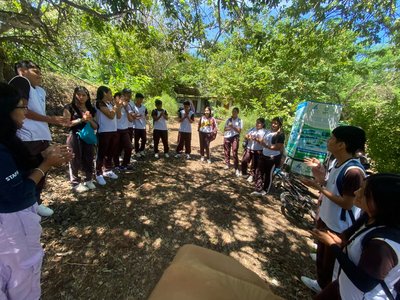
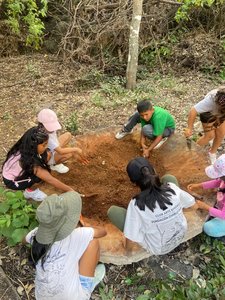
In 2026 we took on a new challenge, the Student Participation Program with 15 students from the Unidad Educativa Fiscomisional San Cristóbal. Together we are developing the Sembrando Conservación (Sowing Conservation) project, an initiative to reforest San Cristóbal Island with native and endemic plants.
Walter Pisco
Dylan Andino
Dylan Andino
This story holds a lesson for any scientific institution. Buildings do not create a presence; they only confirm it. Before the octagon, there was a man who studied the island's birds and talked with his neighbors about the nature around them. For more than a decade, Jacinto Gordillo sustained the Station's bond with San Cristóbal, with his work and his patience as his only tools. The 1989 building rewarded that effort, and the young people planting native species on the island today show that his legacy is still alive. A shared dream, when sustained with perseverance, eventually takes root.
Walter Pisco
Katty Coquinche CDF
Katty Coquinche CDF