The Charles Darwin Foundation and Manta fishing associations sign agreement to generate the science needed to reduce shark bycatch in longline fisheries
Under a new Memorandum of Understanding, the Charles Darwin Foundation, ASOAMAN and ASOPTMANTA will work together to tag pelagic sharks with satellite trackers across the Eastern Tropical Pacific and gather fisheries data to identify bycatch hotspots, helping build a more responsible longline fishery
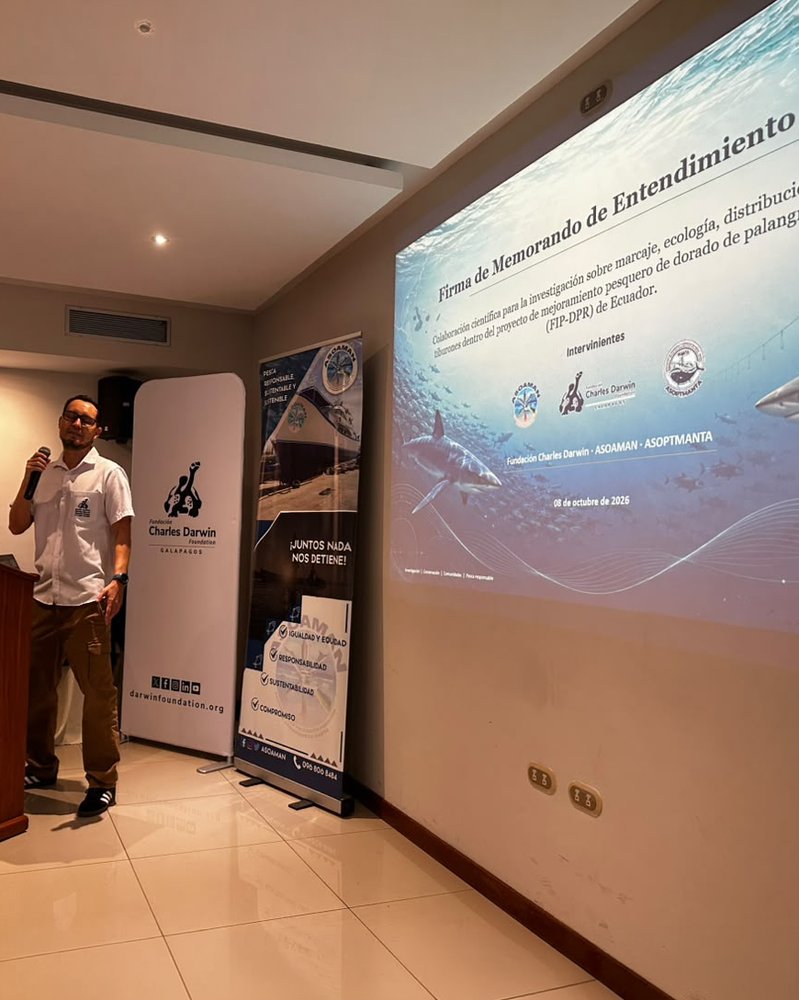
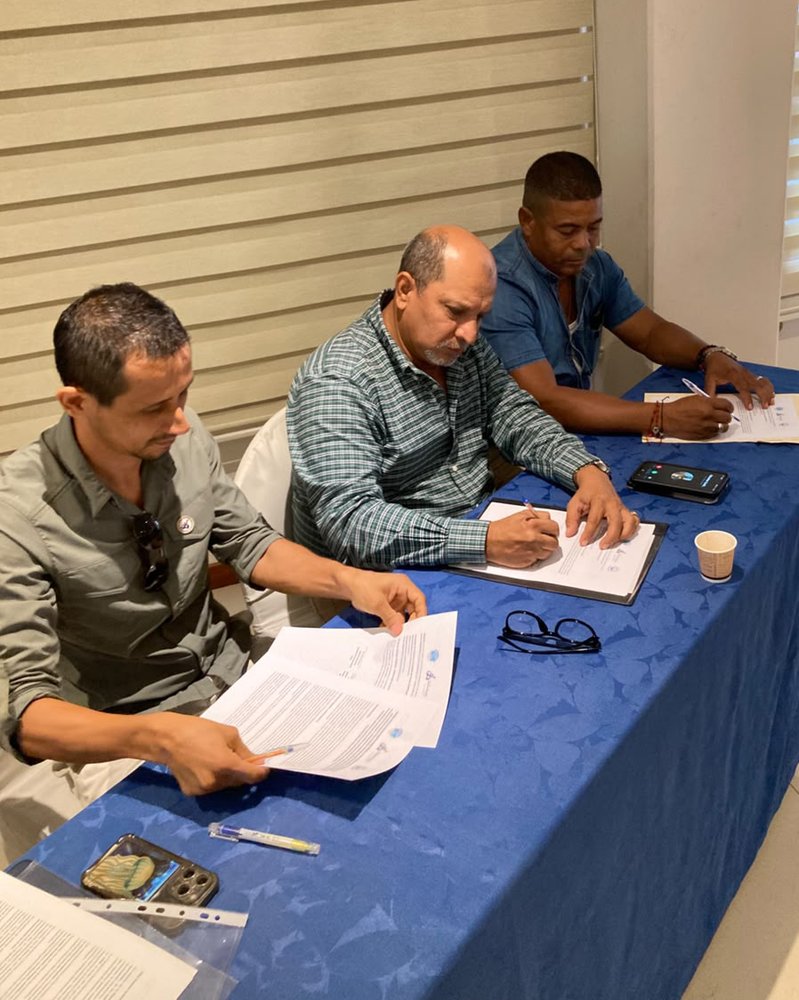
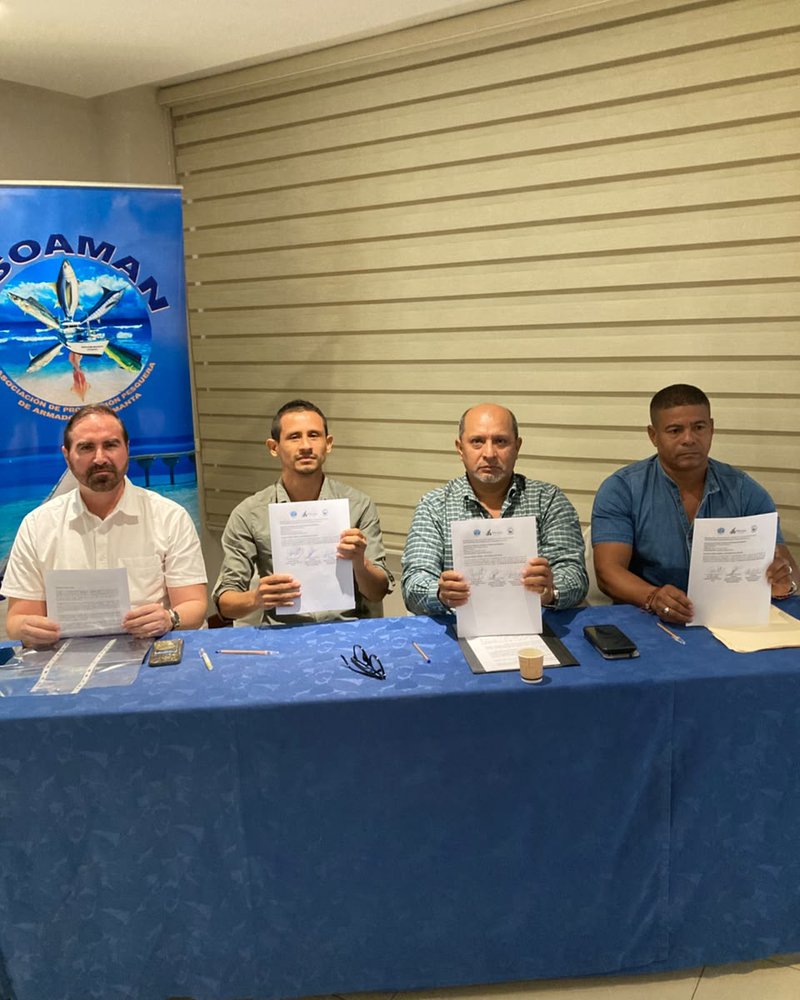
.Manta, October 8, 2026. The Charles Darwin Foundation (CDF), the Manta Shipowners’ Fishing Production Association (ASOAMAN) and the Manta Association of Skippers and Helmsmen (ASOPTMANTA) today signed a Memorandum of Understanding to carry out scientific research that will help reduce the bycatch of sharks and other endangered, threatened or protected (ETP) species in the surface longline fishery for mahi-mahi and other large pelagic fish.
The agreement brings together a scientific institution and the associations representing the vessel owners, skippers and helmsmen of Manta’s longline fleet – one of Ecuador’s leading fishing ports.
María José Barragán, CDF Director of Science, said: “This partnership strengthens our work with the fishing sector in mainland Ecuador. I want to recognize the Manta associations for taking this step, because at the end of the day, nobody knows the sea like they do, and science alone cannot solve this problem without their experience and commitment. Sustainable shark management and the conservation of threatened species in the Eastern Tropical Pacific require solutions built together with the people whose livelihoods depend on the sea. This memorandum shows that fishing and conservation can move forward together, and that Ecuador can set an example for the region when the fishing sector, scientists and decision-makers sit at the same table to address a shared challenge.”
The initiative aligns with the Responsible Longline Mahi-Mahi Fishery Improvement Project (FIP), led by ASOAMAN vessel owners since 2021 with support from the Sustainable Fisheries Partnership (SFP). The FIP aims to secure the long-term sustainability of the mahi-mahi fishery, reduce its impact on associated species such as sharks, and work toward certification, a credential increasingly valued by the international buyers of Ecuadorian mahi-mahi. Reducing shark bycatch is a key step toward that goal.
“Nobody has more at stake than we do in keeping the sea a source of life, food and opportunity for future generations. If we can catch mahi-mahi without harming sharks, turtles and other threatened species, everyone wins: the fishery, our families and our buyers, who today expect fishing to be responsible and sustainable,” said George Pinto López, president of ASOAMAN.
Joshua Vela
Satellite and conventional tagging
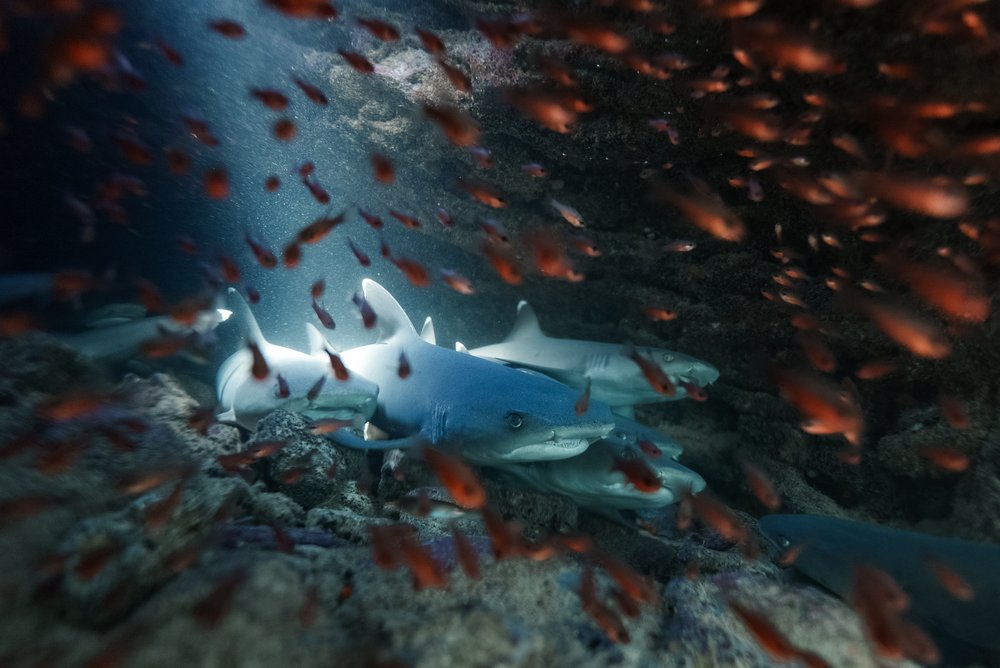
Every year, fisheries in the Eastern Tropical Pacific catch more than 300,000 sharks and rays as bycatch, and many of these species are threatened with extinction. Understanding where these species move and how they use the ocean is key to reducing the impact of fisheries on them.
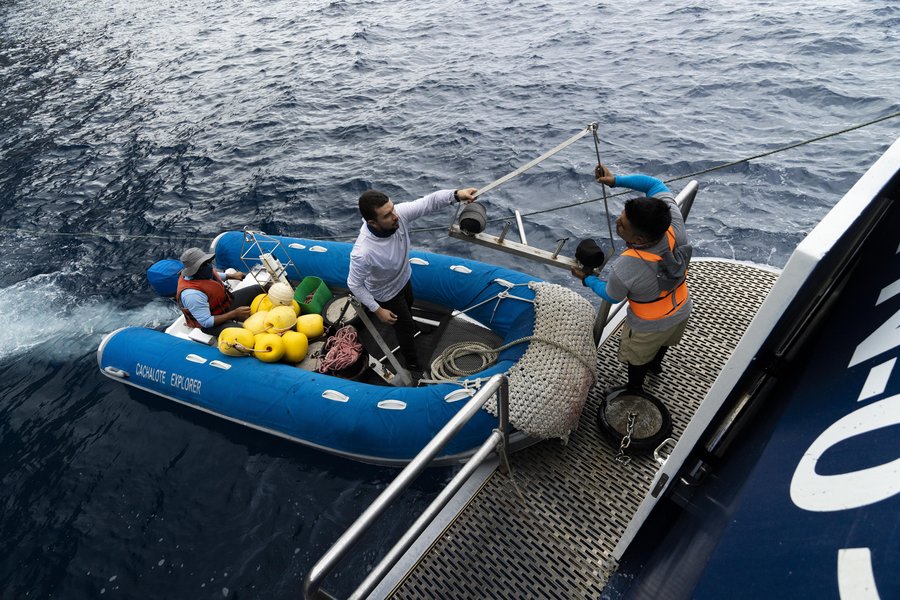
Under the memorandum, the partners will launch a satellite and conventional tagging program for pelagic sharks in the Eastern Tropical Pacific. The tags will reveal the sharks’ distribution, migratory routes, habitat use and survival after capture and release.
CDF will design and lead the program, provide the scientific equipment, and analyze the biological and fisheries data supplied by the fleet. Drawing on that analysis, CDF will identify the areas with the highest bycatch of endangered, threatened or protected species, with a focus on sharks, and map the zones where action to reduce bycatch is most needed.
“Sharks know no borders. Many of the species that pass through Galápagos also travel through the waters where the mainland fleet operates and where bycatch is permitted,” said Edwin Castro, fisheries researcher with CDF’s Shark Ecology and Conservation Program. “Working with fishers to understand where and when bycatch happens is the first step toward solutions that work at sea.”
For their part, ASOAMAN and ASOPTMANTA will mobilize vessels, captains and crews for the scientific campaigns and will help collect and deliver data.
“As skippers and fishers, we’re out at sea every day and see firsthand what happens during fishing operations. We bring years of experience that can help this research deliver results that are truly useful. We want to be part of this process, because the people who live and work at sea must help shape responsible and sustainable fishing,” said José Zambrano Reasco, president of ASOPTMANTA.
Carlos Espinosa/CDF
Scientific independence and joint work
Recommendations arising from the research will be reviewed and discussed with the fishing associations before being finalized, taking into account their operational, economic and social impact. The results will then be shared with the relevant authorities to support the fisheries management led by Ecuador’s Vice Ministry of Aquaculture and Fisheries.
The memorandum builds on CDF’s work with the Government of Ecuador and with national and international experts to strengthen fisheries management and reduce shark bycatch in the country.
-ENDS-
Notes to editors:
For media enquiries please contact:
Charles Darwin Foundation
Ambre Tanty-Lamothe or Daniela Ibarra |comunicacion@fcdarwin.org.ec
About the Charles Darwin Foundation
The Charles Darwin Foundation for the Galápagos Islands (CDF) is an international non-profit organization that has operated in Galápagos since 1959 under a special agreement with the Government of Ecuador. Its mission, and that of its Research Station, is to address the greatest threats and challenges facing Galápagos through scientific research and conservation actions, to protect one of the world’s most important natural treasures. Today CDF supports more than 25 research, conservation, and education projects across land and sea, and is the custodian of over 137,000 specimens in its Natural History Collections. Its diverse team of more than 140 scientists, educators, and support staff is composed primarily of Ecuadorian citizens, with over 60 % from Galápagos. For more information, please visit: www.darwinfoundation.org