The Origins of Environmental Education in Galápagos
The start of environmental education in Galápagos
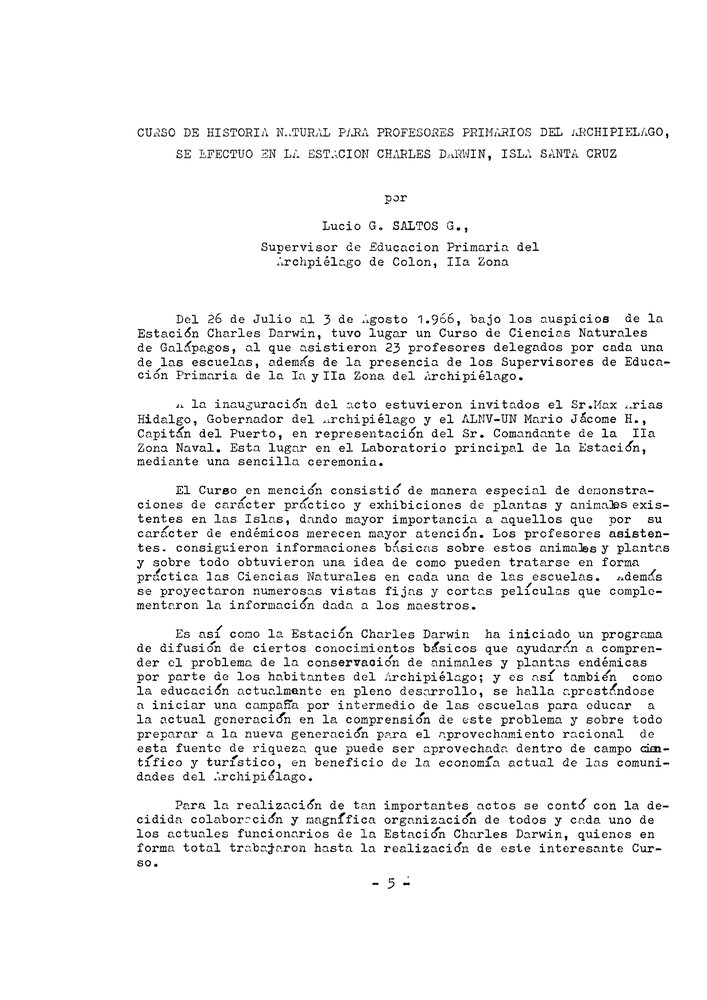
It was 1966 on Santa Cruz Island when the Charles Darwin Research Station hosted the archipelago’s first formal natural sciences course for teachers. What began as a teacher training initiative quickly became something bigger: the beginning of environmental education in Galápagos. This vision grew out of a simple reality—living alongside such unique biodiversity required understanding it.
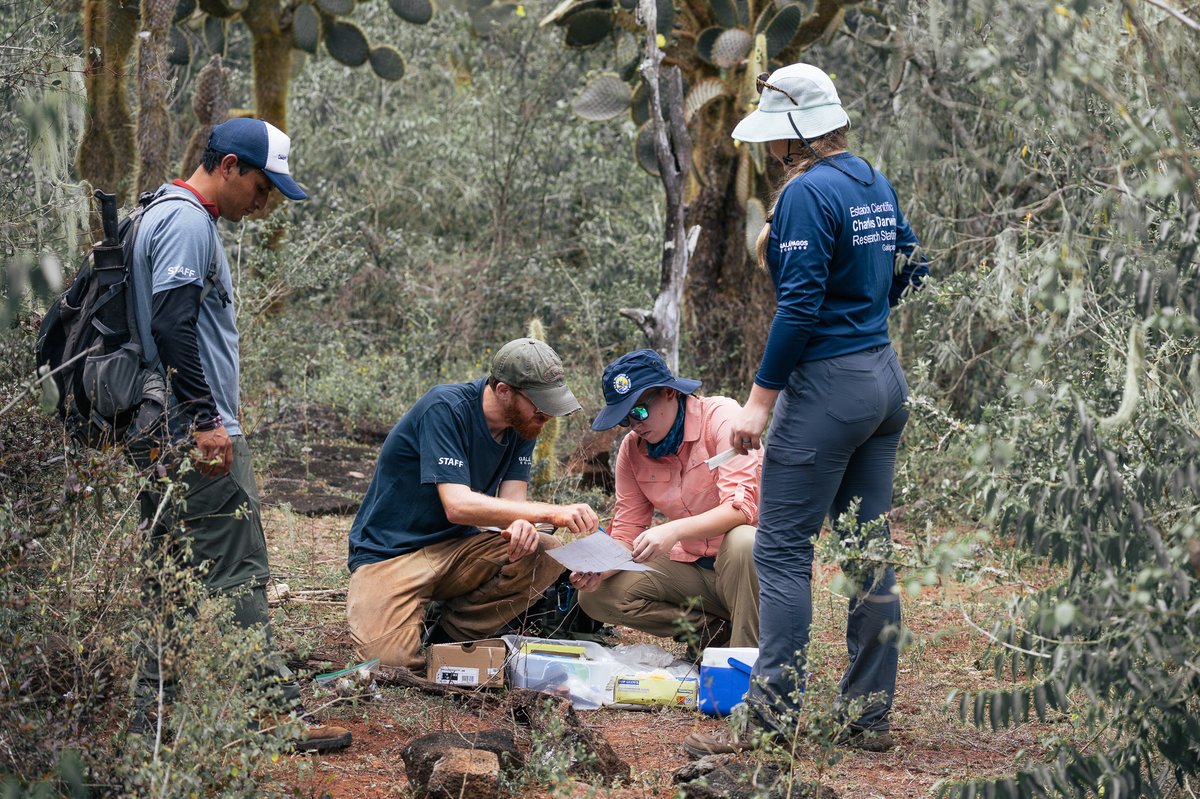
The course brought together 23 teachers from different schools across the archipelago and was held from July 26 to August 3 of that year. The approach was hands-on, combining observation, practical demonstrations, and direct contact with endemic species. This was not about teaching abstract biology, but about turning the surrounding environment into a learning tool. Plants, birds, reptiles, and landscapes became part of the classroom.
Learning rooted in local reality
This initiative introduced both a principle and a need: education in Galápagos had to be rooted in its local context. As noted in a report by the Charles Darwin Research Station’s head of education at the time, Lucio Saltos, the goal was for teachers to “gain an idea of how natural sciences can be taught in a practical way in each school.” In other words, teaching had to move away from mainland-based content and adapt to island realities. This shift responded not only to an educational need but also to an urgent conservation challenge. Understanding the environment was the first step toward protecting it.
César Lombeida, a former teacher and education supervisor, later confirmed the impact of this early effort, stating that “environmental education [in Galápagos] began with the courses held in 1966.” Teachers gained practical tools to deal with everyday situations that, without proper knowledge, often went unnoticed or were misunderstood. For example, teachers started incorporating local species and ecosystems into their lessons, using real plants and animals from the islands instead of relying only on textbooks. This helped students better understand their surroundings and the importance of protecting them.
Education beyond the classroom
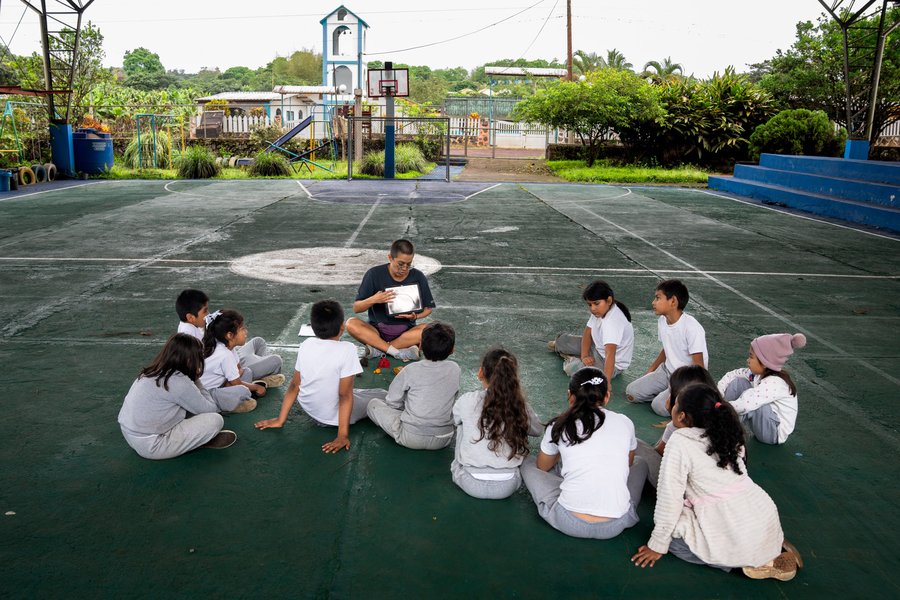
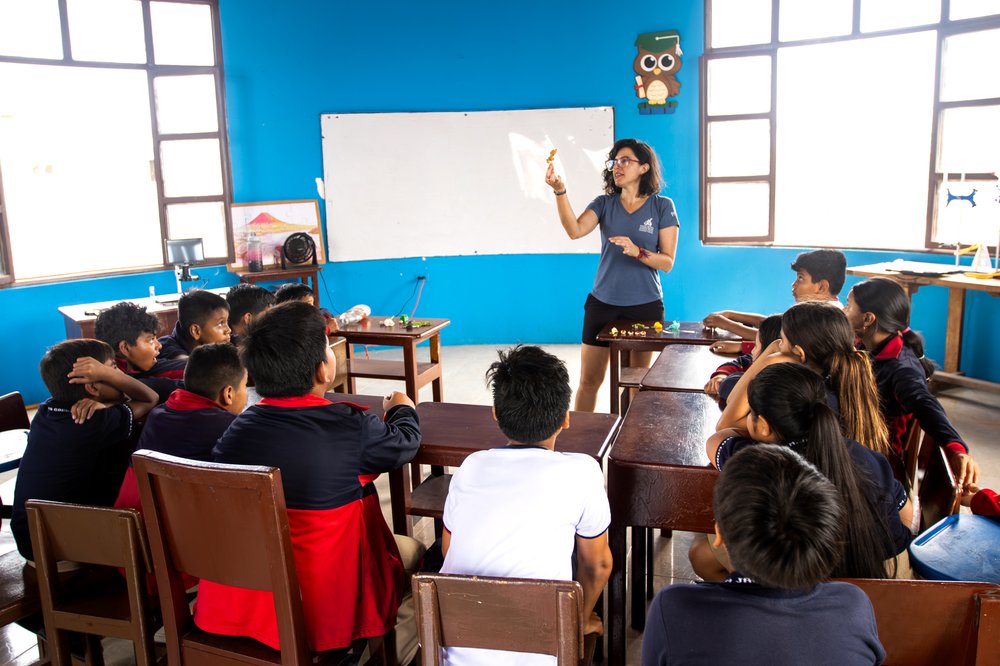
At the time, education in the archipelago faced significant limitations. Schools had very little infrastructure, few teaching materials, and the geographic isolation made ongoing support from mainland Ecuador difficult. These conditions pushed teachers to be more creative and closely connected to their natural surroundings. The classroom extended beyond walls; learning happened in direct contact with the environment.
Archivo CDF
Schools, community, and conservation
Schools also played a central role in community life. They were spaces for gathering, where civic events, theater performances, and poetry recitals took place. These activities were not secondary; they helped build a shared identity in a territory that was still developing.
At the same time, teachers carried the responsibility of raising awareness as tourism began to grow and reshape the islands. Pressure on ecosystems increased, making conservation education even more important. As Lombeida explains, “education was not just about reading and writing; it was also about learning to live alongside unique birds, reptiles, and plants.” This idea reflects a broader shift that was taking place. Schools were no longer separated from their context; they became a bridge between knowledge, community, and nature.
From early efforts to lasting impact
The Charles Darwin Foundation’s 1966 courses were an initial response to these challenges. They did not solve every limitation, but they set a clear direction. They helped teachers recognize the risks of human interaction with local flora and fauna and integrate that understanding into their daily work. They also strengthened the connection between science and education, a relationship that would later become a key part of institutional efforts in Galápagos.
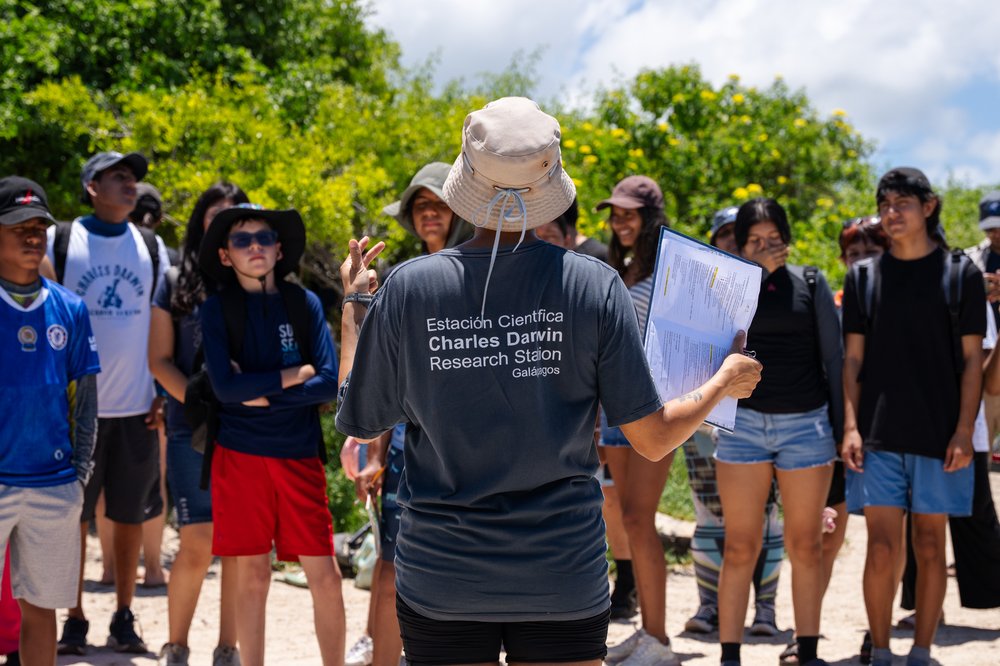
Over time, these efforts expanded. Training was no longer limited to teachers but also included park rangers and naturalist guides. Environmental education evolved from a specific initiative into something embedded across different sectors of society. Still, its roots remain in those early experiences—those first courses where it became clear that conservation is not only a technical task, but also an educational one.
Today, when sustainability is discussed in Galápagos, the idea of context-based education remains essential. Valuing the natural environment is not just a concept; it is something learned from an early age. The experience of 1966 shows that this approach did not come from outside—like the species that evolved in isolation, environmental education in Galápagos developed from the islands’ own reality.
At the Charles Darwin Foundation, we have spent more than half a century promoting environmental education in Galápagos. From that first course in 1966 to today, we have worked continuously to connect science with the community, convinced that understanding the environment is the first step toward protecting it.
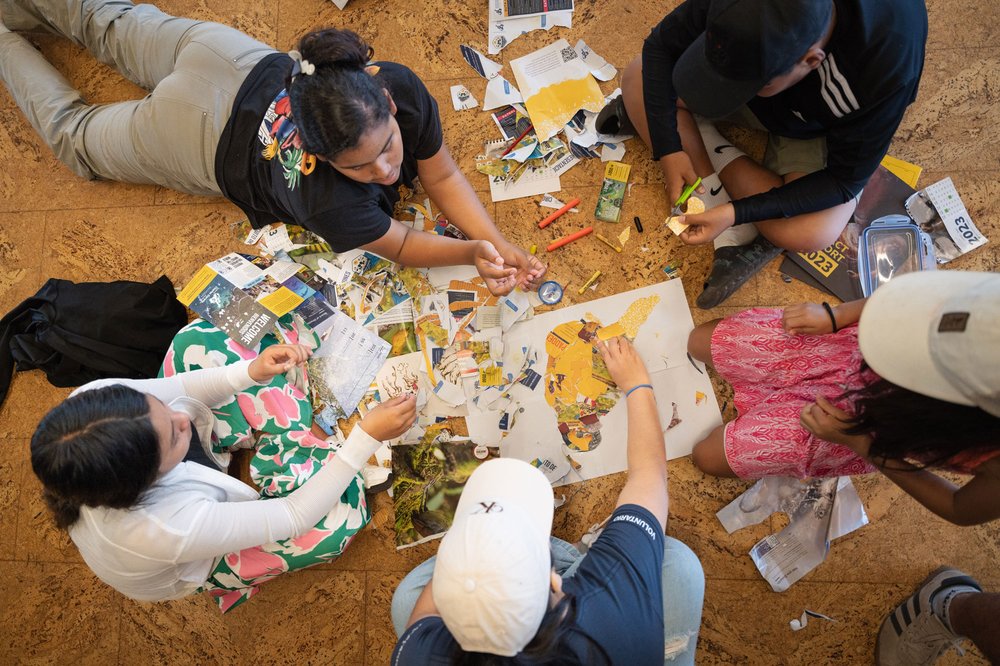
This commitment remains essential. Education not only builds knowledge, but also fosters a culture of respect and shared responsibility for one of the most unique ecosystems on the planet. We invite you to learn more about how we continue to strengthen this connection between education, community, and conservation through our Eco Program:
Alma Suarez CDF