The Origins of Land Iguana Recovery in Galápagos
Archive CDF
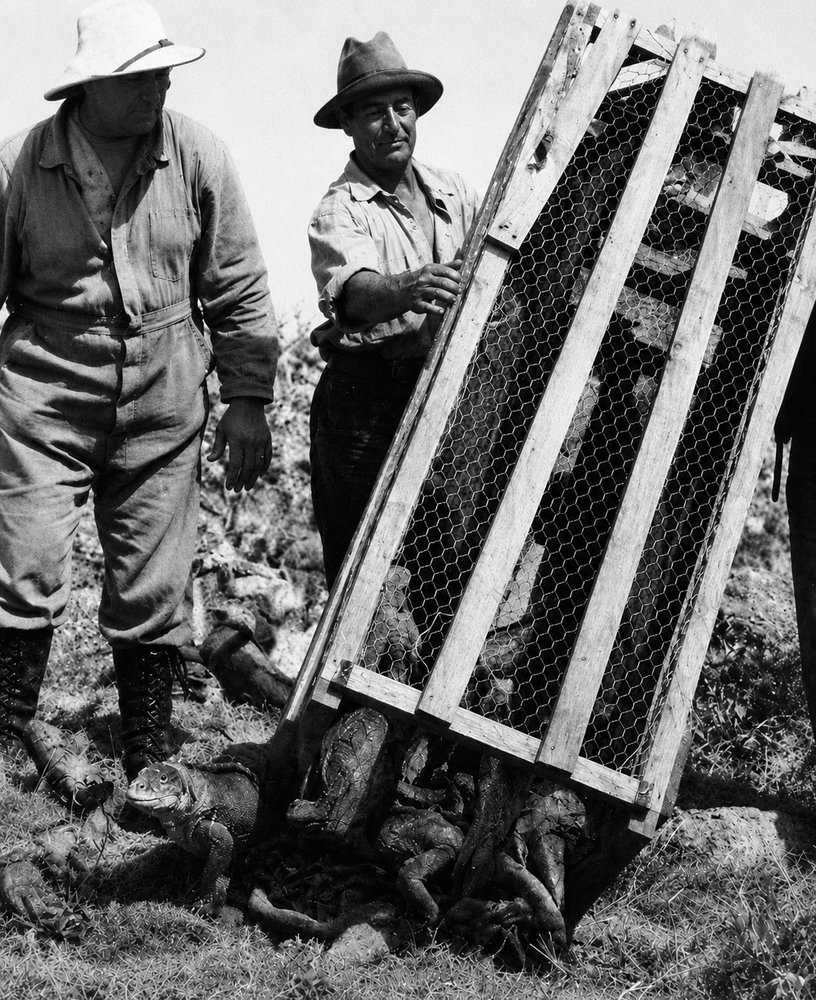
In January 1932, while exploring Baltra Island aboard the Velero III, explorer and philanthropist G. Allan Hancock proposed an idea that would become one of the earliest conservation actions ever attempted in the Galápagos Islands. Concerned about the future of the island's land iguanas, he suggested moving some individuals to nearby North Seymour to establish a second population. The expedition's naturalist, C.B. Perkins, helped capture and transport the animals and recorded the moment in his journal: "A good idea, I believe. No harm anyhow, as far as I can see."
At the time, nobody spoke of ecological restoration or evidence-based conservation. There were no captive breeding programs for endangered reptiles, no protocols for reintroducing wildlife, and little understanding of how island species could recover after severe population declines. The transfer of approximately seventy land iguanas to North Seymour was based largely on observation and common sense. Yet history proved the decision remarkably farsighted. Decades later, after land iguanas had disappeared from Baltra, the North Seymour population became the source for restoring the species to its original home.
Despite this early success, land iguanas across the archipelago continued to decline. Introduced dogs and cats preyed on adults and juveniles, while feral pigs, and rats destroyed nests before hatchlings could emerge. By the mid-1970s, several populations had disappeared, and others were shrinking because too few young iguanas survived long enough to replace aging adults.
Recognizing that protecting the remaining animals was no longer enough, the Charles Darwin Foundation and the Galápagos National Park Service created the Land Iguana Conservation Program in 1976. The initiative represented a new approach to conservation. Rather than focusing solely on breeding animals in captivity, it combined ecological research, captive husbandry, invasive species control, and habitat restoration into a single long-term strategy.
Captive breeding was therefore never considered the final objective. Instead, it was one tool within a broader scientific effort to rebuild healthy wild populations capable of surviving without human intervention.
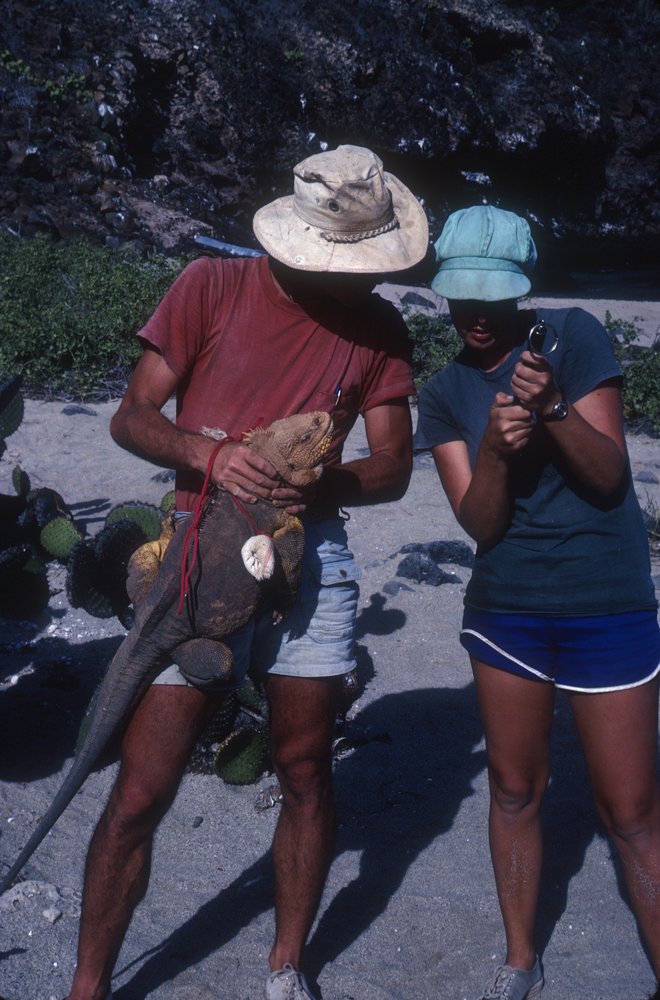
Leading that effort were herpetologists Howard and Heidi Snell, whose work transformed the future of Galápagos land iguanas. Before attempting any reintroductions, they believed it was essential to understand the species' biology in detail. Over many years, they studied nesting ecology, territorial behavior, reproduction, hatchling survival, habitat use, and population dynamics across several islands, generating the scientific knowledge needed to guide every conservation decision.
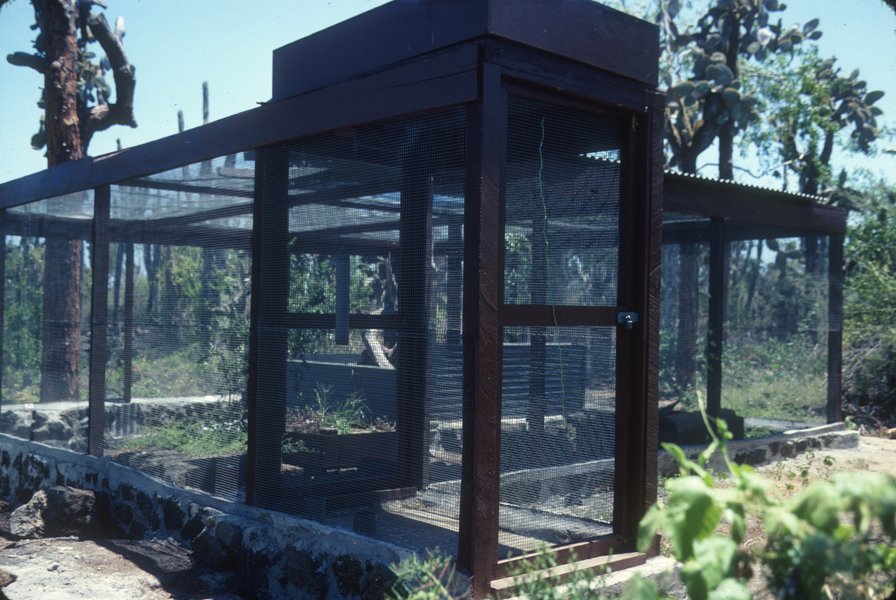
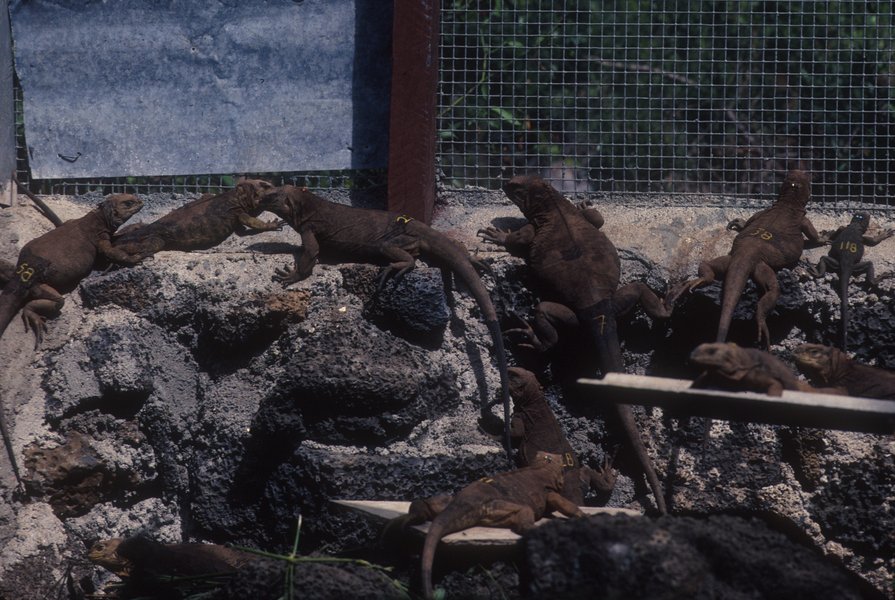
At the same time, they developed husbandry techniques that had never before been successfully applied to Galápagos land iguanas. They designed breeding enclosures that mimicked natural conditions, refined artificial incubation methods, experimented with nesting substrates, and established protocols for raising hatchlings and juveniles. Much of this work relied on trial and error. Early failures involving humidity, ventilation, and incubation conditions became valuable lessons that steadily improved the program.
Just as importantly, the Snells understood that breeding animals alone would never save the species. The 1980 report emphasized that "Captive propagation alone will not save land iguanas unless the causes of their decline are removed."
Archive CDF
That philosophy shaped every aspect of the project. While Howard and Heidi refined captive breeding methods, scientists from the Charles Darwin Foundation and rangers from the Galápagos National Park Service worked to control invasive predators, restore nesting habitat, and eliminate the pressures that had caused land iguana populations to collapse. Conservation became an integrated process in which research, habitat management, and species recovery advanced together.
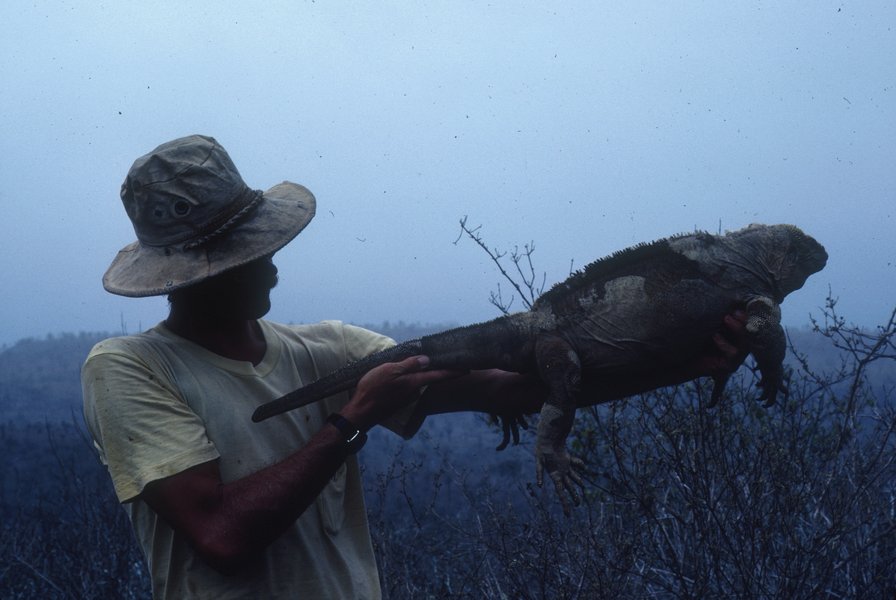
The results were encouraging. By 1980, hatch success reached between 75 and 85 percent, while first-year survival in captivity far exceeded that observed in the wild. For the first time, conservationists had a reliable way to produce healthy juvenile land iguanas suitable for release.
That breakthrough led to another historic milestone in 1982, when captive-reared juveniles were released at Cartago Bay on Isabela Island, where feral dogs had previously eliminated the original population. Robert Reynolds documented the project in the Charles Darwin Foundation's journal Galápagos Report, demonstrating that captive breeding, combined with habitat restoration and invasive species control, could successfully rebuild wild populations.
Archive CDF
Archive CDF
Archive CDF
Over the following years, the program expanded beyond breeding and reintroductions. Howard and Heidi Snell continued investigating land iguana ecology while mentoring a new generation of Ecuadorian scientists, many of whom would later lead conservation projects throughout the archipelago. Their work helped establish Galápagos as an international reference for science-based species restoration.
By 1992, the program's achievements spoke for themselves. The CDF's journal reported that "over 350 land iguanas have been returned to their native areas on Santa Cruz and Isabela."
Having fulfilled its original mission, the breeding and repatriation program eventually concluded as an independent initiative. Its legacy, however, extends far beyond the hundreds of iguanas it returned to the wild. It demonstrated that basic science, long-term research, adaptive management, and collaboration between scientists and conservation practitioners can reverse the decline of even the most vulnerable island species.
Today, thriving populations of Galápagos land iguanas stand as living evidence of that achievement. What began in 1932 with Hancock's intuition and Perkins' field notes evolved, through the leadership of Howard and Heidi Snell and the dedication of countless researchers, veterinarians, technicians, and park rangers, into one of the Charles Darwin Foundation's greatest conservation successes and one of the world's most compelling examples of science restoring nature.
We continue working to protect the unique species of Galápagos through science, conservation, and collaboration.