
The unknown wasps of Galapagos: a world to discover
An invisible world in the islands
When we think of Galapagos, we usually imagine giant tortoises, marine iguanas, or finches. However, a large part of the biodiversity of these islands remains practically invisible. Among the least known organisms are parasitoid wasps, a tiny group that lives silently in all ecosystems of the archipelago.
For many years, knowledge about wasps in Galapagos was limited. An updated list in 2017 reported fewer than 30 species of wasps for the archipelago, a very low figure for one of the groups considered among the most diverse on the planet.
“This does not mean that these wasps did not exist in Galapagos. It means that for a long time they simply had not been studied in sufficient detail”, says Henri Herrera, collaborating scientist at the CDF.
A surprising biology
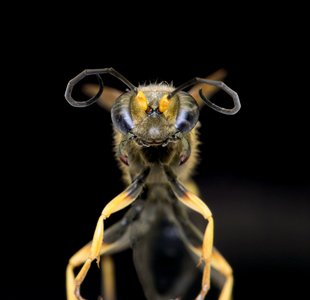
Parasitoid wasps have a very particular way of living. Unlike other wasps that build visible nests or actively hunt prey, these deposit their eggs inside or on other insects, such as caterpillars, spider eggs or fly larvae, which then become hosts.
When the larvae hatch, they develop by feeding inside the host. Although this behavior may seem strange, it fulfills a very important ecological function. By regulating insect populations, some of which can cause damage when their populations increase excessively, parasitoid wasps help maintain the natural balance in ecosystems.
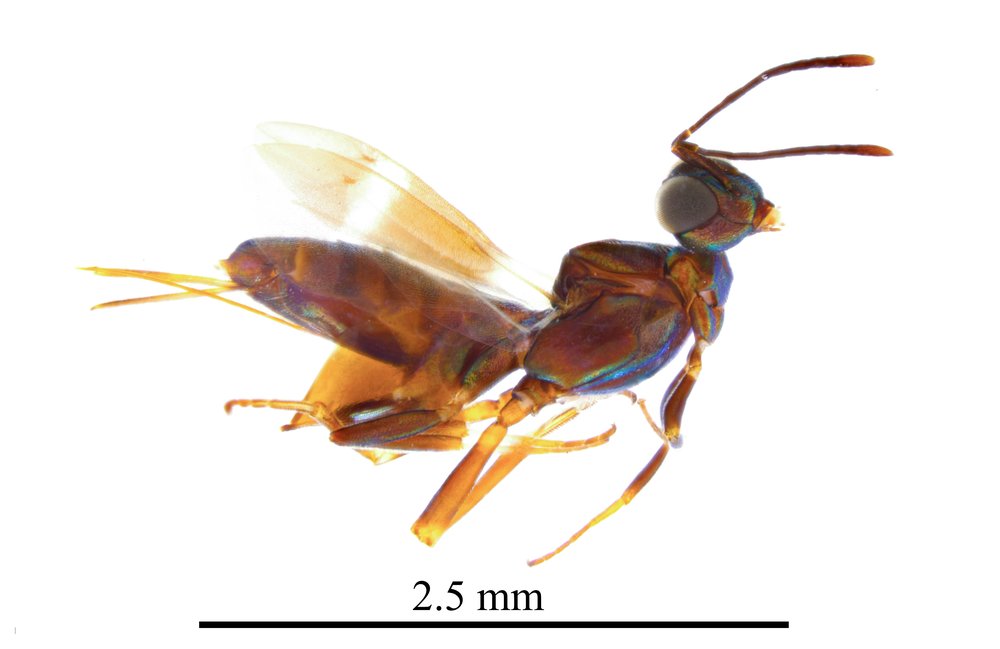
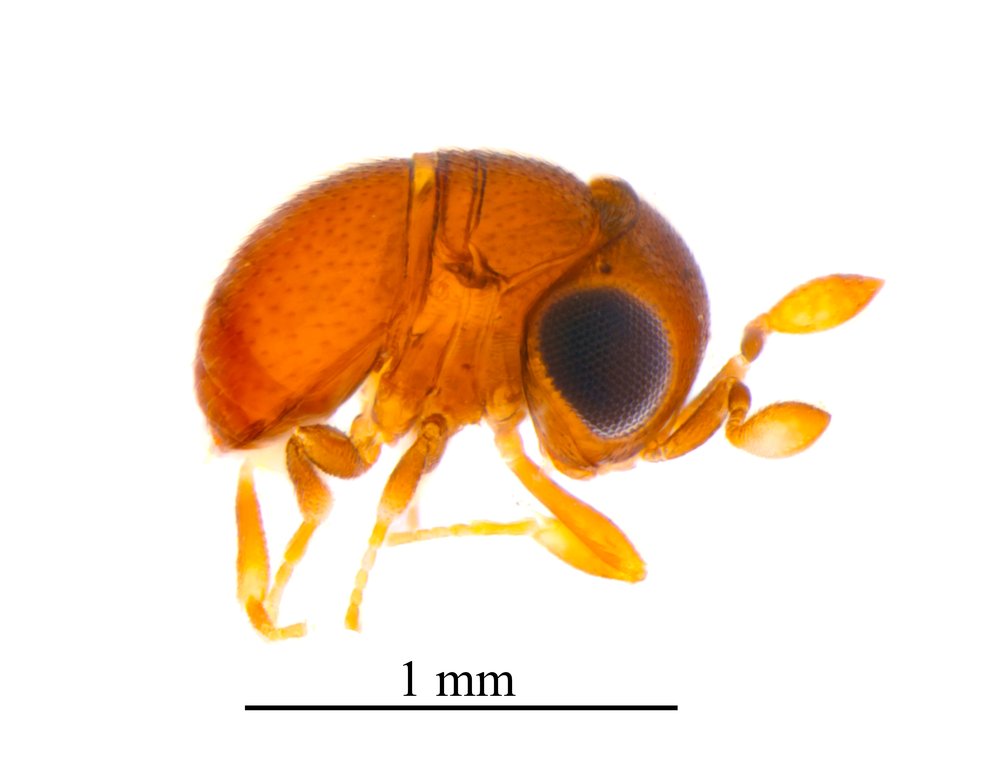
Many of these species are extremely small. Some measure less than one millimeter and can only be seen under a microscope. A curious fact: One of the smallest insects in the world is a wasp so tiny that its size is comparable to that of an amoeba! Its small size, together with its enormous diversity, explains why they have gone unnoticed for so long on these islands.
Patricio Picón-Rentería CDF
Patricio Picón-Rentería CDF
A difficult group to study
Studying parasitoid wasps is not easy. In addition to their small size, this group is very diverse and requires specialized knowledge for identification.
Many species are very similar to each other and can only be distinguished through very small body structures. In some cases, identifying a species requires carefully comparing specimens with scientific collections or consulting specialized literature.
For this reason, there are still species that have not been formally described and that remain without a scientific name. This makes the study of parasitoid wasps one of the largest open fields for entomological research in Galapagos.
The Scalesia forest: a refuge of diversity
On Santa Cruz Island, one of the most unique ecosystems of the archipelago can be found: the Scalesia pedunculata forest, an endemic forest that today represents only a small fraction of its original extent.
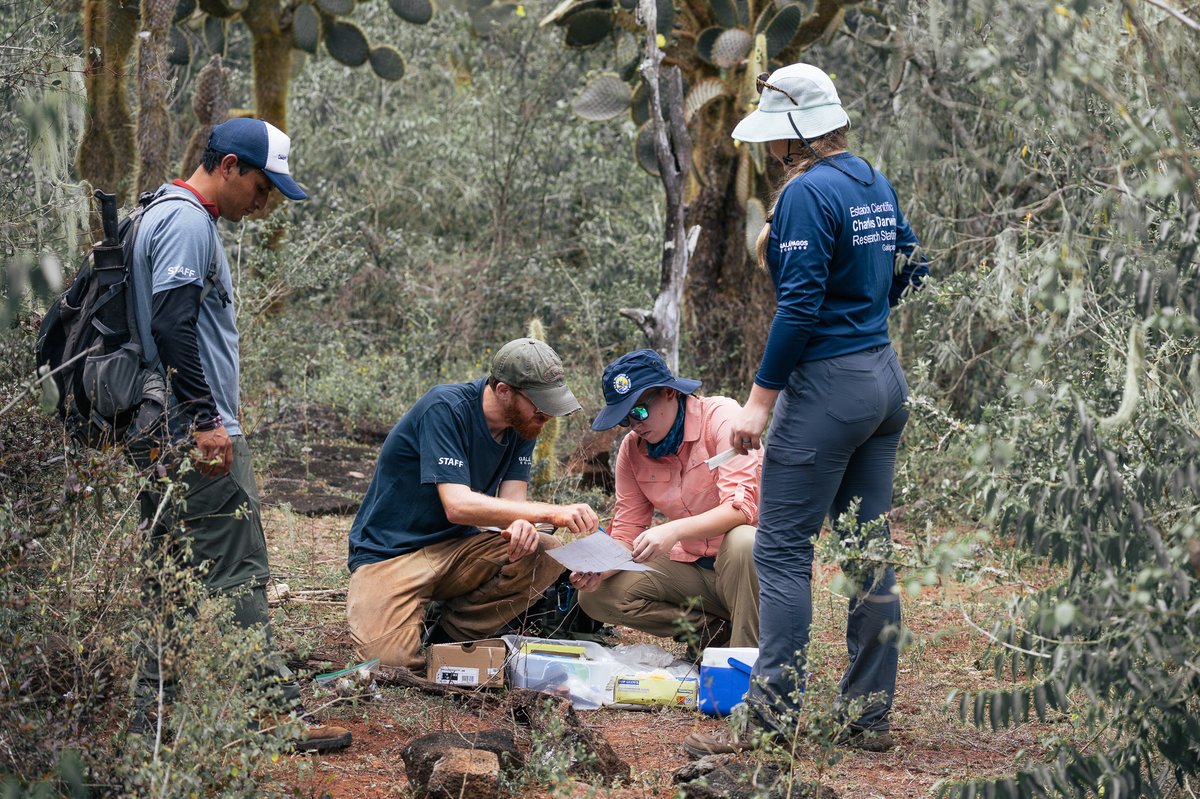
“This ecosystem has been the subject of ecological restoration efforts for several years, allowing the recovery of forest areas and the study of the biodiversity associated with it”, says Heinke Jäger, principal investigator of the Charles Darwin Foundation, who has worked for years on the restoration of Scalesia forests in Galapagos.
Within this forest, in the area known as Los Gemelos, continuous insect sampling has been carried out for 12 years. Among the most surprising findings is the diversity of parasitoid wasps.
During these years of sampling in this forest, we have recorded a diversity of more than 200 taxa of parasitoid wasps, only in this forest! A number that contrasts notably with the approximately 30 species previously reported for the entire archipelago.
This diversity is remarkable for a relatively small area and demonstrates that even these forest fragments can harbor a large number of still poorly known species.
Patricio Picón-Rentería CDF
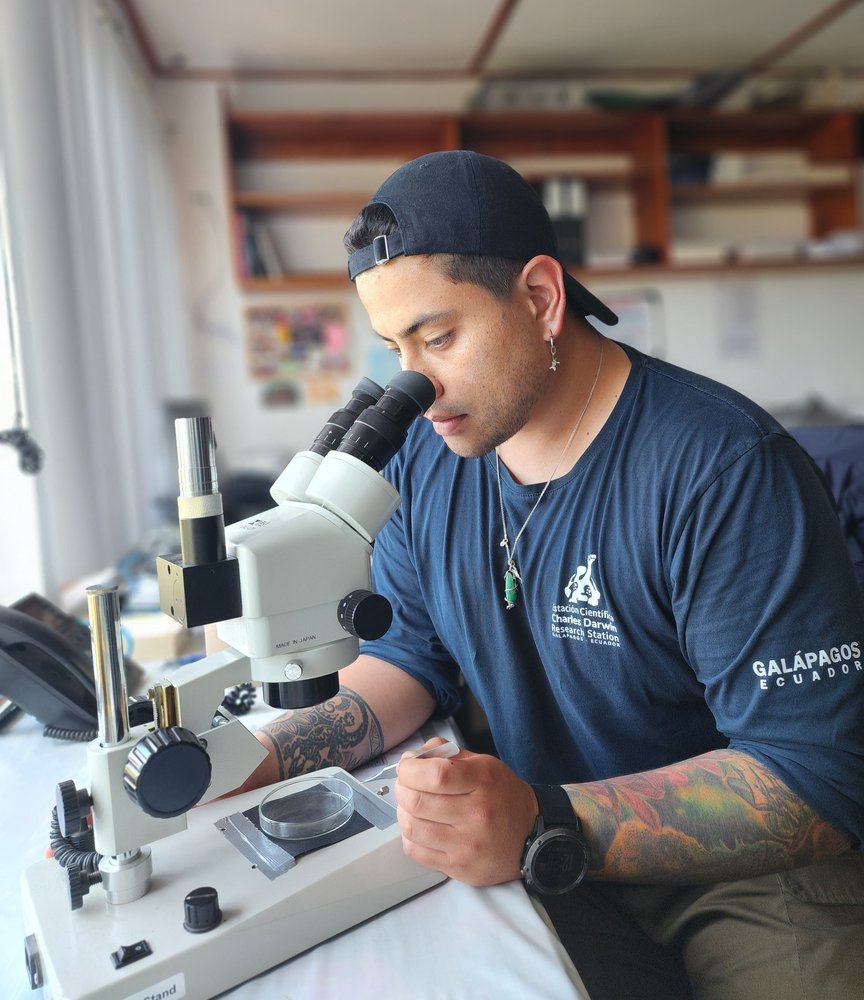
Archivo CDF
A world to discover
Parasitoid wasps remind us that a large part of the planet’s biodiversity remains unknown. In Galapagos, where ecosystems are unique and fragile, studying these organisms is fundamental to understanding how plant and animal communities function.
Although they are small and difficult to see, these wasps play important roles in ecosystems and are part of the complex web of life that sustains forests.
What is most surprising is that this tiny world is not found in remote or inaccessible places, but right in front of us, on leaves, branches and trunks of forests in Galapagos.
And perhaps most importantly, we are still in the early stages of getting to know it.
If you want to support our work with these small insects, as well as with others that inhabit this forest unique Scalesia, whose conservation is today one of our priorities, you can do so here