Home

Results

Rashid Cruz-CDF
Research Data Repository FKt230918 Cruise Report
Rashid Cruz/CDF
CDF Research Highlights the Crucial Role of Mangroves in Galapagos

Scientists from the Charles Darwin Foundation (CDF) have, for the first time, assessed the conservation status of mangrove ecosystems in the Galápagos Islands using the Red List of Ecosystems methodology developed by the International Union for Conservation of Nature (IUCN). The study concludes that this ecosystem is classified as Vulnerable, underscoring the urgency of its conservation. The full report is available in the EcoEvoRxiv repository.

Carlos Espinosa/CDF
CDF Joins Floreana Ecological Restoration Project as Co-Executor

The Charles Darwin Foundation (CDF) has joined the Floreana Ecological Restoration Project as a co-executor, alongside other key organizations. This project aims to restore Floreana Island's ecosystem by eradicating invasive species and reintroducing native animals. CDF will lead habitat restoration efforts and support species reintroductions and monitoring. The initiative focuses on holistic restoration, serving as a model for future conservation projects across the Galapagos and beyond.

Rashid Cruz/CDF
Winged Guardians: Owls and Their Role in Galapagos Conservation

With a heart-shaped face and silent wings, the Galapagos barn owl is a quiet force of balance in the archipelago’s ecosystems. Endemic to the Islands, this elusive predator controls invasive rodent populations, supporting the survival of critically endangered species and ongoing ecological restoration. In the shadows of lava tunnels and forest canopies, it hunts with precision—and reminds us that even the smallest wings can carry the weight of conservation.

Pelayo Salinas de León/CDF
Oceanic MPAs Harbor Highest Concentrations of Sharks

A groundbreaking study across seven marine protected areas in the Eastern Tropical Pacific reveals thriving shark and predator populations in remote island MPAs like Galapagos and Malpelo, while coastal reserves are severely depleted. Discover what this means for ocean protection, why it matters, and the urgent actions scientists recommend.

Mara Speece / CDF
CDF Opens its Doors to the Largest Scientific Heritage of Galapagos in Ecuador

For the first time, the Charles Darwin Foundation opens Galápagos’ largest scientific collections to the public. Housing over 137,000 specimens, this new facility offers a rare glimpse into the science shaping conservation decisions and safeguarding one of the planet’s most extraordinary ecosystems.

Pelayo Salinas de León/CDF
Silky shark's record-breaking migration of more than 27,000 km on the Tropical Eastern Pacific sheds light on urgent conservation need

Silky shark's record-breaking migration of more than 27,000 km on the Tropical Eastern Pacific sheds light on urgent conservation need

Celebrating the life of Phil van Haarlem

Phil van Haarlem was truly a force of nature. In celebration of his life, and to honour his time with us over the last 10 years, we have asked colleagues and friends to tell us their unique experience with Phil, whom we miss dearly.

Rashid Cruz/CDF
New Populations of Scalesia cordata Found in Southern Isabela Island, Galapagos

Park rangers from the Galapagos National Park Directorate (GNPD), in collaboration with scientists from the Charles Darwin Foundation (CDF), have discovered two new areas of Scalesia cordata on Sierra Negra volcano, located in southern Isabela Island. This discovery marks a significant milestone in the ongoing efforts to preserve this critically endangered species, which has seen its natural habitat severely reduced.

Joshua Vela
CDF Launches First Digital Dashboard of Introduced Species in the Galapagos Islands

The Charles Darwin Foundation (CDF) is pleased to unveil the Galapagos Introduced Species Dashboard, the first open-access digital repository of information about species introduced to the Galapagos Islands.

Carlos Espinosa/CDF
A Silent Hero: The Australian Ladybug

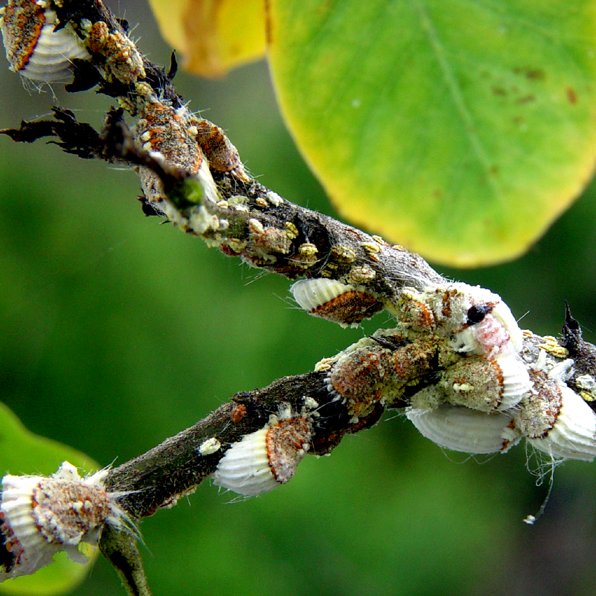
In the heart of the Galapagos Islands, a tiny, unexpected hero emerged in 2002 that would change the course of conservation. The Australian ladybug (Novius cardinalis), small in size but immensely effective, became a crucial ally in the fight against an invasive insect that threatened to devastate the endemic flora of these islands. This is the story of how science, innovation, and nature itself came together to help preserve one of the most valuable biological treasures on the planet.

Teddy Zambrano, Sergio Zanchi, Oscar Cardenas y entire Connie Jean Two crew
Historic Sighting of White shark in Ecuador

Researchers from the Charles Darwin Foundation and the Galapagos National Park have published the first confirmed record of a white shark in Ecuadorian waters. The encounter, roughly ninety kilometers west of Wolf Island and outside the Galapagos Marine Reserve (GMR), marks an unusual sighting of this species in the Eastern Tropical Pacific, where sightings south of Mexico's coastline are exceptionally rare.

Carlos Espinosa/CDF
Carlos Espinosa/CDF
Carlos Espinosa/CDF
Species Database Phoenix dactylifera L.
Carlos Espinosa/CDF
Pachystachys lutea Nees
Species Database Pachystachys lutea Nees