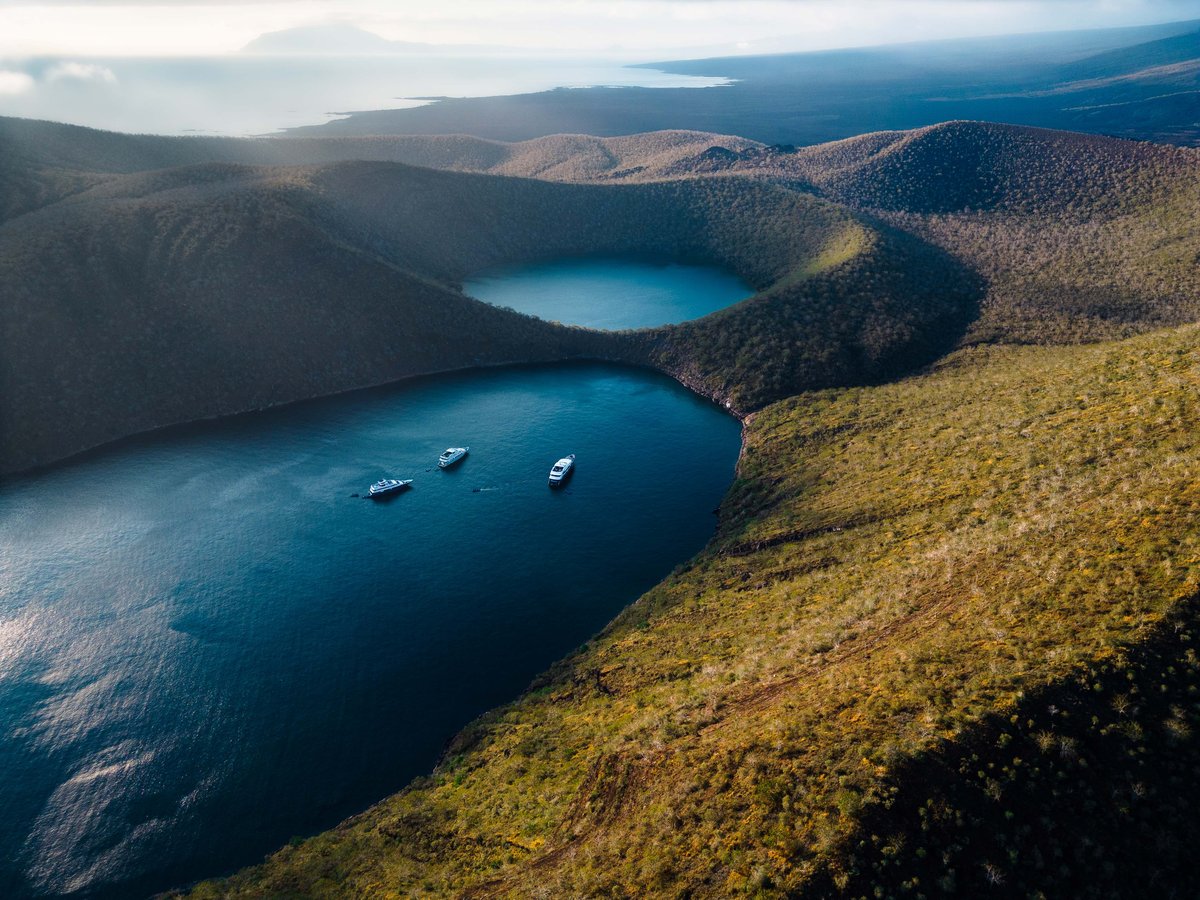

El Niño 2026 in Galápagos
Biodiversity on the front line
The ocean around Galápagos is changing again. Waters are warming, currents are shifting, and those changes are beginning to ripple through the food web—from microscopic organisms to penguins, marine iguanas, sea lions, sharks, and corals.
El Niño 2026 is already underway. During the first half of the year, conditions shifted quickly from a climate transition to sustained ocean warming. By July, forecasts indicated a high probability that the event would continue to strengthen toward the end of the year.
In Galápagos, El Niño is not measured only in degrees of temperature. Its effects are also reflected in food availability, reproduction, survival, and the ability of species and ecosystems to recover. That is where the story of biodiversity begins.
When the Ocean Changes, Food Becomes Scarcer
Cold waters reaching Galápagos carry nutrients that are essential to marine life. These nutrients support phytoplankton, microscopic organisms that form the foundation of much of the ocean food web.
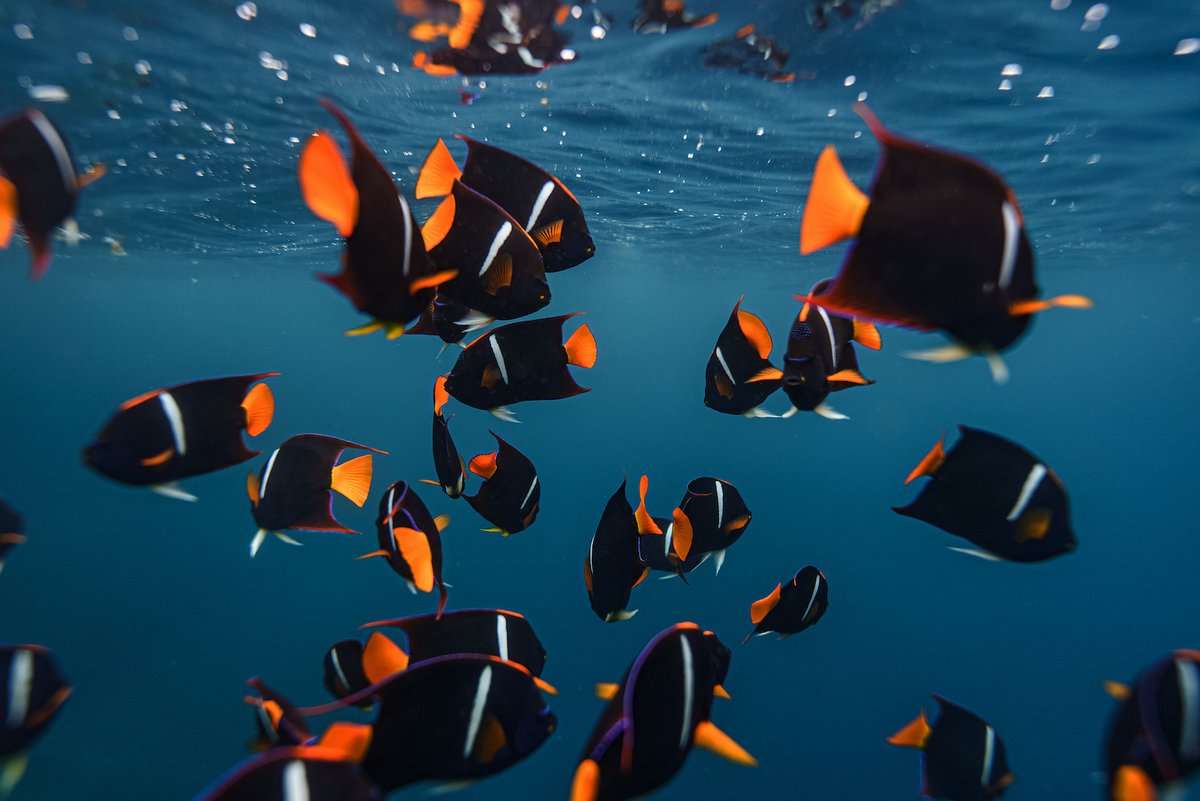
When El Niño warms the sea and reduces the arrival of nutrient-rich waters, marine productivity declines. Small fish and other organisms have less food, and that shortage can then move up the food web to the species that depend on them.
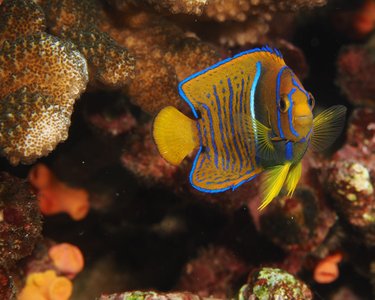
María José Barragán, Science Director at the Charles Darwin Foundation, explains that “with warmer water, primary productivity declines.” The change may be invisible from the surface, but its consequences can emerge weeks or months later. Penguins, cormorants, marine iguanas, sea lions, and large predatory fish all need enough food to survive, reproduce, and raise their young. When food becomes scarce, hunger is not the only problem: reproductive success can also decline.
Inti Keith CDF
Animals May Stop Reproducing
One of El Niño’s most significant effects is that animals may simply stop reproducing. When food is scarce, a species directs more of its energy toward survival. Individuals may abandon nests, stop mating, or produce fewer offspring. For seabirds, heavy rainfall can also alter the places where they normally breed.
María José Barragán notes that the problem is not only about finding food. Some species may also lose suitable breeding areas when vegetation changes or when heavy rain and runoff reshape nesting sites. For that reason, assessing El Niño only during the months of warmest ocean temperatures can provide an incomplete picture. Some of its consequences may become visible much later.
Daniela Vilema
Billy Bensted Smith CDF
Marine Iguanas: Looking on Land to Understand the Ocean
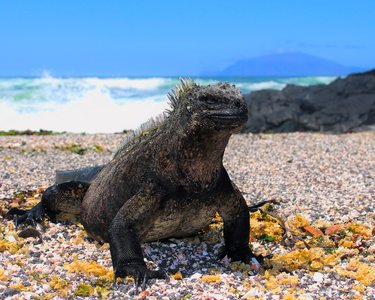
Marine iguanas are among the species that can quickly reveal what is happening beneath the surface. Because they depend on algae for food, they are useful indicators of ecosystem change. When ocean temperatures rise and the algae they feed on decline, marine iguanas can lose weight and, during severe events, die.
“The presence or absence of iguanas can tell us that something is happening in the ocean,” Barragán explains.
But scientists can only determine the severity of a change if they already know how many iguanas were present, where they were distributed, and what condition they were in before the event. The same principle applies to penguins, cormorants, sea lions, land birds, and many other species.
Billy Bensted Smith CDF
Corals Among the Most Vulnerable
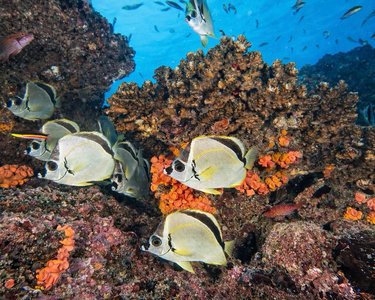
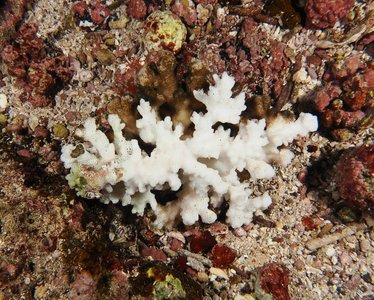
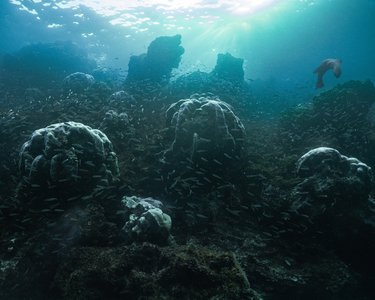
Some animals can move in search of better conditions. Corals cannot. That makes them among the organisms of greatest concern during a strong El Niño. “Corals will probably be among the biggest losers,” Barragán warns. Their tolerance for changes in temperature and ocean conditions is particularly limited.
Galápagos history explains why this vulnerability matters. During the 1982–1983 El Niño, the archipelago’s reefs suffered an estimated 97% mortality. The 1997–1998 event further hindered their recovery and caused local extinctions.
When El Niño ends, its impacts do not necessarily end with it. Some ecosystems may need years to recover, while others may never return to their previous condition.
The Advantage of Decades of Observation
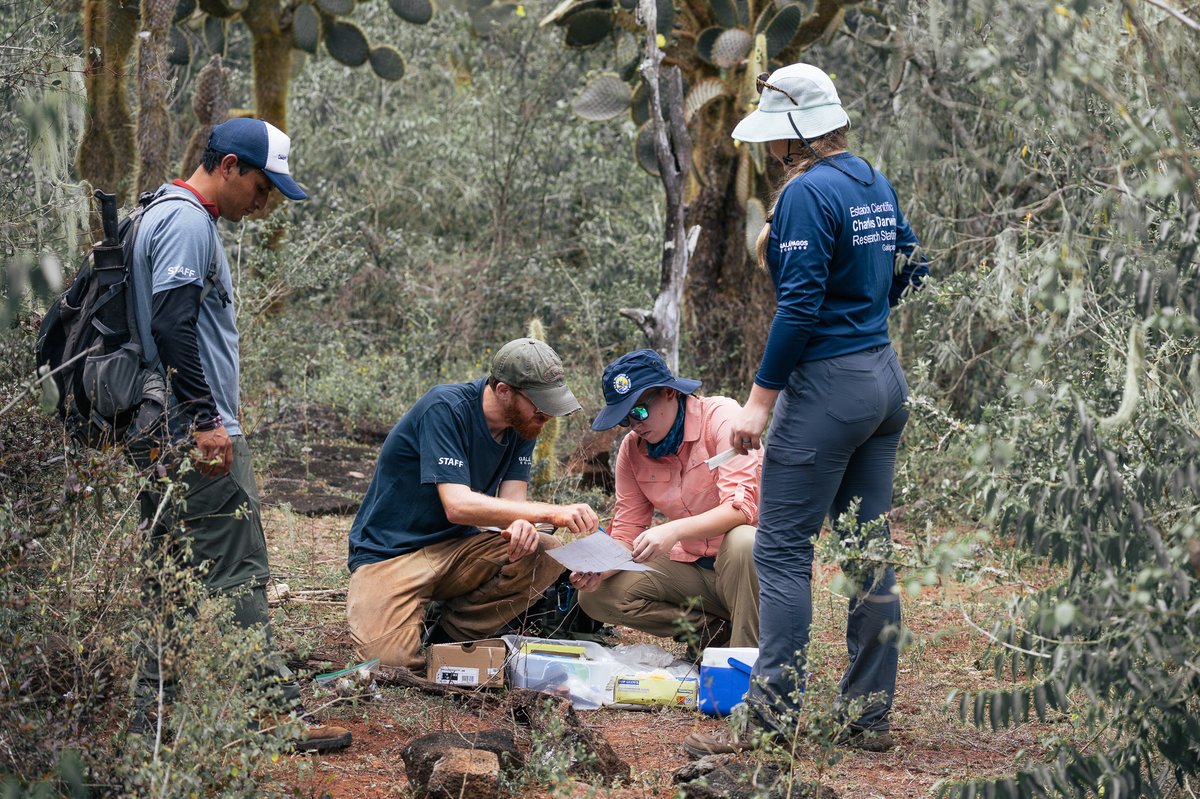
For decades, researchers have returned to the same colonies, counted animals, monitored reproduction, recorded temperatures, and documented changes in ecosystems. This long-term work makes something possible that would be impossible if scientists began collecting data only when a crisis emerged: comparison.
“We maintain several research programs based on long-term biological and ecological monitoring,” Barragán says.
That accumulated knowledge allows scientists to determine whether a population has declined, shifted its distribution, stopped reproducing, or managed to recover.
A Story That Is Just Beginning
Over the coming months, some of the earliest signals will probably appear in the ocean itself and in the availability of food. Changes in behavior, reproduction, and species distribution may follow. Only later will scientists be able to measure the full impact on populations.
Barragán stresses that the value of this information lies in its ability to guide decisions, set conservation priorities, and help Galápagos respond more effectively to the changes left behind by the event. When El Niño ends, scientists will need to ask which species resisted, which populations or reproductive rates declined, and which ecosystems were able to recover. Those answers will be essential for deciding how to respond to the next event.
That scientific memory will help us understand what is changing, identify the species that need the most attention, and make better decisions about how to protect them.
Billy Bensted Smith CDF
Frequently asked questions
How does El Niño 2026 affect biodiversity in Galápagos?
Warmer ocean temperatures can reduce nutrient and food availability, disrupt reproduction, and affect the survival of species such as penguins, marine iguanas, sea lions, cormorants, and corals.
Why do some species stop reproducing during El Niño?
When food becomes scarce, animals invest more energy in survival. This can reduce reproductive capacity, lead to nest abandonment, or result in fewer offspring.
What is the current status of El Niño 2026?
El Niño is continuing to strengthen. Ocean and atmospheric conditions across the equatorial Pacific show that the event is well established, with forecasts indicating a high likelihood of further intensification in the coming months.
What is expected from El Niño over the coming months?
Forecasts indicate that El Niño could continue strengthening toward the end of 2026 and persist into early 2027. In Galápagos, continued monitoring of ocean conditions and biodiversity will be essential to understand how ecosystems and species respond.