Mesocosms in Galápagos!
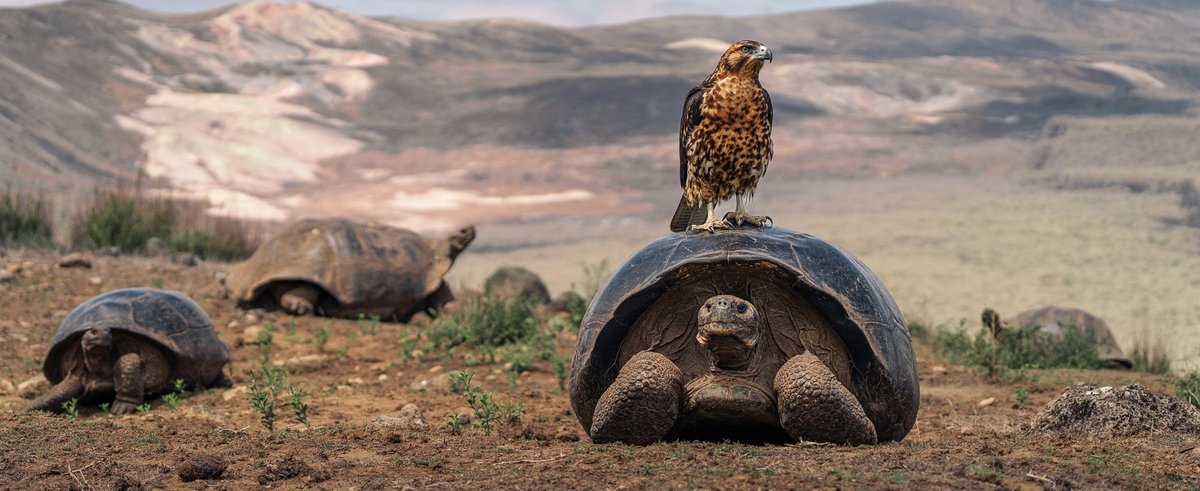
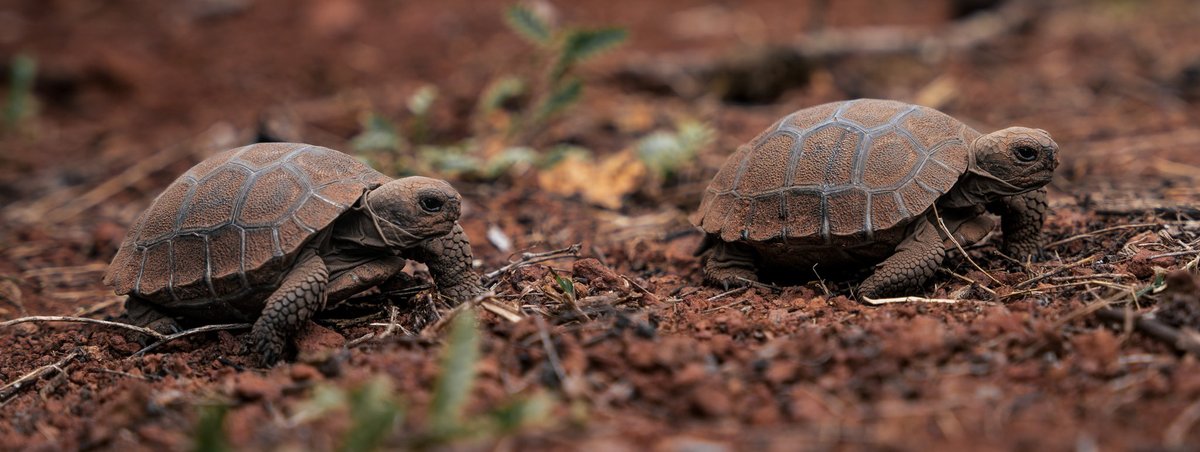
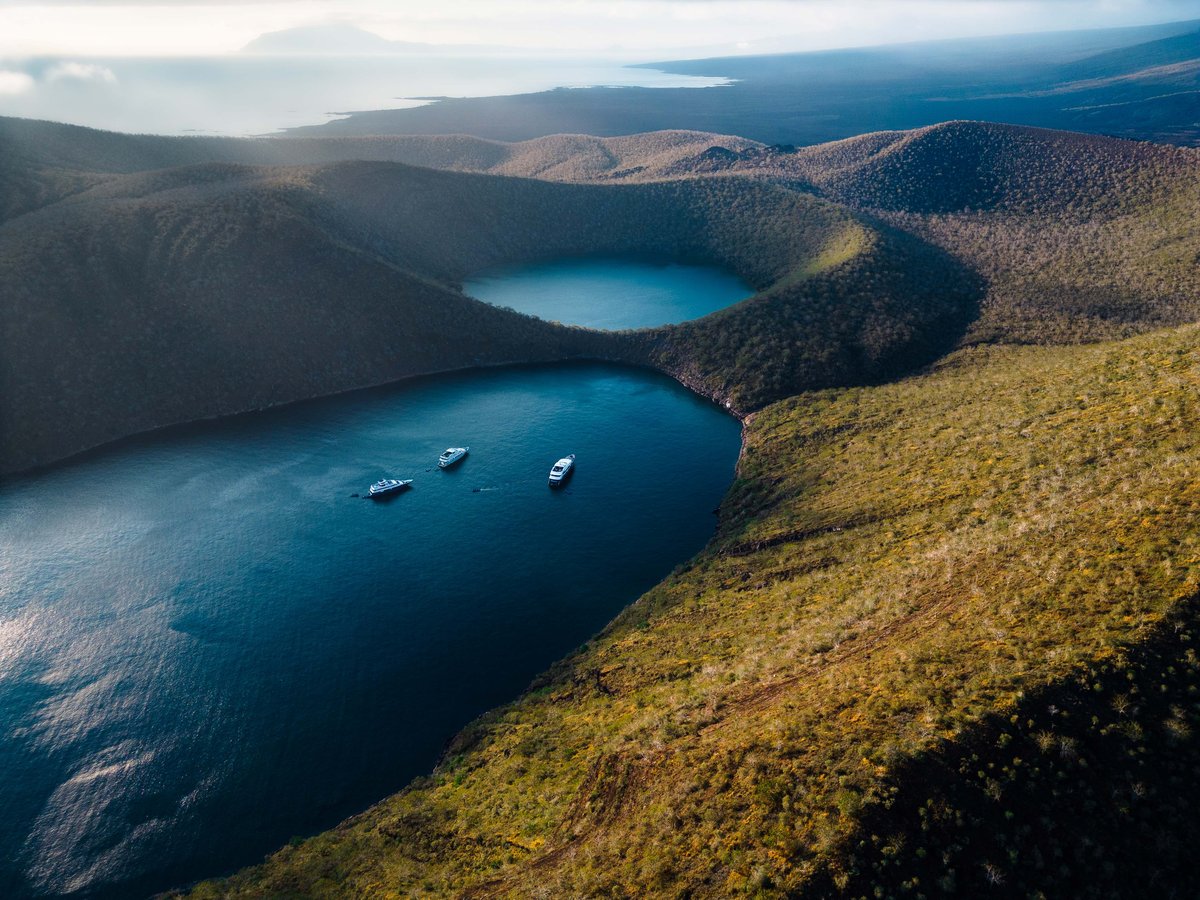
The Galápagos Islands are characterized, among many other things, by a scarcity of surface freshwater. There are few permanent ponds in the highlands of the islands, while most are temporary, small, and dry up during part of the year. Some of these ponds are linked to giant tortoises, which use these sites and, with their weight and strength, expand cavities in the ground that fill with water during the rainy season. Although these ponds are part of the Galápagos landscape, we still know little about how they function and the interactions between native and introduced species in an increasingly vulnerable environment. Now, our team seeks to answer some of these questions in a different way.
For the first time, through a collaboration with Rancho Manzanillo and three partners (Pontifical Catholic University of Ecuador, Oakland University, and Federal University of Paraíba), we have established a mesocosm facility to study these small ecosystems. In February 2026, we launched the first mesocosm experiment of this kind in Galapagos—a milestone for our team and a new opportunity to research the archipelago's freshwater ecosystems.
But… what is a mesocosm?
When I first heard this word, I imagined Carl Sagan or a series about the universe. However, a mesocosm is literally a "mid-sized world": an experimental system that allows us to recreate and observe a part of nature under controlled conditions, yet exposed to the real environment.
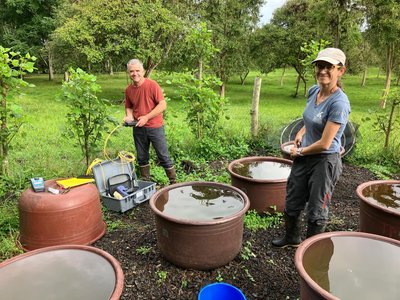
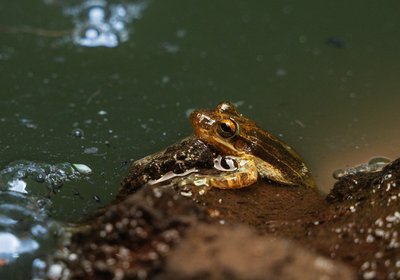
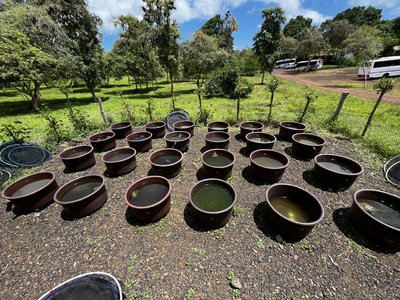
At the entrance of Rancho Manzanillo, we installed 24, 100-liter tubs that simulate natural Galapagos ponds. There, we are studying the development of tadpoles—locally known as uilli uillis—of the tree frog Scinax quinquefasciatus, the only introduced amphibian in the archipelago, and their potential relationship with giant tortoises.
To recreate these conditions, we used rainwater, inoculated with water from natural ponds, and tortoise dung, which is an important source of nutrients for these systems. This approach will allow us to better understand how the presence of tortoises can modify pond conditions and how these changes relate to the only amphibian introduced species in Galapagos.
Heinke Jäger CDF
What was the experiment?
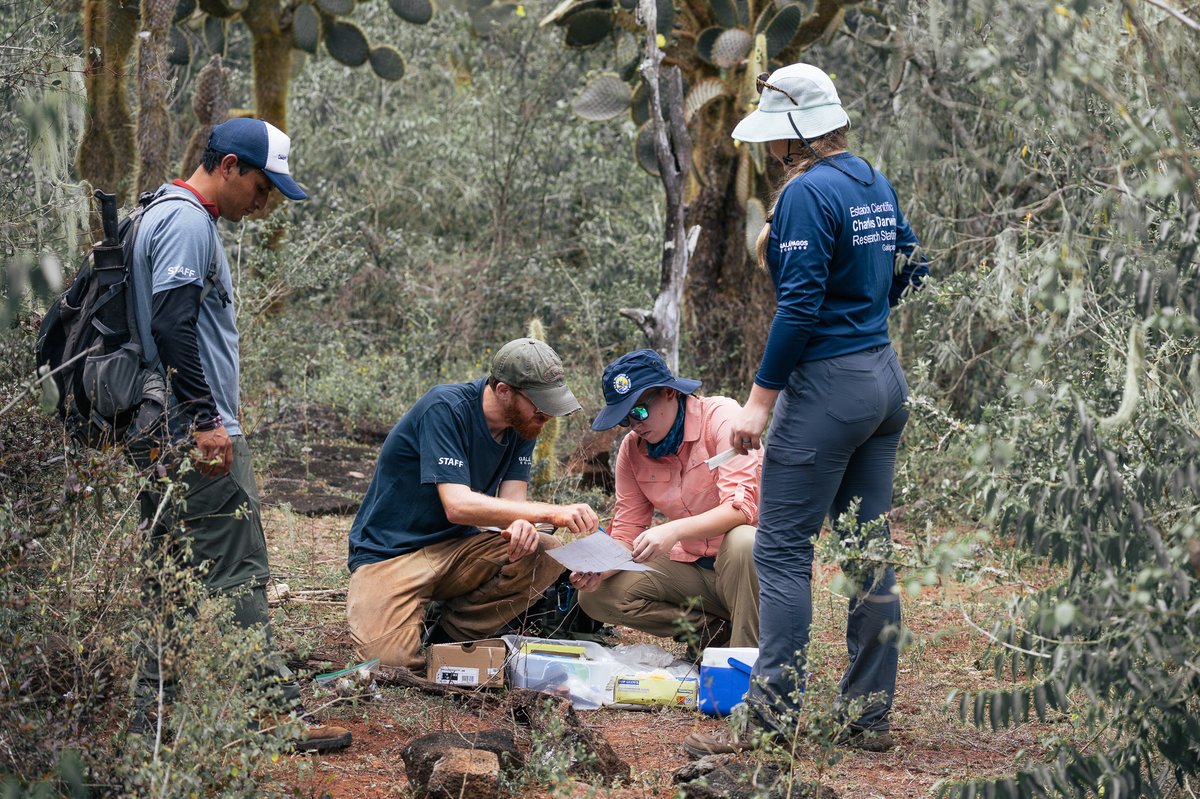
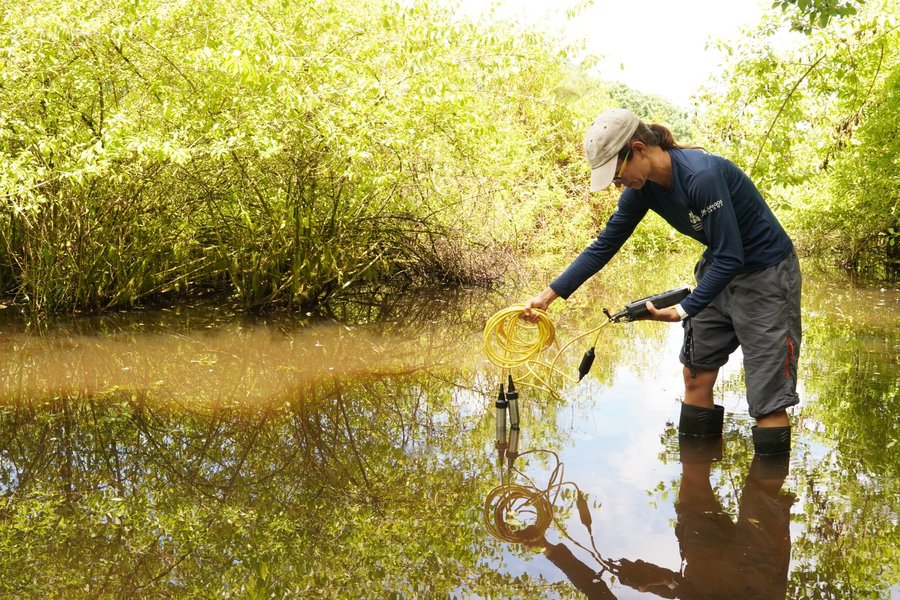
The experiment began on February 14, 2026. A group of researchers gathered at Rancho Manzanillo with several missions: to fill the tubs with rainwater and a pond water inoculum, measure water characteristics, and collect fresh tortoise feces. Out of the 24 water tubs, 12 received tortoise dung as an additional nutrient source. A month later, we added Scinax quinquefasciatus tadpoles to half of the tubs: six with tortoise feces and six without them.
In mid-April, one of the first exciting moments of the experiment occurred: the first little frogs began their metamorphosis! We are now analyzing the water samples and collected data to find out how the different conditions influenced the tadpoles' development.
Mara Speece CDF
Miriam San José CDF
Challenges and opportunities
Maintaining an outdoor experiment in the highlands of Santa Cruz also comes with challenges. Regularly reaching the site, controlling vegetation growth, and maintaining experimental conditions requires constant effort. During the rainy season, we must visit the facility several times a week to monitor the water level and prevent overflows.
Furthermore, although we use mesh screens to limit the entry of leaves and insects, nature always finds ways to participate in the experiment. Dragonflies, aquatic beetles, and even frogs can colonize the tubs, reminding us that working with real ecosystems means accepting part of their complexity.
This facility represents a new opportunity for collaboration and research on Galapagos freshwater ecosystems. Through these small "worlds," we will be able to answer questions related to biological invasions, climate change, and the future of a resource as limited as freshwater on the islands.
Understanding how these ecosystems function today is essential to anticipating the changes they might face tomorrow. Every new answer helps us better protect the extraordinary biodiversity of Galapagos and demonstrates why long-term scientific research remains essential to conserving these unique ecosystems.
S. Tiegs