



The 1973 Master Plan That Changed the Future of the Galapagos Islands
The history of the Galapagos Islands is marked by decisions that shaped the future of one of the most extraordinary territories on Earth. Among the most significant was the development of the Master Plan for the Protection and Use of Galapagos National Park, a document that transformed the management of the archipelago’s protected areas and laid the foundations for modern conservation in the islands.
The plan emerged during a period of profound change in Galapagos. In the early 1970s, international tourism was expanding, the local population was growing, and human activities were placing increasing pressure on ecosystems renowned worldwide for their unique biodiversity.
In 1972, General Guillermo Rodríguez Lara assumed power and promoted a state-led planning approach supported by revenues from Ecuador’s oil boom. Within this context, on February 18, 1973, the Galapagos Islands officially became a province of Ecuador. This new administrative reality highlighted the need for technical instruments capable of guiding the archipelago’s development while safeguarding its natural heritage.
Archivo CDF
Building a Vision for the Future
The initiative to develop a comprehensive plan began in November 1972 through cooperation between national and international organizations. Participants included the Food and Agriculture Organization of the United Nations (FAO), the United Nations Educational, Scientific and Cultural Organization (UNESCO), the Governor’s Office of Galapagos, Ecuador’s National Planning Board (JUNAPLA), and the former Department of National Parks and Wildlife.
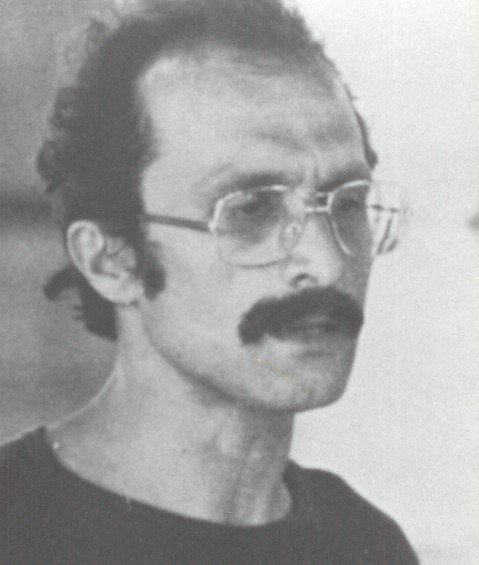
The Master Plan was developed by a multidisciplinary team that included Allen Putney, FAO Protected Areas Specialist; a representative of Ecuador’s Forestry Service, then part of the Ministry of Agriculture; and Peter Kramer, who represented UNESCO while serving as Director of the Charles Darwin Research Station. Together, they combined expertise in protected-area management, Ecuadorian legislation and government administration, and scientific knowledge of the Galápagos Islands. The initiative was supported by Bertram Husch, FAO Regional Director.
The result was the Master Plan for the Protection and Use of Galápagos National Park, one of the earliest comprehensive planning instruments for the management of protected areas in Latin America. The 1973 Master Plan also formalized a collaborative framework between Galápagos National Park and the Charles Darwin Research Station. While it maintained the Park as the authority responsible for the administration and protection of the protected area, it assigned the Research Station a central role in scientific research, the evaluation of research proposals, and the provision of technical advice to support the management of the archipelago.
A Diagnosis That Anticipated the Challenges of Galapagos
To support its recommendations, the plan included a detailed assessment of conditions in the archipelago. It identified population growth, expanding economic activities, and the steady increase in tourism as potential threats to island ecosystems in the absence of adequate planning and management mechanisms.
The document also highlighted institutional limitations that hindered effective territorial administration and natural resource protection. It emphasized the need to strengthen scientific research, improve coordination among organizations operating in the islands, and establish permanent environmental monitoring and management systems. This assessment provided the foundation for a long-term vision focused on preventing impacts and promoting planned territorial management.
Innovations That Marked a Turning Point
One of the plan’s most important contributions was the introduction of a territorial zoning system. The national park was divided into different management categories based on ecological characteristics and permitted uses. These categories included visitor zones, primitive areas, restricted zones, and special-use areas.
The plan also introduced an integrated approach by recognizing that conservation could not be pursued in isolation. Its recommendations linked biodiversity protection with scientific research, tourism, and the needs of local communities.
In addition, the document established criteria for regulating tourism activities, controlling access to sensitive sites, and defining use limits compatible with the conservation of natural resources. It also recommended extending protection to marine ecosystems, anticipating a vision that would later contribute to the creation of the Galápagos Marine Reserve.
Archivo CDF
Archivo CDF
A New Framework for National Park Administration
Beyond its technical recommendations, the Master Plan proposed an administrative structure for the operation of Galápagos National Park. The framework included a central administration responsible for planning, coordinating, and overseeing conservation activities, supported by technical staff and park rangers strategically deployed throughout the islands.
The model assigned a central role to scientific research as the basis for decision-making. To achieve this objective, it promoted close collaboration between Galápagos National Park, the Charles Darwin Research Station, and government institutions responsible for managing the territory.
The proposal also defined responsibilities related to species protection, protected-area surveillance, environmental education, and visitor management. At the time, this approach represented a significant advance because it introduced a management system grounded in scientific criteria and a clearly defined institutional structure.
A Legacy That Endures
Throughout much of the 1970s and 1980s, the Master Plan guided the administration of Galápagos National Park and served as a reference for decisions related to conservation and public use of the protected area.
Although later management plans eventually replaced it, many of its principles remain relevant today. Zoning, visitor management, protection of sensitive ecosystems, scientific research, and interinstitutional coordination continue to serve as fundamental pillars of environmental management in the archipelago.
Its legacy remains visible in the policies and strategies that continue to guide conservation efforts in the islands and reaffirm the importance of planning as a fundamental tool for protecting the future of Galápagos.