The 1985 Decision That Sustained Conservation in Galápagos
In 1985, the Charles Darwin Foundation (CDF) created its first US-based nonprofit to expand its fundraising base in North America, a move that proved decisive for the future of science in Galápagos and changed how conservation in the archipelago would be funded for four decades.
Recognition without resources
CDF was established in 1959 as an international not for profit organization, under the auspices of a young UNESCO and IUCN, to provide scientific advice to the newly created Galápagos National Park. In 1978, UNESCO declared the islands a World Natural Heritage Site, and in 1984 the National Park was designated a Biosphere Reserve. International recognition was growing, but the budget was not keeping pace.
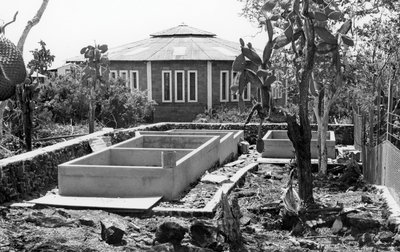
The Charles Darwin Research Station had been operating in Puerto Ayora for nearly two decades under a 25-year agreement with the Ecuadorian State that was due to expire in 1989. Its flagship giant tortoise and land iguana breeding programs were delivering results, but funding depended on one-off donations and a handful of European partners, with no reserves to plan ahead. In 1985, a fire burned for months on Sierra Negra volcano, on Isabela Island, devastating ecosystems and underscoring the need for predictable resources.
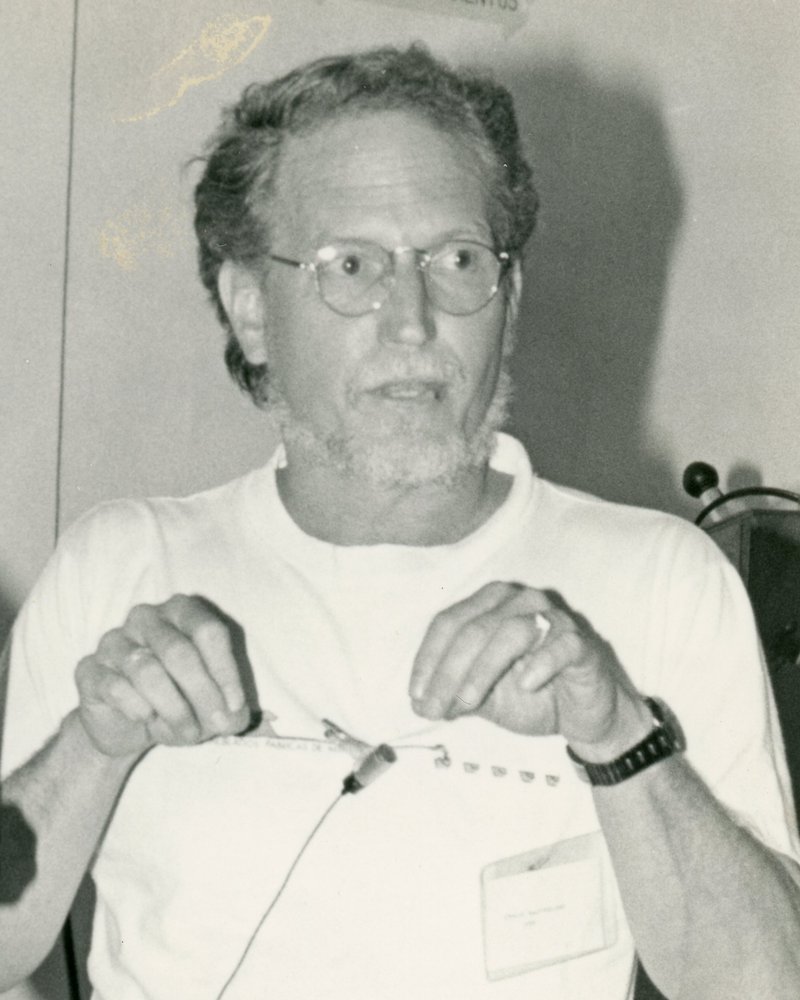
Under the presidency of Craig MacFarland (1984–1996), CDF recognized that long-term science cannot be sustained with short-term funding.
Powerful allies in Washington
The idea of an endowment came from Kitty and John Lastavica, who recommended incorporating a foundation in Delaware to manage it.
CDF joined forces with The Nature Conservancy and the Smithsonian Institution to launch a fundraising campaign in the United States. In March 1985, Ken Margolis and other representatives of The Nature Conservancy visited the Station to discuss the plan, as recorded in Noticias de Galápagos.
The goal was a US$1.5 million endowment fund, which started with US$1 million in 1987. The aim was not to cover immediate expenses but to build capital whose returns would fund research, education and conservation.
Archive CDF
The campaign had political backing at the highest level. At a ceremony at the Smithsonian in Washington, Ecuadorian President León Febres Cordero announced his government’s support for the fund, and the United States Agency for International Development (USAID) matched that commitment. Noticias de Galápagos summed it up realistically, noting that the fund would not solve every problem, but it would provide stability.
That sobriety is perhaps the most valuable lesson of the episode. Nobody promised miracles. They built a mechanism.
The first US nonprofit was a tool, not a symbol
The campaign gave rise to the Darwin Scientific Foundation, Inc., incorporated in Delaware in 1985 as CDF’s first US nonprofit. Its first chairman was S. Dillon Ripley. IRS records confirm its tax-exempt status from October 1985.
Its purpose was clear, to build and manage the endowment fund. In 1989, Noticias de Galápagos described it as an entity able to receive tax-deductible donations from U.S. donors, with no administrative fees and a mailing address at the Smithsonian itself.
That was the key point. Without a legal entity in the United States, an American donor could not claim a US tax deduction for a contribution to a foundation registered in Belgium and operating in Ecuador. The new organization removed that barrier and opened the door to the world’s largest philanthropic market.
An endowment works much like savings that are never touched. The capital stays invested, and only a portion of the returns is spent. For a research station, that meant being able to plan ten- or twenty-year research programs without depending on each new funding call, something it had lacked for two decades.
The model worked so well that CDF sought to replicate it. In 1988, a parallel endowment for Europe began to take shape under the leadership of Prince Henri of Luxembourg. By 1995, the Galápagos Darwin Trust was operating in Luxembourg for European donors.
Archive CDF
Four decades later
The seed planted in 1985 grew. In 1992, Johannah Barry founded the Charles Darwin Foundation, Inc. near Washington, a membership organization raising funds for Galápagos, while also leading the Darwin Scientific Foundation. The two merged in 2001 to channel funding to the Charles Darwin Research Station. The resulting organization grew to more than 10,000 members and built a donor network that remains active today. It now operates independently as Galápagos Conservancy, funding conservation initiatives led by various NGOs in the archipelago.
In 2022, CDF established another US not for profit, Friends of Charles Darwin Foundation, dedicated solely to supporting its scientific work in Galápagos. It follows the 1985 principle, updated for a new era. That continuity is the true dividend of the 1985 decision, four decades of a stable bond between American philanthropy and science in the islands.
The conservation of Galápagos is not explained solely by scientists in the field and park rangers on the islands. It also owes much to less visible institutional decisions, made in distant offices, that kept the work going long after the headlines moved on.
Creating the first nonprofit in the United States meant recognizing that science requires patience, and that patience requires funding. Forty-one years later, that lesson still holds.