The Galápagos We Don’t See
A new study reveals the enormous diversity of bees, ants, and wasps across the archipelago
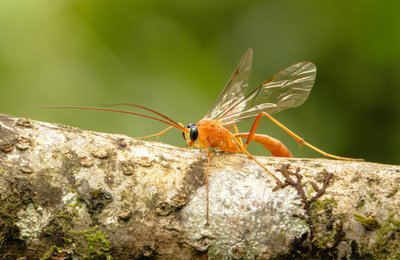
Galápagos is one of the most studied places on the planet and, yet, it still harbors relatively little-known biodiversity. For years, Hymenoptera, the order that includes bees, ants, and wasps, were among the least known and least studied insect groups on the islands. The most comprehensive list available before this study, published in 2017, included 84 species. Today, this new work documents a richness of 524 species/morphospecies and establishes a much broader baseline for understanding the diversity of this group.
Decades of work behind this baseline
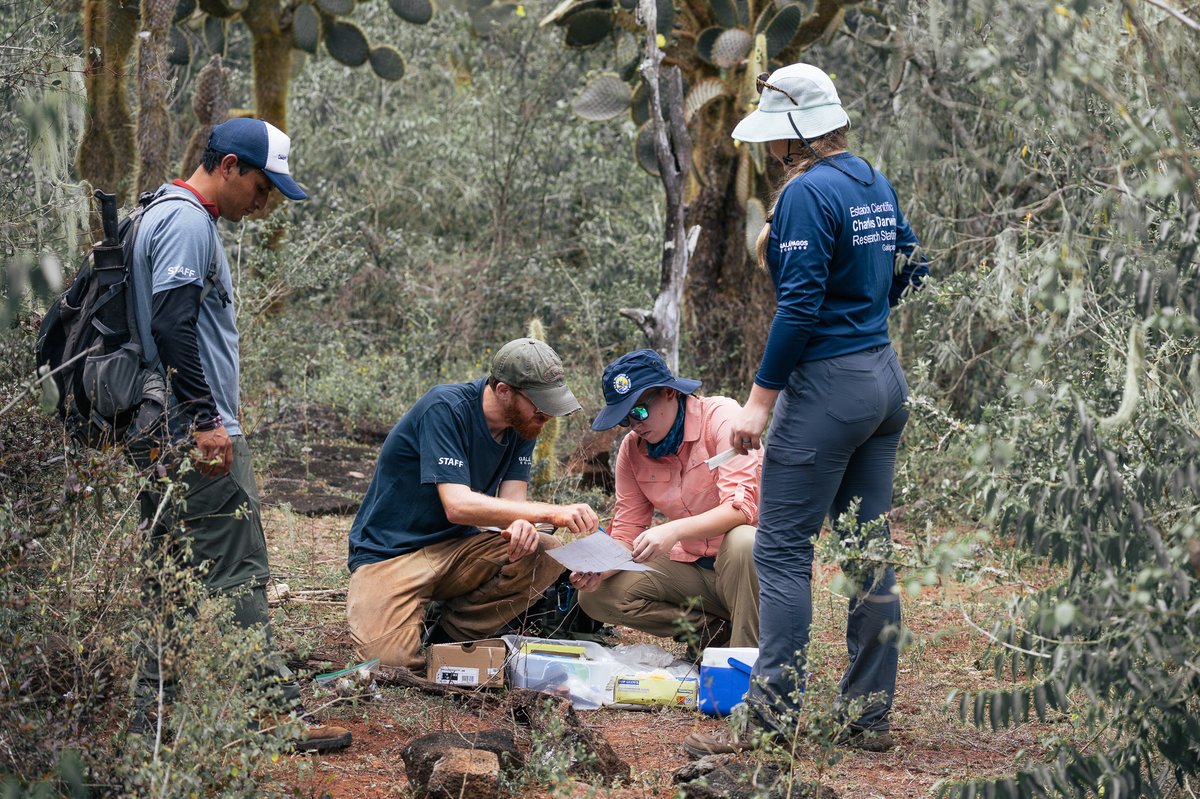
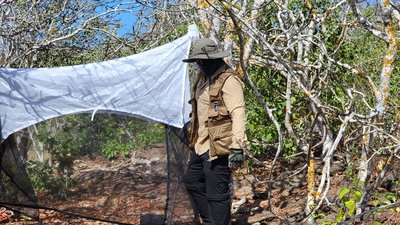
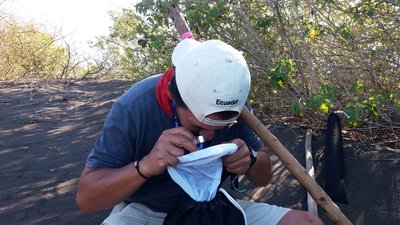
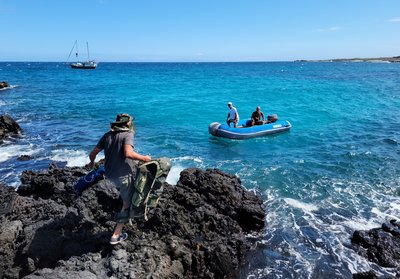
This work brings together several expeditions carried out from 2018 to the present, during which Hymenoptera were collected on ten of the largest islands in Galápagos, as well as on other islands and islets. The work was led by the Escuela Superior Politécnica de Chimborazo (ESPOCH), under an agreement with the Charles Darwin Foundation (CDF), together with researchers from the Universidad Nacional de Colombia.
This work also has decades of previous research and contributions from international experts such as John Heraty and Stewart Peck, who had already carried out several expeditions in Galápagos over the years and collected specimens and information that are now part of this baseline. In addition, information accumulated over years of ant monitoring, scientific collections, literature, and historical records was integrated. In total, the study brought together 21,364 Hymenoptera records between 1959 and 2025.
José Avendaño
Patricio Picón Rentería CDF
The challenge of identifying them
Many specimens could be clearly distinguished from one another, but it was not always possible to assign them a species name. For some groups, sufficient identification tools do not exist, comparative material is limited, or the diversity is so great that their identification requires much more specialized studies.
A considerable portion of the reported diversity consists of morphospecies, identified mainly to genus level. Reaching this level of identification already represents an important advance in these complex groups. Some of these morphospecies could correspond to already described species, while others could eventually prove to be new to science. Each one represents an opportunity to continue researching.
“For years, we knew that Hymenoptera diversity in Galápagos was underestimated, but we did not know how much remained to be discovered. This work allows us to build a stronger information base and identify the main knowledge gaps”, says Henri Herrera, ESPOCH researcher and project leader.
New records, new discoveries
The study documents, for the first time in Galápagos, 20 species, 134 genera, and 11 families, showing how much of this diversity had remained unrecorded.
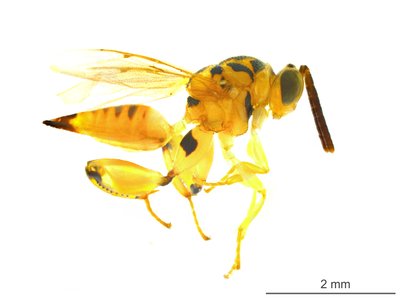
Some of these findings have already led to more detailed studies. In recent years, little-known families such as Sclerogibbidae and Mymarommatidae have been recorded for the first time in Galápagos, and Ablerus byroni, a species new to science, was also described from specimens collected during these investigations.
Patricio Picón Rentería CDF
Patricio Picón Rentería CDF
Alma Suárez
Continuing to discover
This work provides a much more complete taxonomic and distributional reference for the Hymenoptera of Galápagos, which will contribute to updating Galápagos biodiversity databases, such as the Charles Darwin Foundation’s DataZone, formally incorporating new records for the archipelago, and guiding future studies.
“It is satisfying to see the completion of the inventory of the Hymenoptera of Galápagos. The field and laboratory studies my research group carried out from 1985 to 2000 found the Hymenoptera the most difficult group to deal with. Now, an international group of scientists has brought this study to completion and found that this is the largest insect order on the islands. But we all realize that the study must continue and that new species will be found”,
says Stewart B. Peck, Professor Emeritus at Carleton University and one of the researchers with the longest-standing experience studying the insects of Galápagos.
This new baseline does not mark the end of the work on Hymenoptera in Galápagos: it shows how much progress has been made and, above all, how much still remains to be discovered.