
Galápagos, 1914: The Rumor That Made Ecuador Look to Its Islands
An unconfirmed report of German warships in the archipelago sparked a diplomatic crisis with France, Britain and the United States, and changed the Ecuadorian state’s relationship with its islands.
In October 1914, barely three months after the outbreak of the First World War, an alarming report reached Quito: German ships had allegedly anchored in the Galápagos Islands, landed British prisoners, loaded coal and stayed for several days. If true, Ecuador, a neutral country, had allowed a belligerent power to use its territory as a base in the Pacific.
It was never proven. But the rumor was enough to thrust the archipelago into the center of international diplomacy and to make the Ecuadorian state, for the first time, take seriously the defense of islands it had all but forgotten.
Historian Élodie Lenoël, a researcher at Université Sorbonne Nouvelle and the Centre for Research and Documentation on the Americas (CREDA), reconstructed the episode from diplomatic archives and the press of the time. She told the story on The Station, the podcast of the Charles Darwin Research Station.
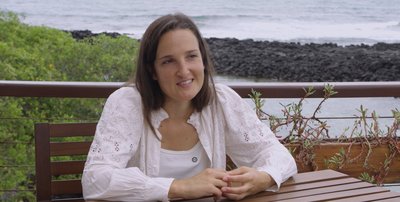
Carlos Espinosa CDF
A strategic point in the Pacific
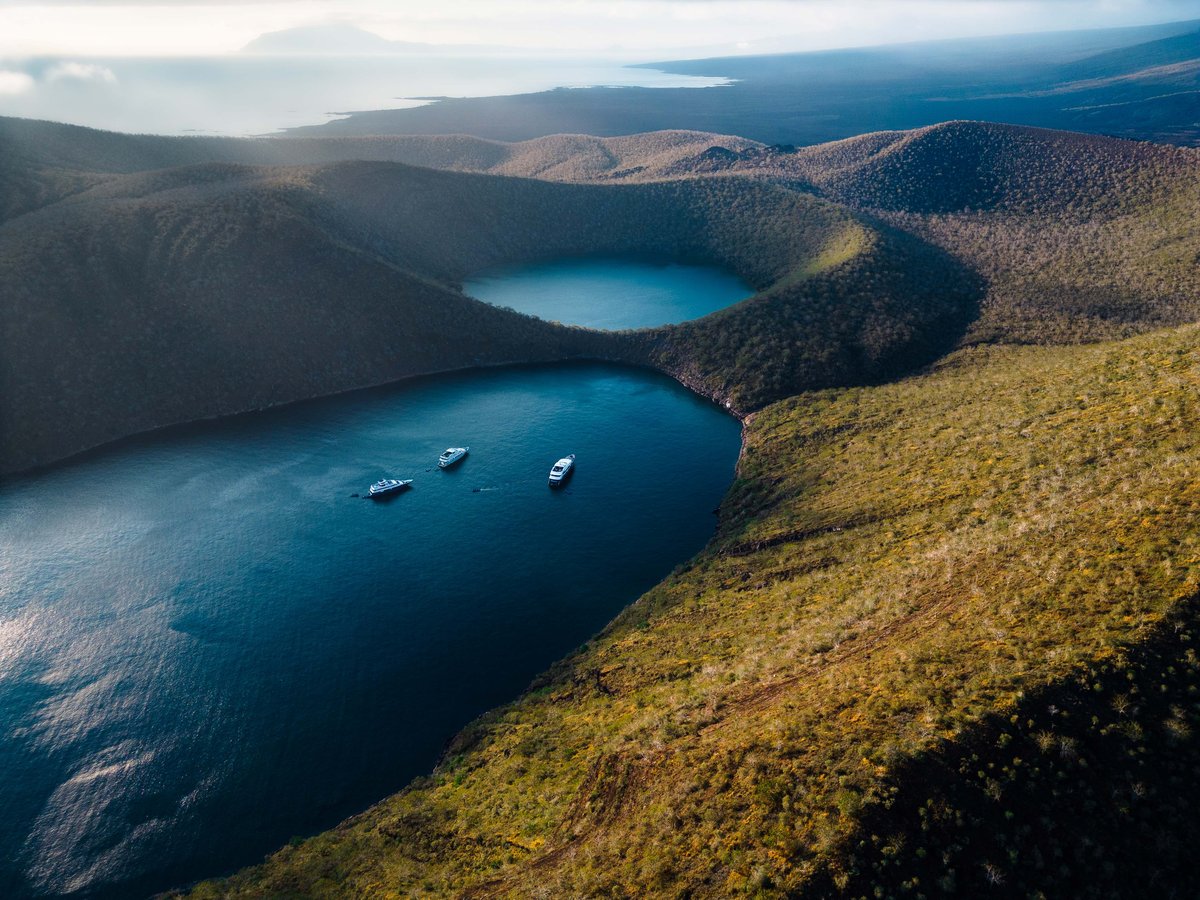
To understand the alarm, look at the map of 1914. The Panama Canal had opened in August that year, and Galápagos lay on the route of any fleet operating in the eastern Pacific. German and Allied squadrons were fighting in those waters.
Ecuador, by contrast, had no stake in the war. Its economy depended on cacao, which it sold to Britain, the United States, France and Germany. No border dispute or military alliance pushed it toward the front, and neutrality, declared on August 17, 1914, allowed it to keep trading with everyone. It held that position until December 1917, when it broke off relations with Germany.
Neutrality came with rules. International law barred a belligerent warship from remaining more than 24 hours in the waters of a neutral country. A German base in Galápagos would have been a serious violation and a direct accusation against Ecuador.
A rumor turned into fact
The Ecuadorian government acted cautiously. It told the representatives of the warring nations in Quito that it had received a rumor that still needed to be verified. The French and British diplomats did something else: they informed their capitals that the Germans were taking over the islands as a military base.
Paris and London reacted with alarm and turned to Washington. On November 14, the State Department asked its representative in Quito to find out whether Ecuador had broken its neutrality and whether Galápagos was a German naval supply base. For the Ecuadorian government, the fact that two European powers had gone to a third country to settle an Ecuadorian matter came as a surprise.
Washington insisted it had no wish to intervene, only to use its friendly relations. Ecuador responded with an assertion of sovereignty: the territory was its own, even if it lay a thousand kilometers from the mainland, and the country itself would investigate. The foreign minister promised to protest to Germany if the charges proved true.
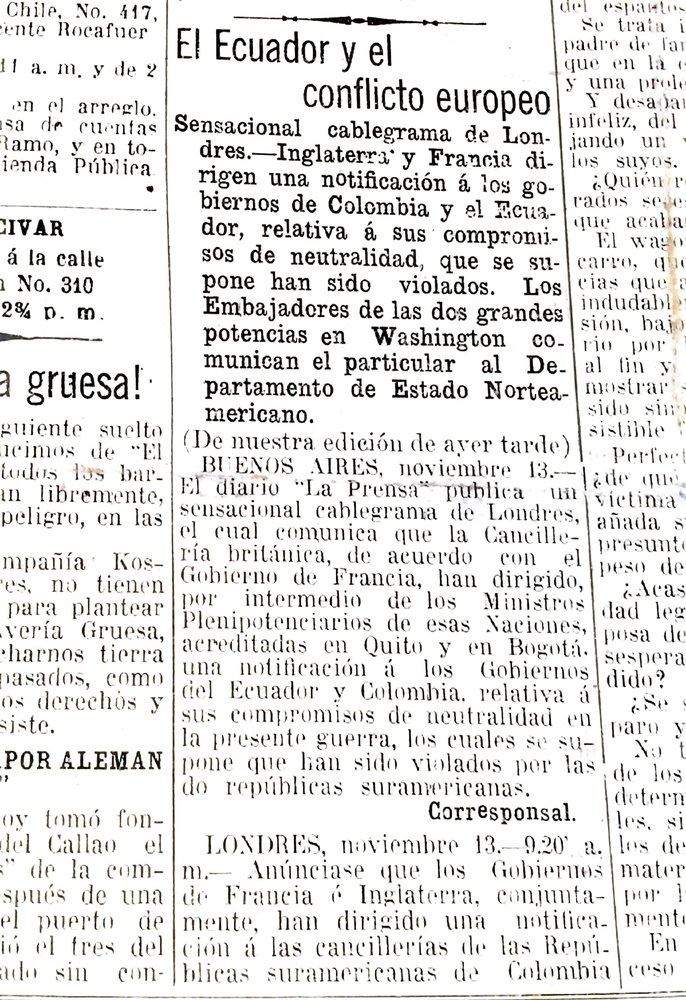
Biblioteca Nacional del Ecuador
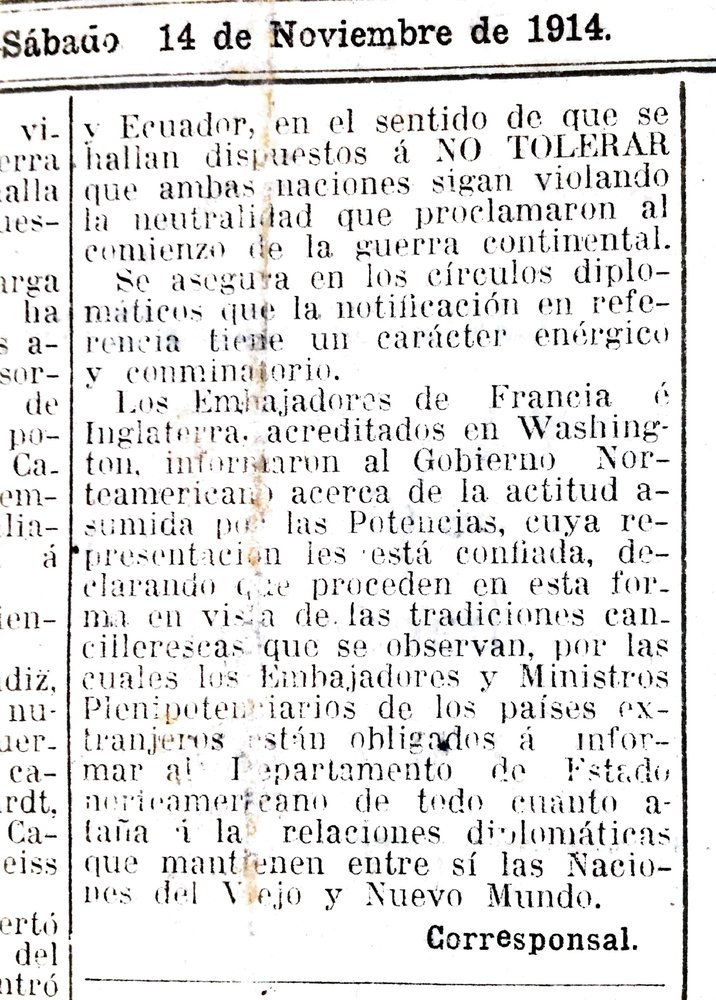
Biblioteca Nacional del Ecuador
What the commission found
The investigation, completed in December 1914, ruled out a military base. It found that German, British and Japanese ships had called at the islands and bought cotton and provisions, but no coal. On December 25, the government informed Washington that no breach of neutrality had occurred in its island territory. France, Britain and the United States accepted the report, and the case was closed.
That same December, Ecuador went further and proposed that the belligerents declare the seas off the American coasts a neutral zone.
“They could not land here and think of building a military base. What could happen is that, because it is a strategic place in the Pacific, ships came here to rest before returning to the naval battlefield.” Élodie Lenoël, historian.
Sovereignty is exercised through presence
The rumor’s most lasting effect was at home. Until 1914, Ecuadorian governments had neglected Galápagos: settlement projects were few, and no president had ever visited the archipelago. After the crisis, the Navy sent the ship Constitución to patrol its coasts. During his term, President Alfredo Baquerizo Moreno became the first head of state to visit the archipelago, even as the naval war continued in the Pacific.
“I think it has to do with affirming sovereignty, with recognizing that the islands are part of Ecuadorian territory and that they must be defended or, at the very least, watched over.” Élodie Lenoël, historian.
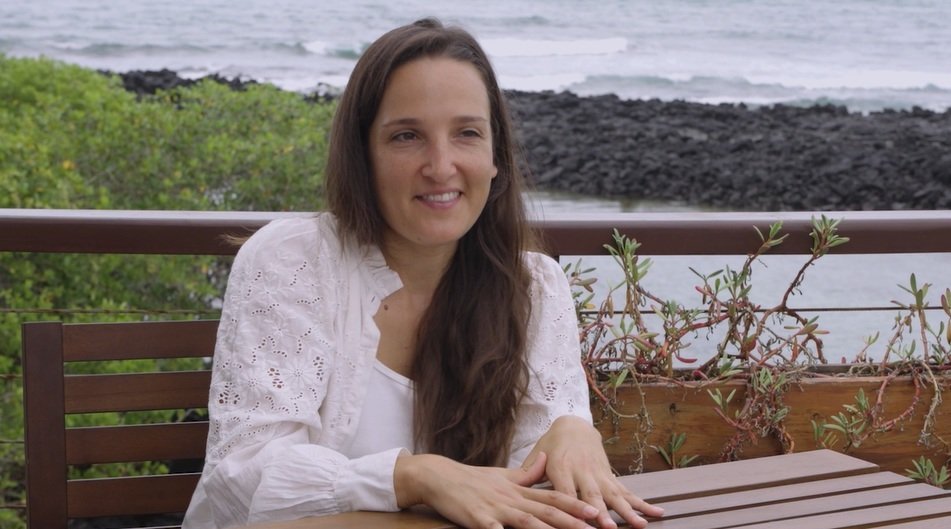
Carlos Espinosa CDF
From strategic periphery to global center
A century later, Galápagos is a global benchmark for science, conservation and tourism. Many visitors see it as a natural paradise with no state and no history. The 1914 episode belies that image: the archipelago has always stood at the crossroads of international interests, and Ecuador has held on to it since 1832, despite offers to sell or lease it.