

The Salasacas
The Indigenous Community That Helped Build Galapagos
The Galapagos Islands are home to countless stories waiting to be told. They are stories of people whose hard work and determination helped shape the archipelago, overcoming enormous challenges to build a life in one of the world's most extraordinary natural environments. Among them is one story that has rarely appeared in the historical record: that of thousands of Indigenous men and women who helped build the Galápagos we know today.
Anthropologist Pilar Sánchez Voelkl brings this overlooked history to light in her book Salasacas de Galápagos: Colonization, Governance and Conservation in the Archipelago. Based on years of historical research, archival records, and dozens of personal testimonies, the book reconstructs the presence of the Salasaca people in Galápagos and reveals how an Indigenous community became a driving force behind the development of Santa Cruz while remaining largely invisible in the islands' official historical narrative.
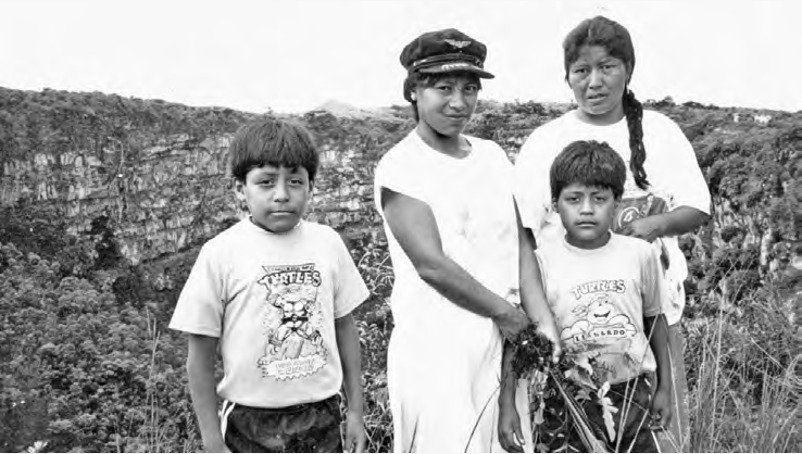
Archivo Margarita Masaquiza
A Migration That Helped Transform the Islands
The book shows that the history of the Salasaca people in Galápagos began much earlier than commonly believed. The first Indigenous people from Ecuador's central highlands arrived in the islands during the nineteenth century to work on haciendas established on San Cristóbal and Isabela. Beginning in the 1960s, however, numerous families from the parish of Salasaca, in Tungurahua Province, migrated to Santa Cruz, starting a movement that would profoundly shape the island's development.
Their arrival coincided with the rapid growth of Puerto Ayora as the archipelago's main urban center. Hundreds of Salasaca families-built homes, roads, businesses, and infrastructure that made the city's expansion possible and supported the island's development.
Today, an estimated 3,000 people of Salasaca origin live on Santa Cruz, making them one of the archipelago's largest communities. Yet their contribution to the history of Galápagos remained largely undocumented.
The Cost of Integration
One of the book's most important findings is that integration into Galápagos society required the Salasaca people to adapt to a very different social reality. In their homeland, they had preserved their language, traditional clothing, and cultural practices for generations. In Galápagos, however, the situation was different.
Sánchez describes this as a process of "cultural whitening," in which many people chose to say they came from Ambato or Pelileo rather than identify themselves as Salasaca. She reflects on this reality by noting:
"In Salasaca, some people genuinely wanted to become mestizo and stop wearing traditional clothing. But what struck me most was the situation of women, who carried a much stronger obligation to wear traditional dress, uphold their customs, and preserve their cultural heritage."
Rather than abandoning their Indigenous identity, many Salasaca families adopted strategies that allowed them to navigate a society where discrimination remained a constant challenge.
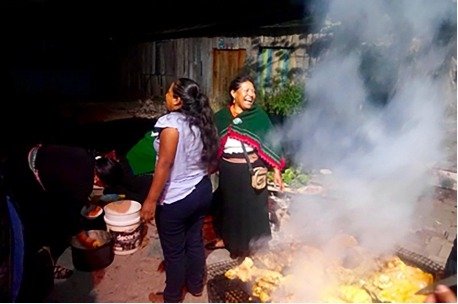
Pilar Sánchez
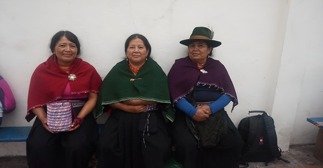
Pilar Sánchez
A Community That Never Stopped Resisting
In 1998, the death of Bernardo Caiza, known as "Cali," marked a turning point for the Salasaca community in Galápagos. After he died in an accident, his family was unable to find a place to hold his wake and faced rejection when asking for support. That experience inspired Salasaca families to organize and build their own community center. Constructed through collective volunteer work and community contributions, it became a place where traditions could be preserved, cultural identity strengthened, and the Salasaca Association established. Today, it remains the community's leading organization and the cornerstone of its cultural heritage.
As Margarita Masaquiza, president of the Salasaca Association of Galápagos, explains:
"The Association has allowed us to keep our culture alive. Here we gather, speak our language, and teach our children who we are and where we come from."
Beginning in 2010, a process of re-indigenization gradually took shape within the Salasaca community in Galápagos. After years of concealing their identity, several community leaders, including Margarita Masaquiza, resumed wearing traditional clothing and publicly embraced their Indigenous heritage. Rather than representing a return to the past, this cultural reaffirmation became an expression of pride and identity, as well as a strategy to strengthen community participation, highlight the Salasaca people's historical contribution, and advocate for the recognition of their rights as an Indigenous people in the archipelago.
A New Way of Understanding Galápagos
The book's greatest contribution is its invitation to rethink how we understand Galápagos. For decades, the history of the archipelago has focused primarily on nature, evolution, and the conservation of its unique species. Salasacas de Galápagos demonstrates that human history is also an essential part of the islands' heritage and that understanding it is fundamental to building a more complete picture of the territory.
In a place celebrated worldwide for its extraordinary biodiversity, this book reminds us that Galápagos is also home to an extraordinary diversity of human stories. Preserving the memory of those who helped build the archipelago is, in itself, another way of conserving its heritage
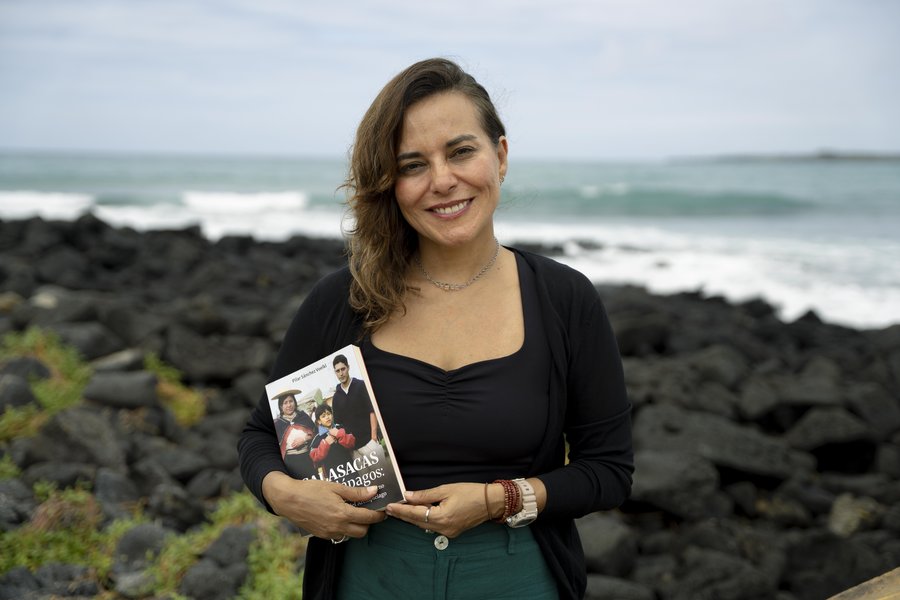
Carlos Espinosa CDF