
The Science Behind a Designation
When Galápagos Became a Biosphere Reserve
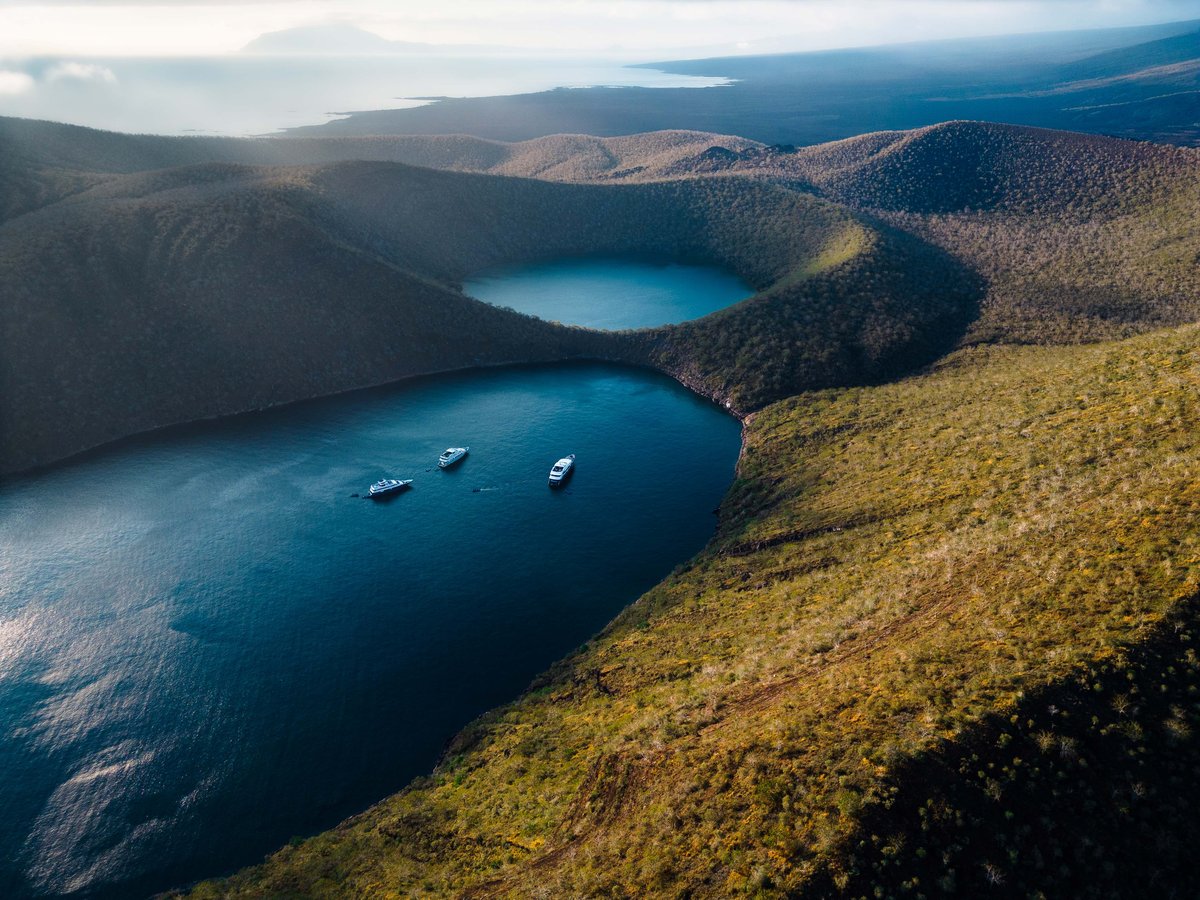
In 1978, the Galápagos Islands were inscribed on UNESCO’s World Heritage List during the second session of the World Heritage Committee. Six years later, in 1984, the archipelago was incorporated into the World Network of Biosphere Reserves. Although both designations are related to the conservation of Galápagos, they respond to different concepts and objectives.
The Man and the Biosphere Programme -MAB, by its acronym- seeks to integrate biodiversity conservation with sustainable development, research, monitoring, education, and training. In other words, it aims to understand and build a sustainable relationship between people and their environment.
Background to the Nomination
In 1980, Peter Kramer proposed that the Government of Ecuador and the National Committee of the Man and the Biosphere Programme promote the designation of Galápagos as a Biosphere Reserve before UNESCO. The proposal sought to broaden the approach to conservation in the archipelago by integrating ecosystem protection with research and human development.
A year later, in June 1981, during the 18th working session of IUCN’s Commission on National Parks and Protected Areas, the initiative received important support. The Commission considered the designation of Galápagos as a Biosphere Reserve to be a matter of “first priority and urgency” for Ecuador and stated that the islands met the basic requirements for such a status.
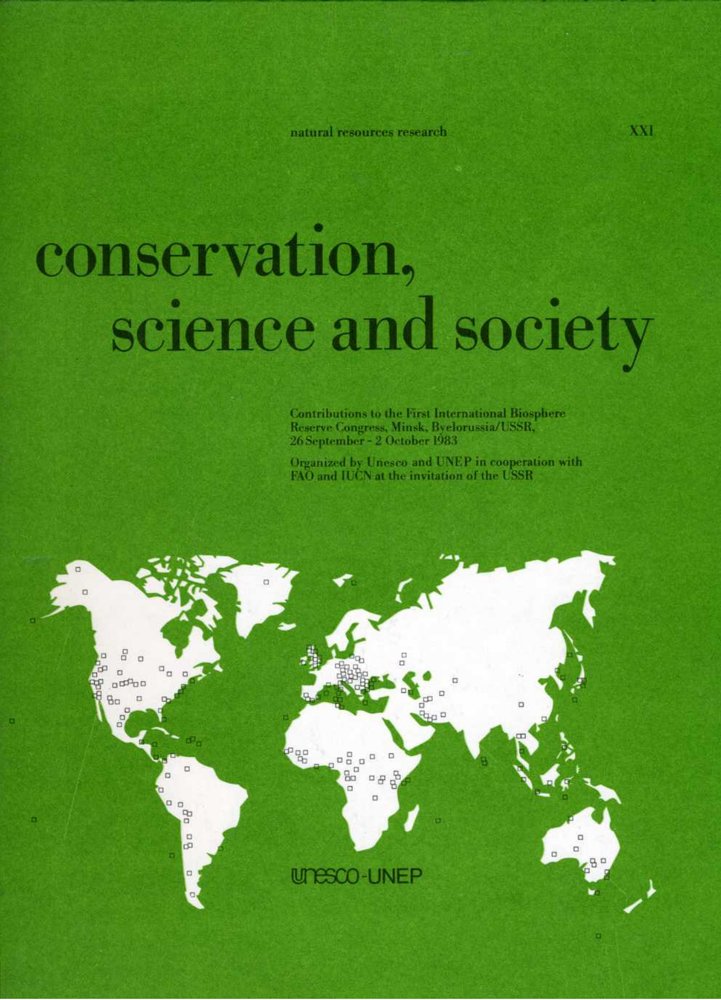
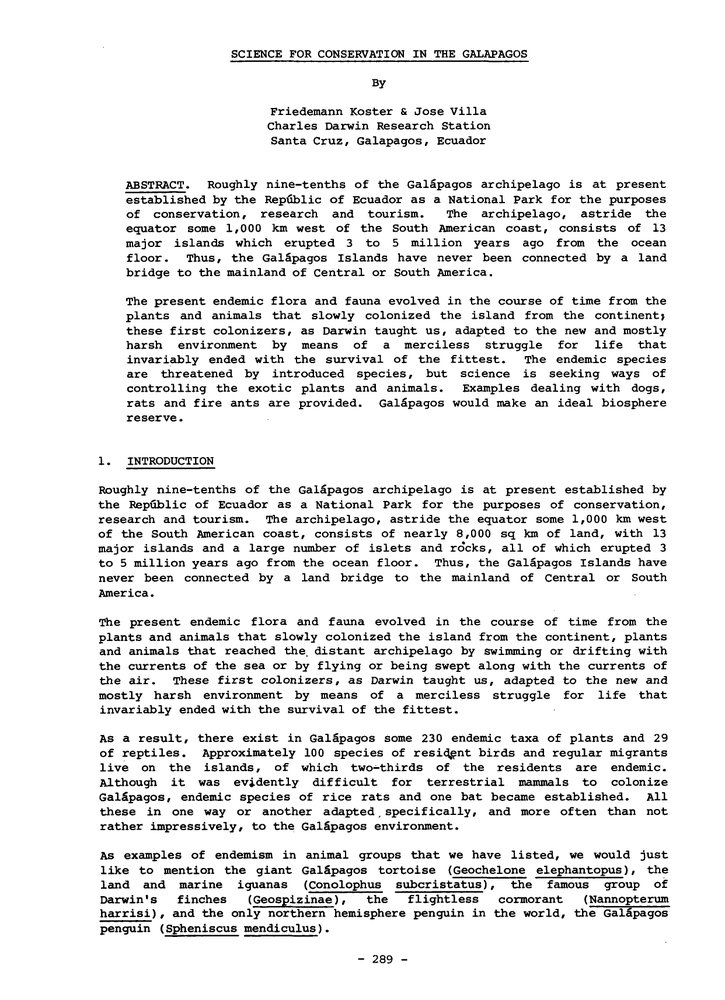
Scientific and international support gained further momentum in 1983, when Friedemann Köster and José Villa, from the Charles Darwin Research Station, prepared Science for Conservation in the Galapagos, a paper presented by Köster at the First International Biosphere Reserve Congress, held in Minsk. There, they highlighted the ecological uniqueness of the archipelago, the accumulated experience in research and management, and the need to integrate conservation and development.
Archive CDF
Archive CDF
The Official Nomination
A 1986 IUCN publication provides key evidence of the role played by the Ecuadorian State in this process. In an article by Arturo Ponce, then Head of Natural Areas and Wildlife of Ecuador, it is explicitly stated that the Ecuadorian Government submitted the request for Galápagos to be designated a Biosphere Reserve. The request was subsequently accepted by UNESCO’s Man and the Biosphere Programme (MAB).
The recognition was not intended simply to strengthen the protection of an exceptional territory, but to integrate conservation, scientific knowledge, and development, so that ecosystem protection could be aligned with the needs and dynamics of the society living on the islands.
Science Builds the Case
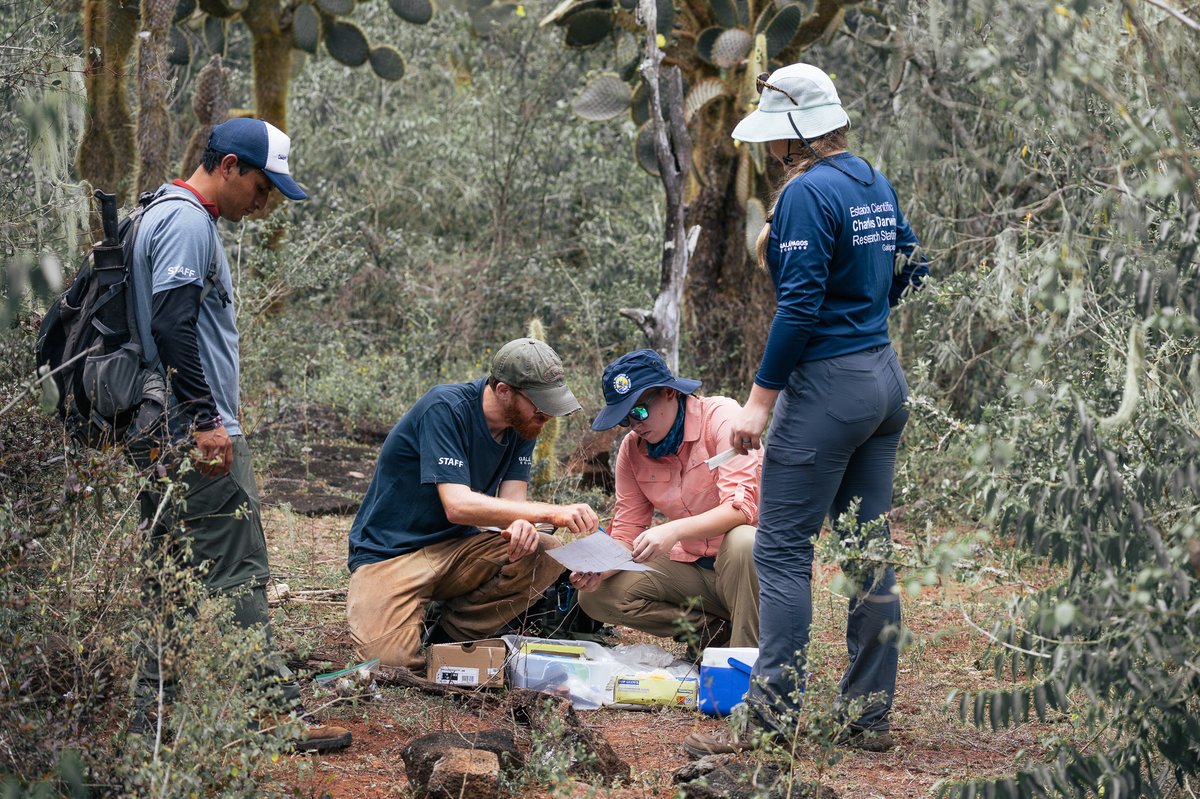
The document prepared by Friedemann Köster and José Villa of the Charles Darwin Research Station demonstrated that Galápagos not only possessed extraordinary biodiversity, but also had accumulated scientific experience capable of providing concrete solutions to conservation problems.
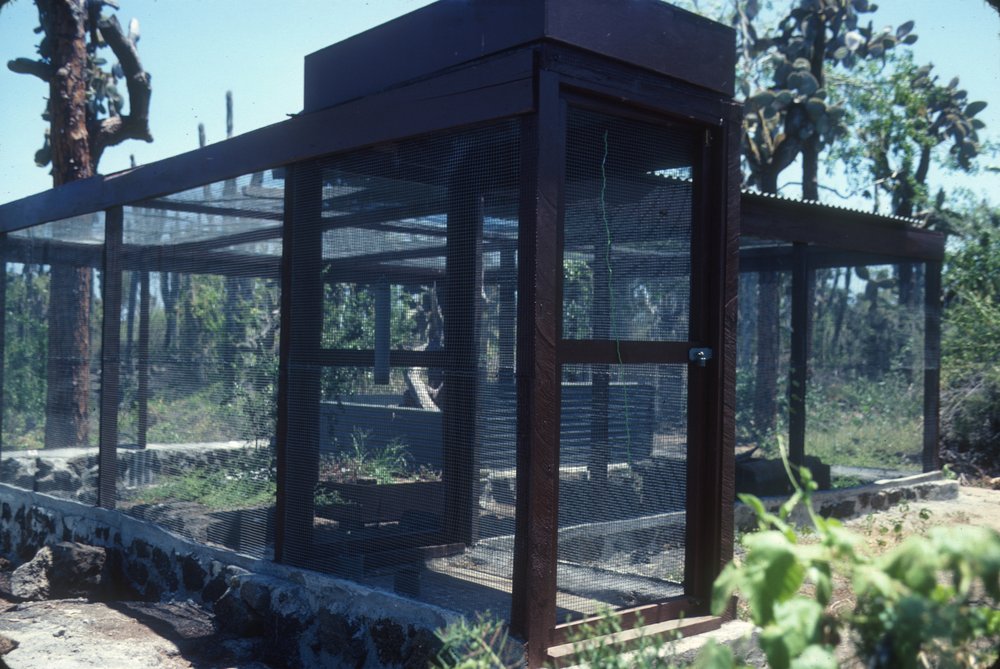
Among other examples, the authors described the impact of feral dogs on marine iguanas, penguins, sea lions, and birds, as well as the programmes implemented to reduce their populations. At Cerro Pajas on Floreana, monitoring of the Galápagos petrel helped identify the impact of rats and cats on eggs, chicks, and adults. Early results from control efforts carried out in 1983 indicated that at least half of the eggs and chicks could survive after rat populations were reduced in the intervention area. The little fire ant, Wasmannia auropunctata, was also being studied, as its spread was reducing the diversity of other invertebrates. For Köster and Villa, Galápagos was already beginning to become a laboratory for science applied to conservation.
Köster and Villa also emphasized that, in response to the growth of settlements, agriculture, tourism, and immigration, the Ecuadorian Government had created an agency responsible for coordinating these processes in an integrated manner and was preparing a Master Plan for conservation and social development in Galápagos.
This makes it possible to understand the process as a convergence between science, which helped build the international case, and the legal and institutional framework provided by the Ecuadorian State through the administration of the protected area and, ultimately, the official nomination.
A Vision for the Future
In the final section of their paper, Köster and Villa argued that the major challenge facing Galápagos was no longer simply the protection of species. Economic growth, tourism, agriculture, urbanization, and immigration made it necessary to think simultaneously about conservation and society. They therefore considered that a Biosphere Reserve could help overcome the apparent contradiction between conservation and development by integrating ecological criteria into decisions about the future of the archipelago.
Archive CDF
Galápagos thus added a different but complementary international recognition, six years after becoming a World Heritage Site. If the first designation had confirmed the universal value of its ecosystems, the second recognized that the future of the islands would depend on the capacity to use science to reconcile the conservation of an exceptional natural heritage with the needs of the society that lives within it.