The shark trade puzzle in Ecuador
Illegal shark trade exposes traceability gaps in Ecuador, demanding stronger governance, enforcement, and transparency to protect sharks and international markets.
Discover our work conserving key marine species in Galapagos and the Eastern Tropical Pacific.
View our Ocean Programs Deep-ocean exploration & conservation Mangrove Ecology and Climate Change Marine biodiversity research Marine bird conservation Ocean governance Sea turtle conservation Shark ecology and conservationExplore our efforts to safeguard and restore the Galapagos Islands' iconic land-based fauna and flora.
View our Land Programs Conservation of threatened plant species Control of the avian vampire fly Floreana Ecological Restoration Project Giant tortoise conservation Landbird conservation Restoration of Arid Zones Scalesia forest restorationUnderstand how our work is grounded in the benefits nature provides to the people of Galapagos.
View our people programs Education and Community Outreach Sustainable fisheries Sustainability for Conservation Urban and rural restoration
Make a lasting impact in Galapagos. Donate to support our mission and our work.
Donate Give monthly Adopt a speciesThere are a number of other ways you or your organization can contribute to our work.
Leave a legacy gift Become a corporate donor Fundraise for GalapagosThe impact you make in Galapagos is part of a larger footprint. Get involved today.
Meet our donors Become a CDF Ambassador Become a volunteer Send a free e-card! Sign up to our newsletter
Discover how our science and conservation programs are making a difference for the future of Galapagos.
View moreThe latest news releases from the Charles Darwin Foundation and its Research Station.
View moreExplore firsthand accounts from our researchers, staff, and collaborators in Galapagos.
View moreListen to The Station, where science, conservation, and stories from Galápagos come together.
Listen to our podcast
When you travel to Galapagos, you become part of a global effort to protect these iconic islands.
About Galapagos Travel tips How to pack for Galapagos Frequently Asked Questions Galapagos National Park Rules 2026 Cruise with the Grants
Discover our work conserving key marine species in Galapagos and the Eastern Tropical Pacific.
View our Ocean Programs Deep-ocean exploration & conservation Mangrove Ecology and Climate Change Marine biodiversity research Marine bird conservation Ocean governance Sea turtle conservation Shark ecology and conservationExplore our efforts to safeguard and restore the Galapagos Islands' iconic land-based fauna and flora.
View our Land Programs Conservation of threatened plant species Control of the avian vampire fly Floreana Ecological Restoration Project Giant tortoise conservation Landbird conservation Restoration of Arid Zones Scalesia forest restorationUnderstand how our work is grounded in the benefits nature provides to the people of Galapagos.
View our people programs Education and Community Outreach Sustainable fisheries Sustainability for Conservation Urban and rural restoration
Make a lasting impact in Galapagos. Donate to support our mission and our work.
Donate Give monthly Adopt a speciesThere are a number of other ways you or your organization can contribute to our work.
Leave a legacy gift Become a corporate donor Fundraise for GalapagosThe impact you make in Galapagos is part of a larger footprint. Get involved today.
Meet our donors Become a CDF Ambassador Become a volunteer Send a free e-card! Sign up to our newsletter
Discover how our science and conservation programs are making a difference for the future of Galapagos.
View moreThe latest news releases from the Charles Darwin Foundation and its Research Station.
View moreExplore firsthand accounts from our researchers, staff, and collaborators in Galapagos.
View moreListen to The Station, where science, conservation, and stories from Galápagos come together.
Listen to our podcast
When you travel to Galapagos, you become part of a global effort to protect these iconic islands.
About Galapagos Travel tips How to pack for Galapagos Frequently Asked Questions Galapagos National Park Rules 2026 Cruise with the Grants
Discover our work conserving key marine species in Galapagos and the Eastern Tropical Pacific.
View our Ocean Programs Deep-ocean exploration & conservation Mangrove Ecology and Climate Change Marine biodiversity research Marine bird conservation Ocean governance Sea turtle conservation Shark ecology and conservationExplore our efforts to safeguard and restore the Galapagos Islands' iconic land-based fauna and flora.
View our Land Programs Conservation of threatened plant species Control of the avian vampire fly Floreana Ecological Restoration Project Giant tortoise conservation Landbird conservation Restoration of Arid Zones Scalesia forest restorationUnderstand how our work is grounded in the benefits nature provides to the people of Galapagos.
View our people programs Education and Community Outreach Sustainable fisheries Sustainability for Conservation Urban and rural restoration
Make a lasting impact in Galapagos. Donate to support our mission and our work.
Donate Give monthly Adopt a speciesThere are a number of other ways you or your organization can contribute to our work.
Leave a legacy gift Become a corporate donor Fundraise for GalapagosThe impact you make in Galapagos is part of a larger footprint. Get involved today.
Meet our donors Become a CDF Ambassador Become a volunteer Send a free e-card! Sign up to our newsletter
Discover how our science and conservation programs are making a difference for the future of Galapagos.
View moreThe latest news releases from the Charles Darwin Foundation and its Research Station.
View moreExplore firsthand accounts from our researchers, staff, and collaborators in Galapagos.
View moreListen to The Station, where science, conservation, and stories from Galápagos come together.
Listen to our podcast
When you travel to Galapagos, you become part of a global effort to protect these iconic islands.
About Galapagos Travel tips How to pack for Galapagos Frequently Asked Questions Galapagos National Park Rules 2026 Cruise with the Grants
Illegal shark trade exposes traceability gaps in Ecuador, demanding stronger governance, enforcement, and transparency to protect sharks and international markets.
One plus one equals three
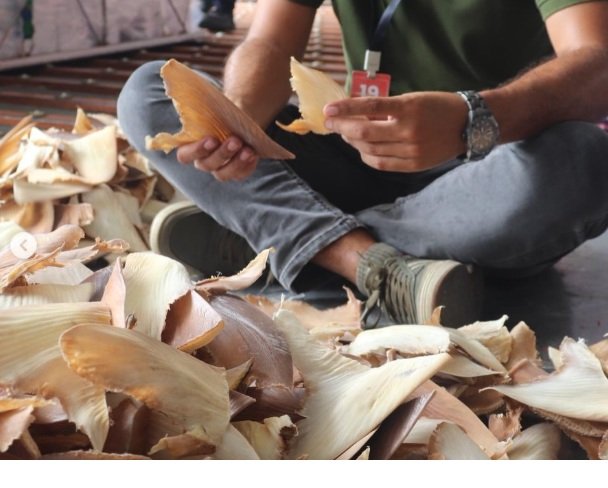
The recent seizure of 22,000 dried shark fins by Ecuadorian Police at Guayaquil airport adds a new piece to an already complex puzzle of the illegal shark trade in Ecuador. While such seizures are not new, this case highlights a key issue: the fins were destined for Malaysia and were set to be shipped by plane without the legally required CITES authorization to export endangered species.
Officially, targeted shark fishing is not permitted in Ecuador. However, current regulations allow fishing vessels to land sharks if these are declared as incidental bycatch. In practice, this means that a vessel targeting species such as tuna may return with sharks as part of its catch, as long as they are reported as bycatch.
This regulatory framework reflects the realities of mixed fisheries, but it also raises important questions. Ecuador’s oceanic fisheries land an estimated 260,000 sharks each year, placing the country among the top 20 globally in terms of shark landings, despite not having a targeted shark fishery.
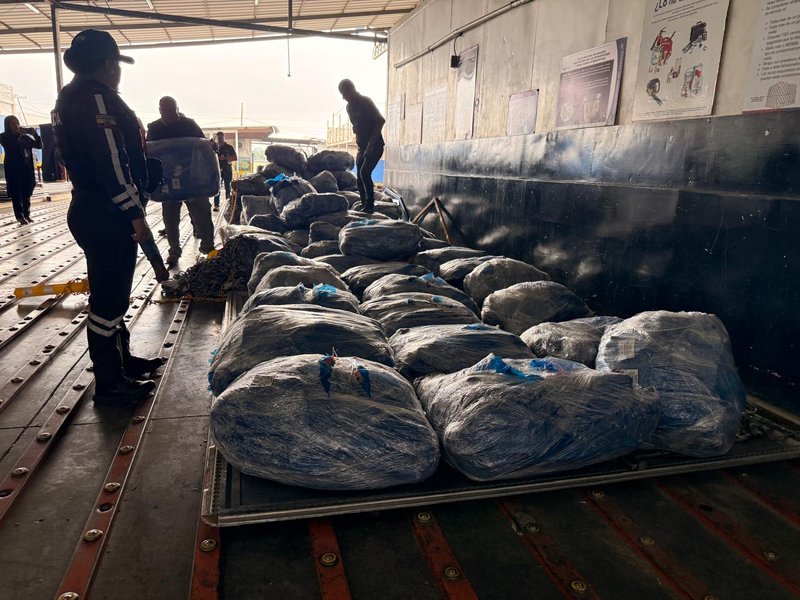
The trade puzzle
Historically, shark fins from Ecuador have been exported to Asian markets, while shark meat has been (and continues to be) traded to countries such as Peru, Spain and Portugal. In recent years, however, concerns around sustainability, transparency and traceability have gained prominence, leading the Convention on International Trade in Endangered Species of Wild Fauna and Flora, CITES, to issue measures in 2024 limiting Ecuador’s shark exports. Since then, Ecuadorian authorities have been working, on different fronts, to address these concerns, by improving fisheries governance practices, strengthening fisheries management, and by better regulating its fisheries, with the aim of lifting the international trade restrictions.
Yet some elements of the puzzle remain difficult to reconcile.
The landings puzzle - where do the sharks go?
Following the restrictions applied by CITES to Ecuador’s fisheries trade, declared exports of shark species prohibited, decreased significantly. At the same time, shark landings remained high. In 2024, Ecuadorian fisheries reported landings of more than 340,000 sharks.
Here, an important question emerges: If exports have declined, and shark meat is not widely recognized as a traditional food in Ecuador, where are all these sharks caught by Ecuadorian fisheries going?
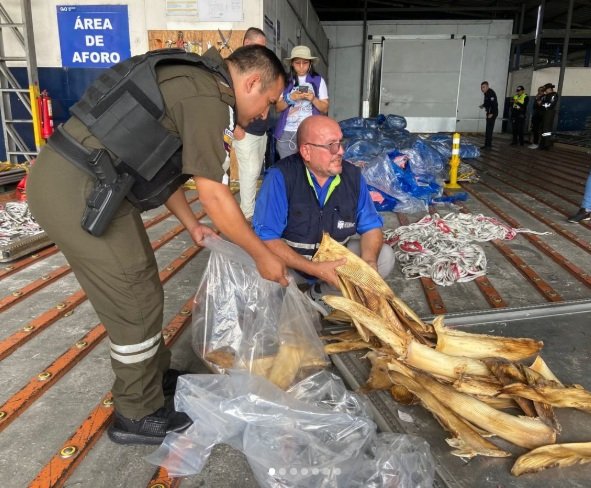
One plus one equals two again
A recent study by researchers at the Universidad San Francisco de Quito offers part of the answer. By analyzing fish meat sold in markets across Ecuador, including Manta, Guayaquil, Cuenca and Quito, the study found that about half of the “fish meat” sold in popular markets as corvina (a commonly consumed white-meat fish) was, in fact, shark meat.
The study also identified the presence of protected species, including hammerhead sharks, in those markets, which are illegal to land and trade in Ecuador. This points to challenges not only in traceability, but also in ensuring compliance with existing regulations that should be consistently applied across the supply chain.
Together, these findings help explain one important piece of the puzzle: a significant portion of shark meat that is not exported is entering Ecuadorian domestic markets under different labels.
The seizure of thousands of shark fins in Guayaquil a few weeks ago provides a second piece. It suggests that part of the international shark fin trade, which operated within legal export permits until before the CITES trading restriction in 2024, may be shifting toward illegal routes, potentially supplying international markets outside established controls.
Resolving the puzzle
This reveals a difficult reality about the shark trade in Ecuador. On one hand, it may be depriving consumers of the ability to make informed choices about what they are eating. On the other, it appears that legally conducted fisheries are contributing, intentionally or not, to global illegal trade. These dynamics are unfolding at a critical moment, as the country is working to improve transparency and traceability in its fisheries and trade, efforts that are essential to strengthen opportunities for the fishing sector and the communities that depend on it. However, the illegal and unregulated trade of shark products undermines Ecuador’s image abroad.
The recent seizure of illegal shark fins should be seen as a wake-up call. It highlights that resolving this puzzle will require closer collaboration between the fishing industry and government authorities in an effort to demonstrate that shark catches and trade from Ecuador are sustainable, transparent and traceable.
This is increasingly what key international markets, including the European Union and the United States, expect from Ecuador, and it will be central to restoring confidence and addressing current trade restrictions linked to CITES.