

Rearing flies to control flies!
For the last 16 years, researchers have been working hard to better understand the invasive fly Philornis downsi, a species that poses a serious threat to the survival of endemic birds in the Galápagos Islands. This has been no easy task and there are still many unknowns about this species, commonly called the avian vampire fly.
At the Philornis downsi laboratory at the Charles Darwin Research Station, work is focused on answering key scientific questions that will help figure out its biology and how this fly behaves in order to find practical solutions for controlling this deadly fly.
Daily routine in the laboratory
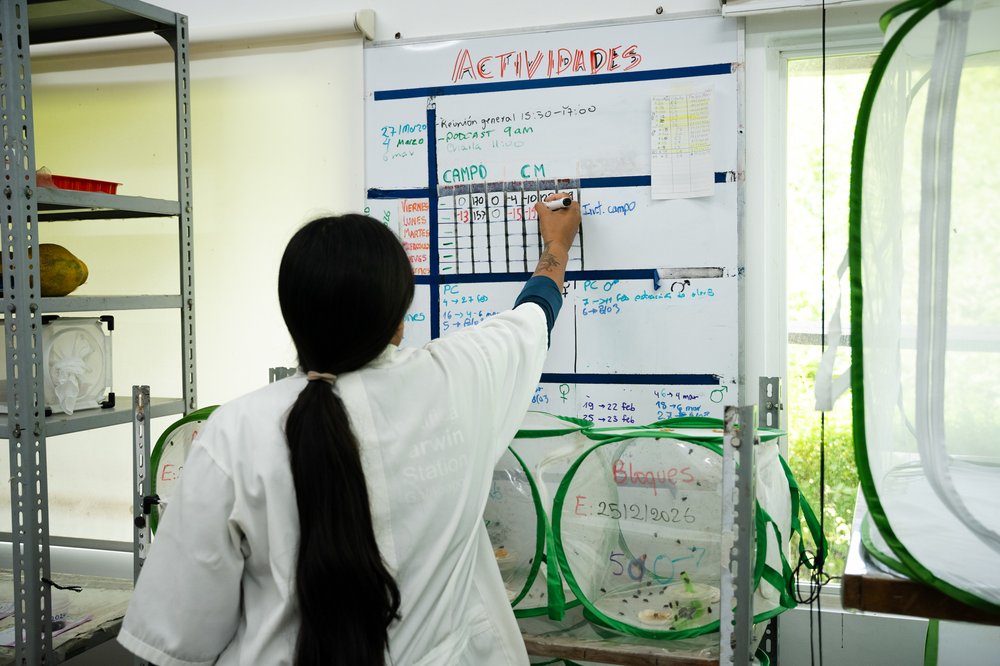
Each week begins with the careful planning of tasks as well as quality controls to make sure that all activities meet strict scientific standards.
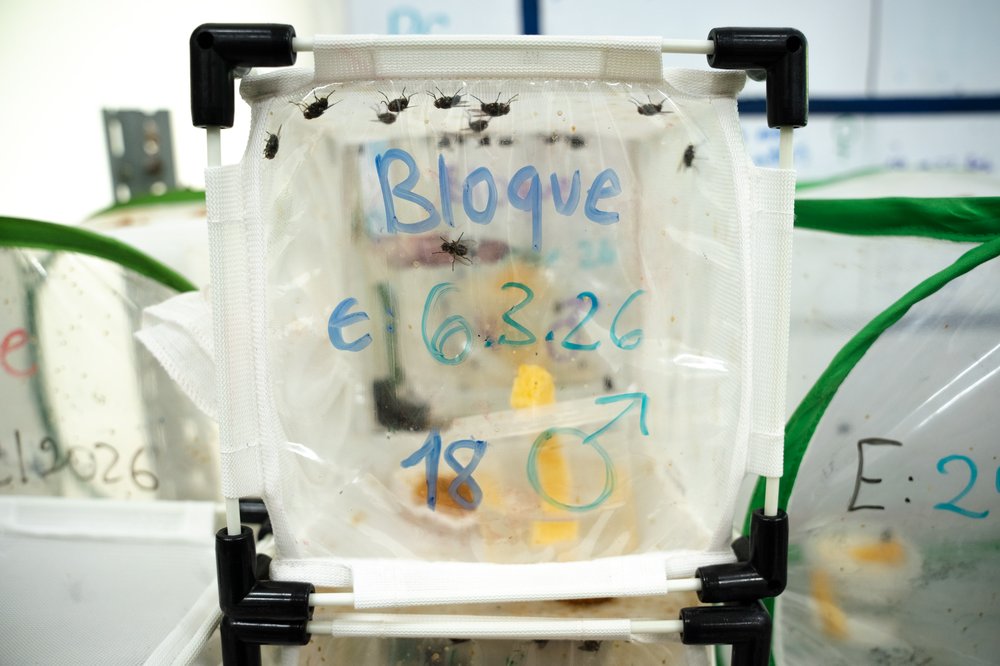
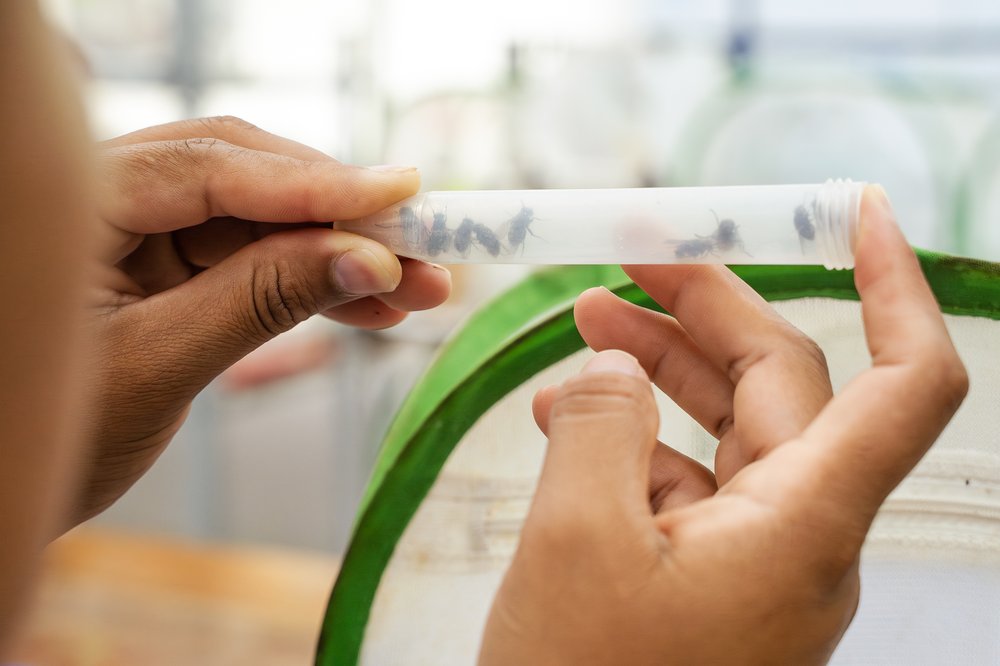
The process starts with the collection of any eggs that have been laid by the flies on the mesh surfaces inside their containers. In addition to this, to encourage egg laying, fifty or so female flies are placed in small, specially modified plastic containers with Styrofoam. The stress generated in this environment prompts them to lay eggs, helping maintain the laboratory population. These eggs are then transferred to the rearing room, where a highly controlled and detailed process begins that attempts to reproduce the conditions that flies experience in bird nests.
Alma Suarez CDF
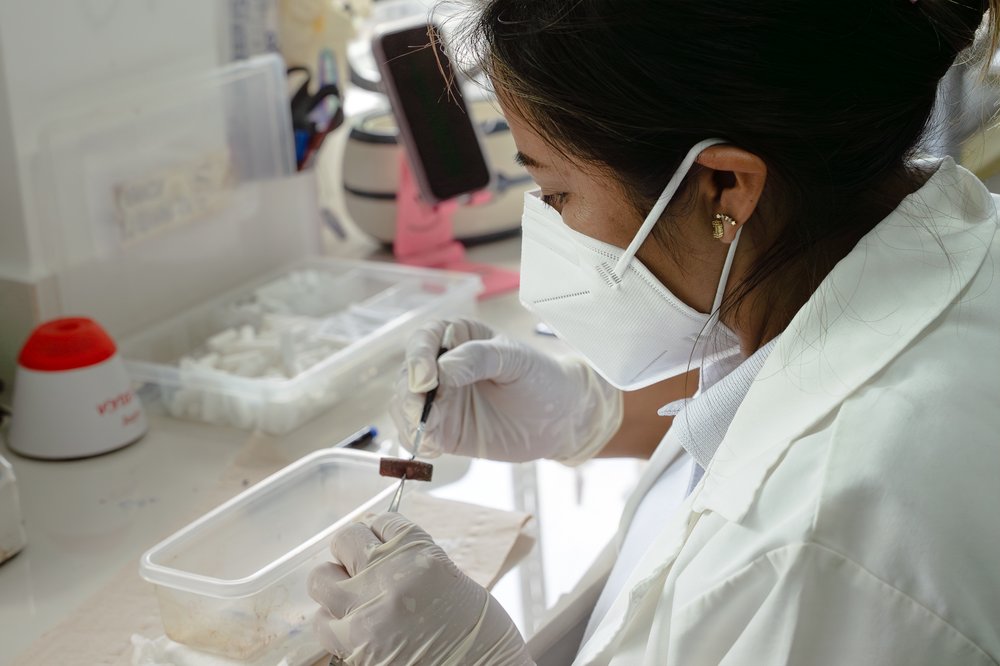
Avian vampire fly larvae develop in three stages. The first, lasting four days, is the most fragile, with mortality reaching 50%. At this stage, larvae are kept in incubators under fixed temperature and humidity conditions, and are fed with blood from free‑range chickens. The second stage lasts five to six days, and the third two days, with lower mortality. In these phases, larvae are reared in containers with cellulose fiber to maintain moisture and are fed with broiler chicken blood mixed with brewer’s yeast. Daily cleaning, removal of dead individuals, and food replacement ensure healthy colonies until pupae (the stage between larva and adult) are extracted for rearing or for experiments. Of note, is that the avian vampire fly does not keep office hours! Work continues on the weekends and holidays – flies need to eat and drink!
Alma Suarez CDF
Alma Suarez CDF
Alma Suarez CDF
Turning research into action
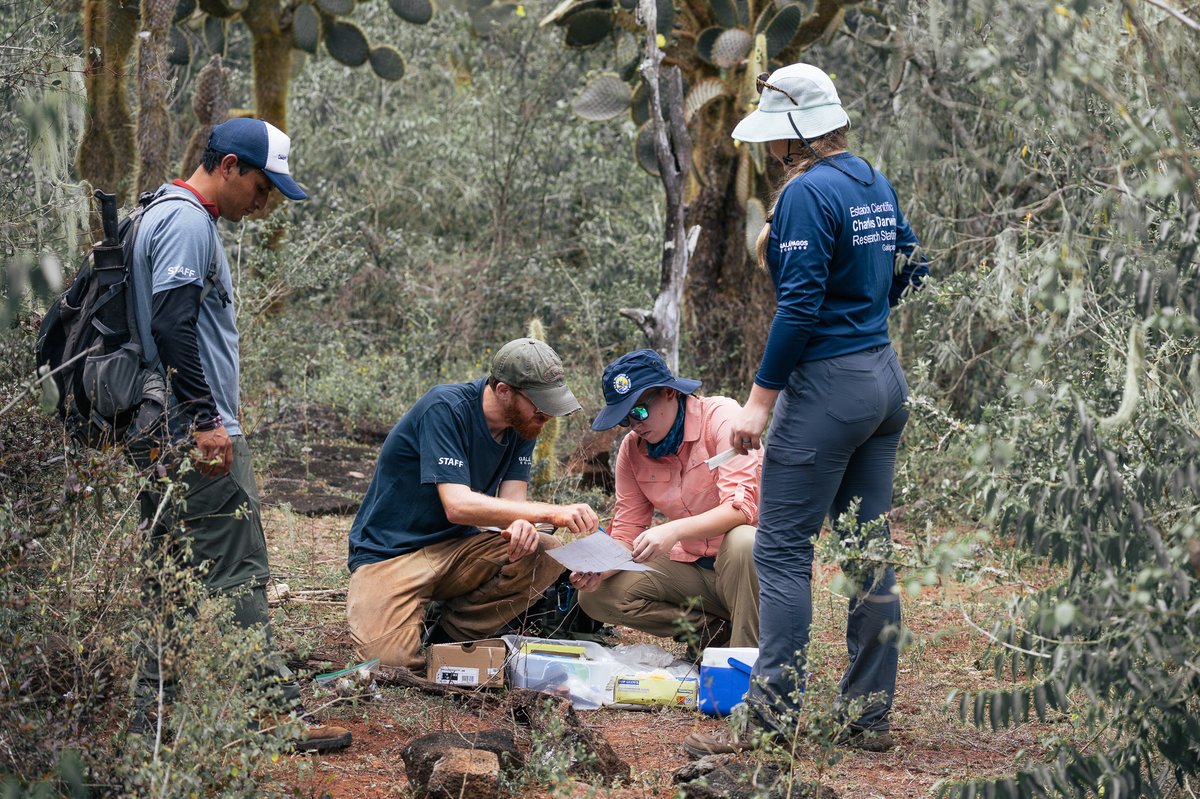
One of the biggest challenges in maintaining avian vampire fly colonies in the lab is their low reproductive success in captivity, currently around 10%. This means that researchers need to collect mated females from the wild every day to obtain fertile eggs and secure enough pupae to test control methods. Large numbers of flies are also needed to understand what conditions motivate flies to mate and complete their life cycle in captivity. Current studies are focused on identifying missing triggers: scientists are testing female responses to male odors to explore the role of pheromones, and examining mating rates under different light conditions. Step by step, more is being uncovered about this invasive species’ reproductive needs.
In 2025, despite a significant reduction in the availability of wild female flies, the laboratory successfully produced around 9,000 pupae. Of these, 6,000 were sent to the lab at the Escuela Superior Politécnica del Litoral where colonies of two natural enemies of the avian vampire fly are being maintained to evaluate the potential of using them in a biological control program. This achievement highlights the team’s ability to adapt and continuously improve rearing methods under challenging
Alma Suarez CDF
The importance of data recording
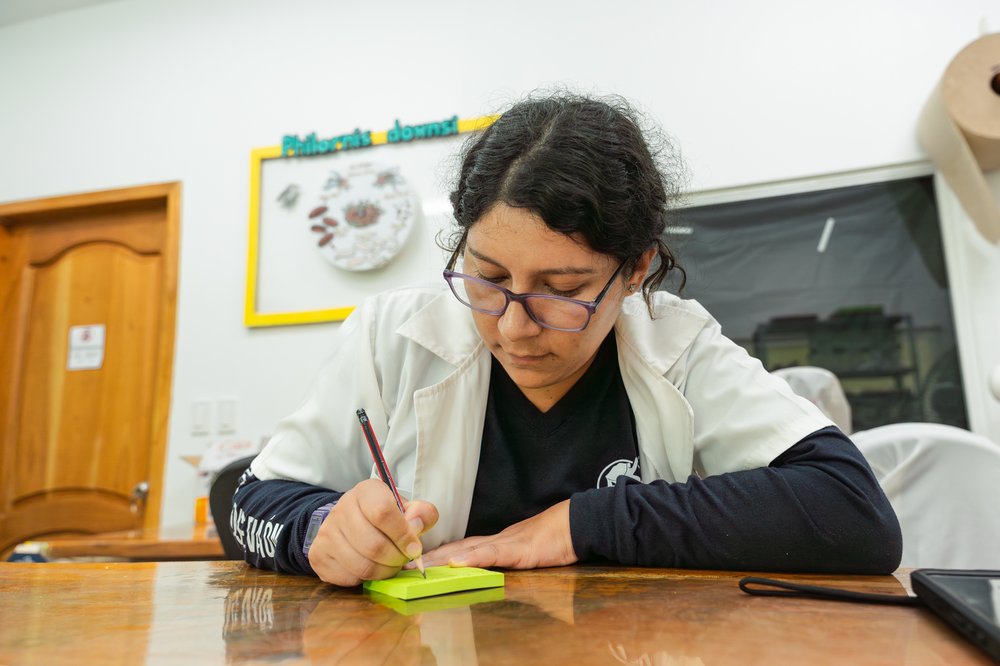
Scientific progress relies not only on discoveries but also on systematic data recording and method refinement. In the Philornis laboratory, every step is documented: larval mortality in the first stage, number of fertile eggs, responses to diets, and mating frequency under varied conditions. This approach enables researchers to track changes, detect patterns, and adjust protocols. For example, the finding that exposure to acetone increased egg‑laying was possible thanks to consistent records. Well‑organized data thus becomes the backbone of understanding and shows how routine tasks can generate meaningful evidence and contribute directly to conservation efforts in the Galápagos.
Science with a clear purpose
The laboratory’s work is closely tied to conservation in the Galápagos. By rearing large numbers of Philornis downsi, scientists can test the option of using biological control and the Sterile Insect Technique to safeguard Darwin’s finches and other landbirds. Current priorities include improving larval survival, understanding mating success, and refining diets. Progress depends not only on breakthroughs but on daily routines—cleaning containers, handling larvae, and recording data. This steady effort illustrates how applied research and consistent dedication can deliver practical solutions for protecting endemic bird species.
The team behind the work
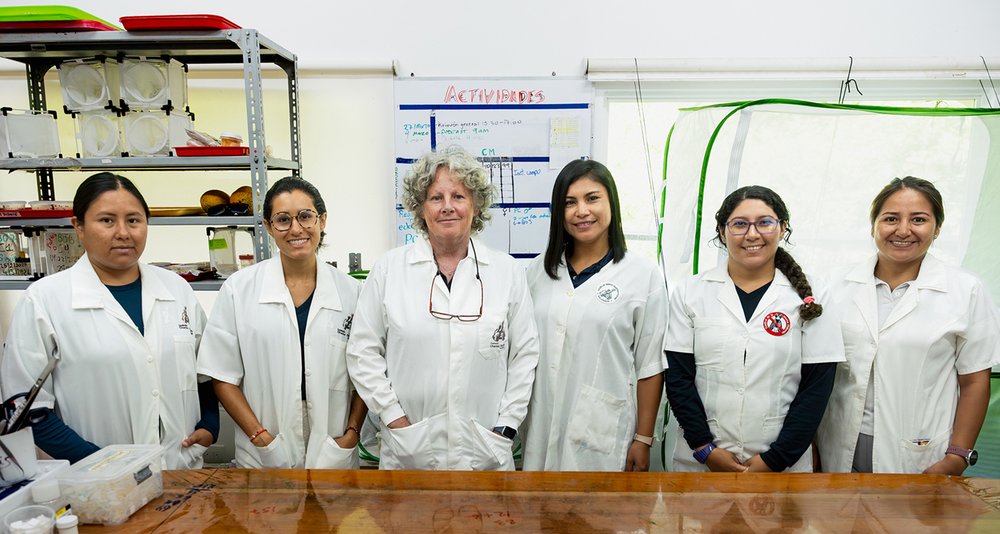
The laboratory’s achievements rely on a dedicated and coordinated team as well as input from a large group of collaborating scientists. The team is led by Charlotte Causton as lead researcher, with Paola Lahuatte as researcher. Paola also oversees the day-to-day running of the laboratory. Also, working in the laboratory are three research assistants: Magally Infante, who oversees fly rearing, Andrea Cahuana, who coordinates fieldwork, and Joselyn Yar, who, is helping evaluate the use of biological control as a conservation tool. Local, national and international volunteers can often be found working at the laboratory, too. These volunteers take part in the work underway in the laboratory for 2-6 months acquiring valuable work experience.
Although their roles differ, each team member plays a critical part. Together, they form a team that translates scientific research into concrete actions to protect the ecosystems of the Galápagos Islands.
Alma Suárez/CDF