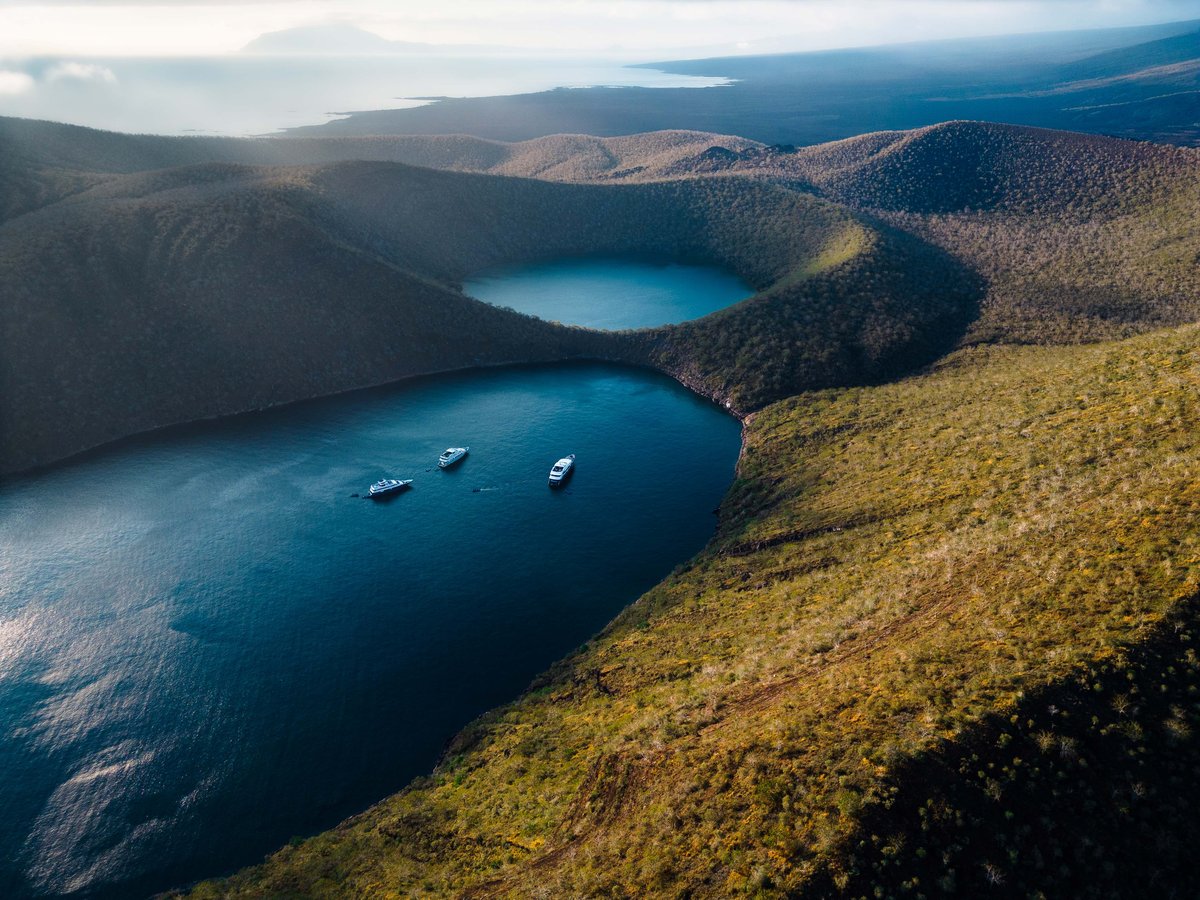

Since 1973, Peter and Rosemary Grant Have Shown That Evolution Can Be Seen in Real Time
In 1973, evolutionary scientists Peter Grant and Rosemary Grant began a research project in the Galápagos Islands that would permanently change the modern understanding of evolution. What started as an ecological study of Darwin’s finches on the small island of Daphne Major eventually became one of the most influential long-term scientific projects in contemporary biology.
For more than five decades, the Grants’ work produced numerous scientific papers, specialized books, and groundbreaking studies demonstrating how natural selection can be directly observed in nature. Their findings helped establish the Galápagos Islands as one of the world’s most important natural laboratories for studying evolution and biological adaptation.
Juan Manuel García
Darwin’s Finches and Evolution in Real Time
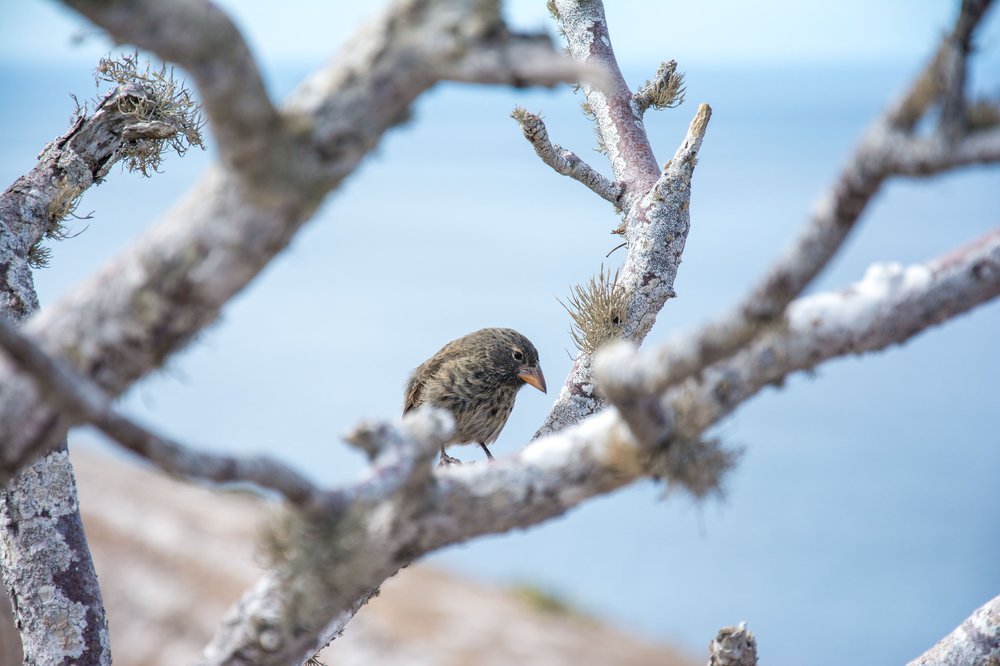
The protagonists of this scientific story were Darwin’s finches, iconic birds of the Galápagos that display different beak shapes and sizes depending on the food they consume. Although Darwin’s mockingbirds are often considered the species that most directly influenced his early thinking on evolution, the remarkable diversity of Galápagos finches also contributed significantly to the development of his ideas about natural selection following his visit to the archipelago in 1835.
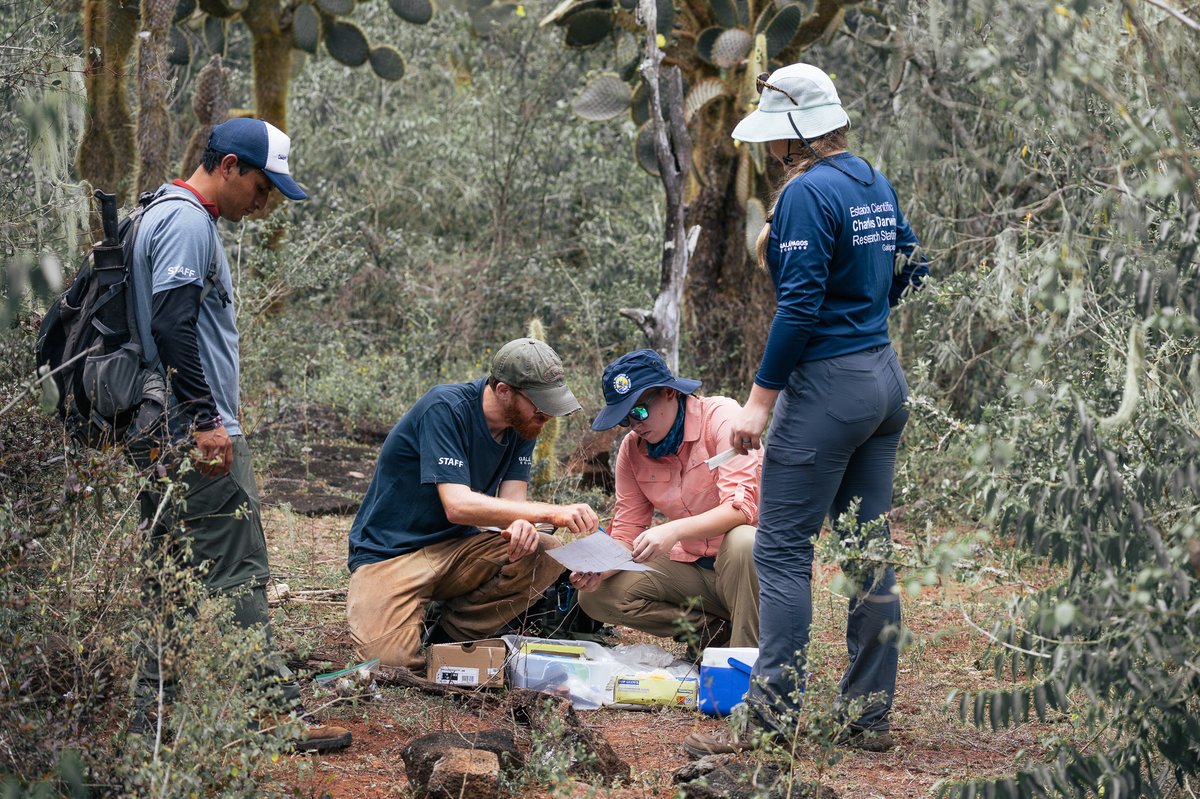
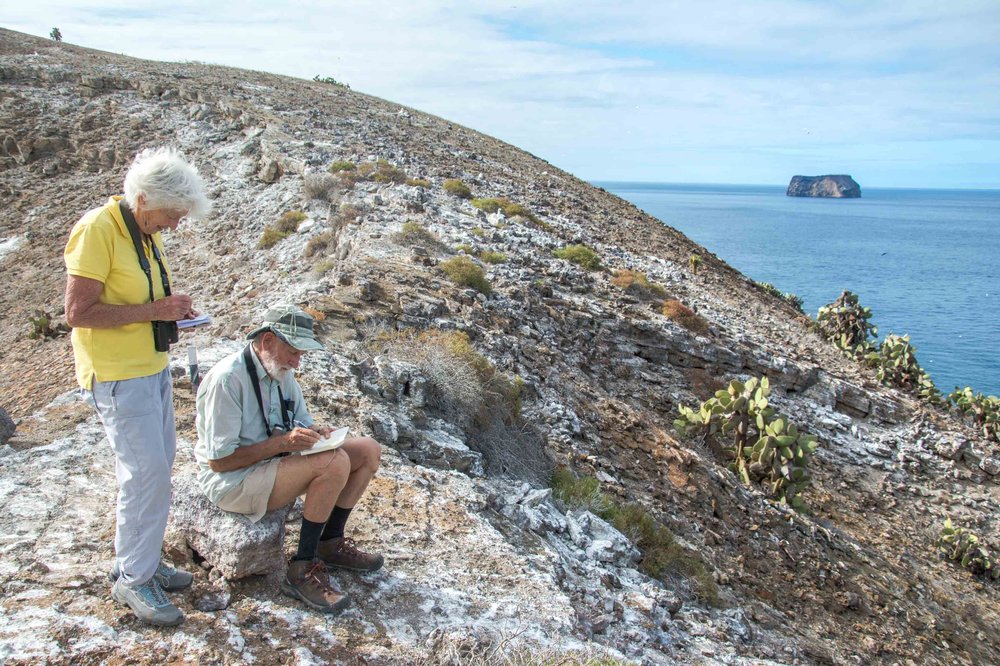
Peter and Rosemary Grant’s work made it possible to observe these evolutionary processes in real time. For decades, they captured birds, marked them with identification bands, and carefully recorded body measurements, survival rates, reproduction, and behavior.
One of their most important discoveries occurred after a severe drought in 1977. The shortage of small seeds favored the survival of finches with larger, stronger beaks capable of cracking hard seeds. Within just one generation, the average beak size of the population had changed measurably. It was direct evidence of natural selection acting within only a few years.
These findings demonstrated that evolution does not occur solely over millions of years, but can also be observed over relatively short periods when environmental conditions change.
Decades of Scientific Publications
The significance of the project was also reflected in the extensive scientific output generated from the research that began in 1973. The first publications appeared in the mid-1970s, including studies such as “Finch Numbers, Owl Predation and Plant Dispersal on Isla Daphne Major” (1975), which documented fundamental ecological aspects of finch populations.
Later, Peter and Rosemary Grant published key research in high-impact scientific journals including “Nature”, “Science”, “Proceedings of the National Academy of Sciences”, and “Evolution”. Among the most influential studies were “Natural Selection on Beak and Body Size in Darwin’s Finches” (1979), “Evolution of Character Displacement in Darwin’s Finches” (2006), and multiple investigations on genetics, adaptation, and speciation.
Juan Manuel García
Beyond scientific papers, the Grants also published major books that became essential references for modern evolutionary biology. One of the most important was Ecology and Evolution of Darwin’s Finches, published in 1986 and considered a foundational work on evolution and ecology in the Galápagos.
Decades later, they published “How and Why Species Multiply”, summarizing discoveries related to speciation and adaptation observed on Daphne Major. Another landmark publication was “40 Years of Evolution”, a comprehensive review of four decades of continuous monitoring that began in 1973.
Juan Manuel García
The Relationship with the Charles Darwin Foundation
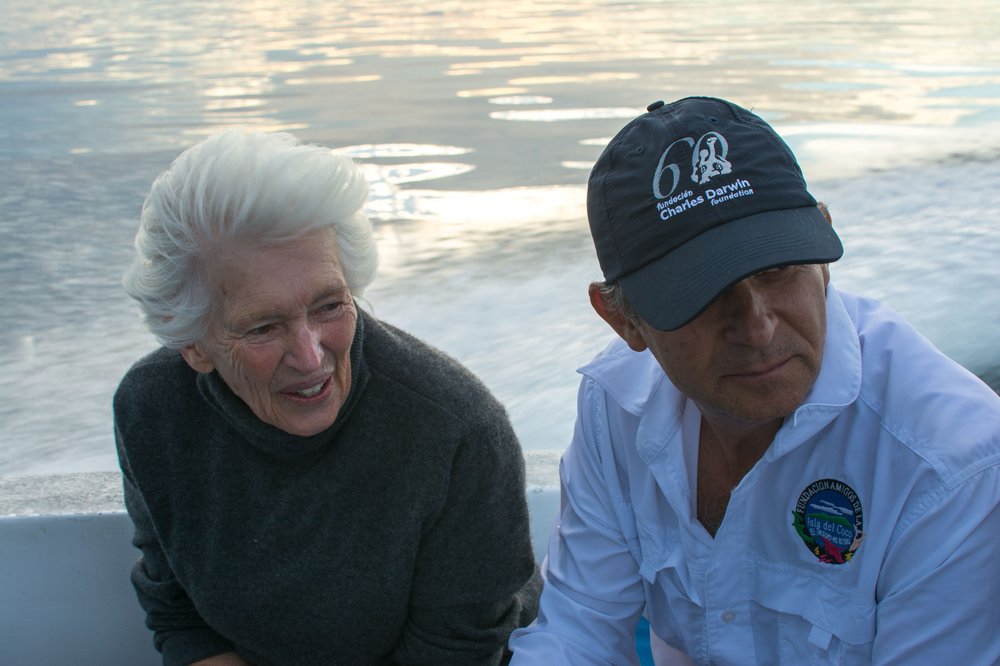
From the beginning of their research, Peter and Rosemary Grant worked as collaborating scientists with the Charles Darwin Foundation. The Foundation played a fundamental role in sustaining the project during a time when research conditions in the Galápagos were far more challenging than they are today.
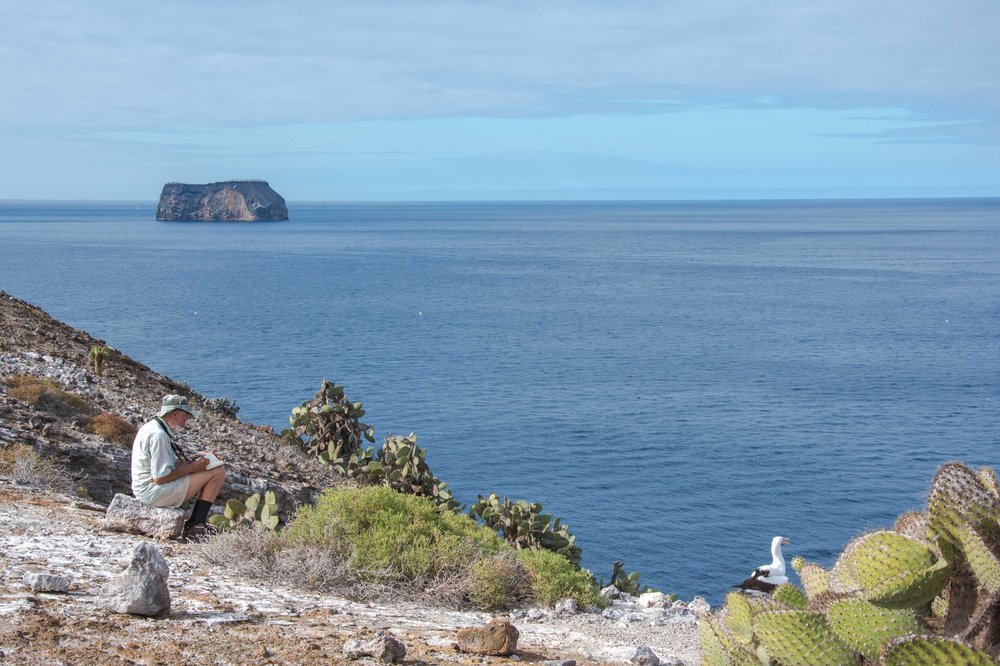
The logistical, scientific, and operational support provided by the Charles Darwin Foundation made it possible to maintain continuous field campaigns on Daphne Major, an uninhabited and difficult-to-access island. The Charles Darwin Research Station on Santa Cruz Island also served as a key center for data storage, scientific coordination, and international collaboration.
The collaboration between the Grants and the Charles Darwin Foundation strengthened the global recognition of the Galápagos Islands as a leading center for scientific research and conservation. Their studies demonstrated the immense value of long-term research for understanding ecological and evolutionary change in island ecosystems.
The Scientific Legacy of the Grants in Galápagos
The impact of these investigations extended far beyond academia. In 1994, science writer Jonathan Weiner published The Beak of the Finch, a book that chronicled the scientific and human story behind the Grants’ decades of work in the Galápagos. The book showed how their observations confirmed Darwin’s fundamental ideas about natural selection and evolution. It received the Pulitzer Prize in 1995 and helped bring evolutionary biology to global audiences.
Beyond their discoveries about finches, Peter and Rosemary Grant’s work demonstrated the enormous value of long-term scientific research. Their studies showed that some of nature’s most important processes can only be understood through continuous observations conducted over decades.
Juan Manuel García
More than fifty years after the beginning of their research on Daphne Major, the Grants’ publications and scientific contributions continue to be essential references for studies in evolution, ecology, and conservation. Their legacy strengthened the international role of the Galápagos Islands and the Charles Darwin Foundation as leading centers for scientific research and biodiversity conservation.
To honor Peter and Rosemary Grant’s scientific legacy in Galápagos, the Charles Darwin Foundation is establishing the Peter and Rosemary Grant Endowed Chair in Evolutionary Biology: a permanent scientific leadership position dedicated to advancing evolutionary research in Galapagos and the Eastern Tropical Pacific. Held by a Senior Principal Investigator, the Chair will strengthen CDF’s role as a global center for evolutionary biology through innovative research, mentorship, and collaboration. To launch this endowment, CDF will host a special seven-day expedition aboard Metropolitan Touring’s Isabela II from October 30 to November 5, 2026, offering 39 guests the rare opportunity to explore Galápagos alongside Peter and Rosemary Grant while directly supporting the future of evolutionary science at the Charles Darwin Research Station. A limited number of spaces are still available for this once-in-a-lifetime trip.

Roberto Maldonado
Communications and Media Officer
Protect Galapagos, Impact the World
The impact you make on this small ecosystem of enormous biodiversity is part of a larger footprint you are leaving for the world's future. Join us on our mission to safeguard one of our planet’s most important natural treasures through science and conservation action by making a donation today. Thank you for making an impact with us.