The Charles Darwin Foundation Presents Its 2025 Impact Report During the 55th General Assembly
The Assembly reaffirmed the commitment of the scientific and institutional community to the future of science and conservation in Galápagos in the face of the Archipelago’s environmental challenges.
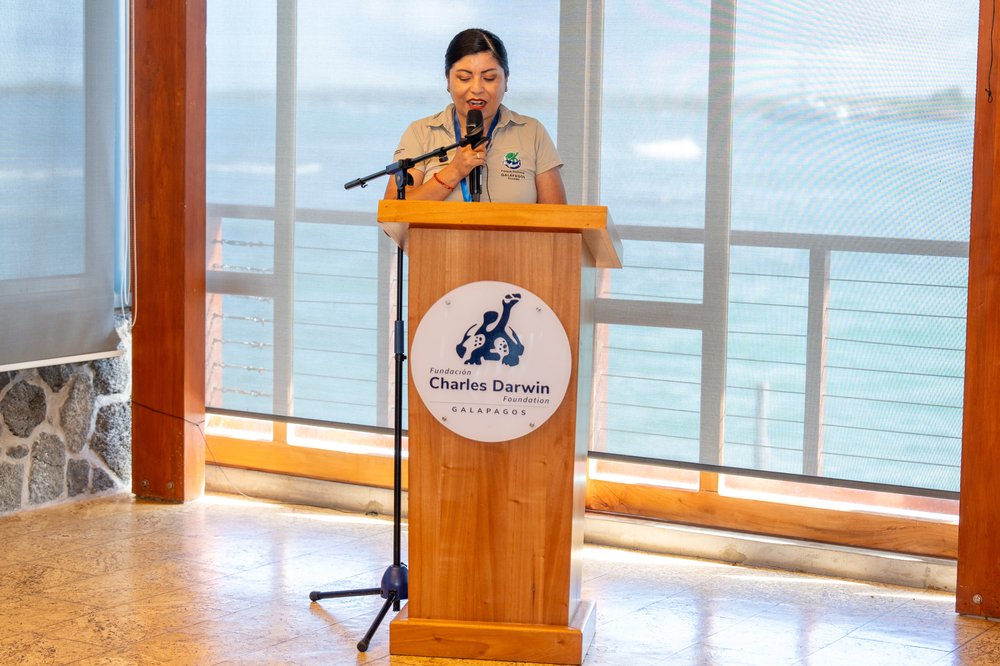
Puerto Ayora, Galápagos, June 2, 2026 — In a global context marked by growing environmental challenges, as well as rapidly changing funding and governance landscapes, the Charles Darwin Foundation (CDF) reaffirmed during its 55th General Assembly its commitment to protecting Galápagos through science, collaboration, and the generation of knowledge for conservation.
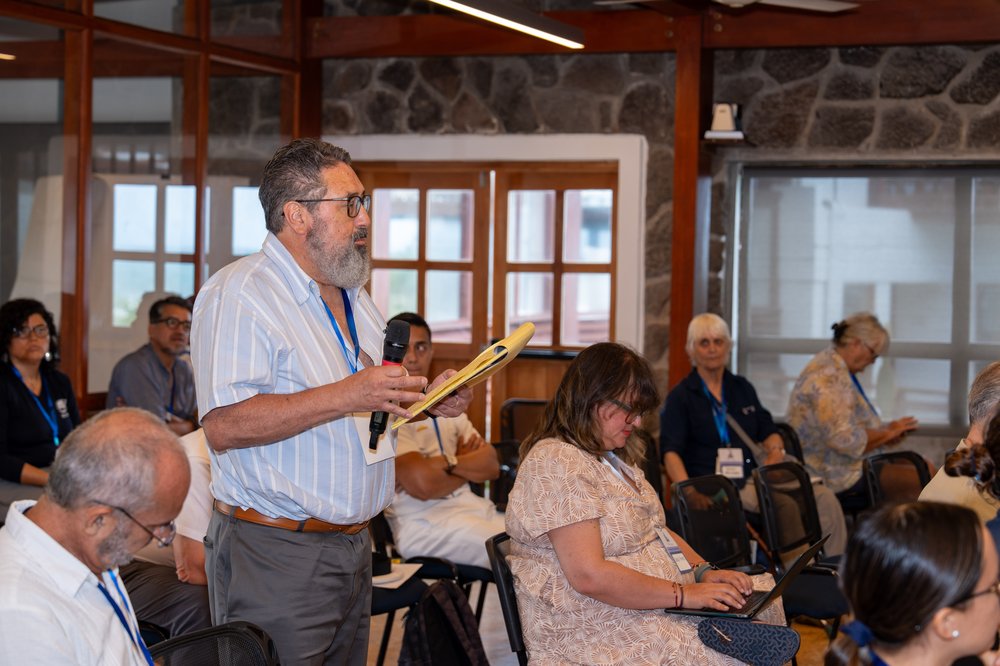
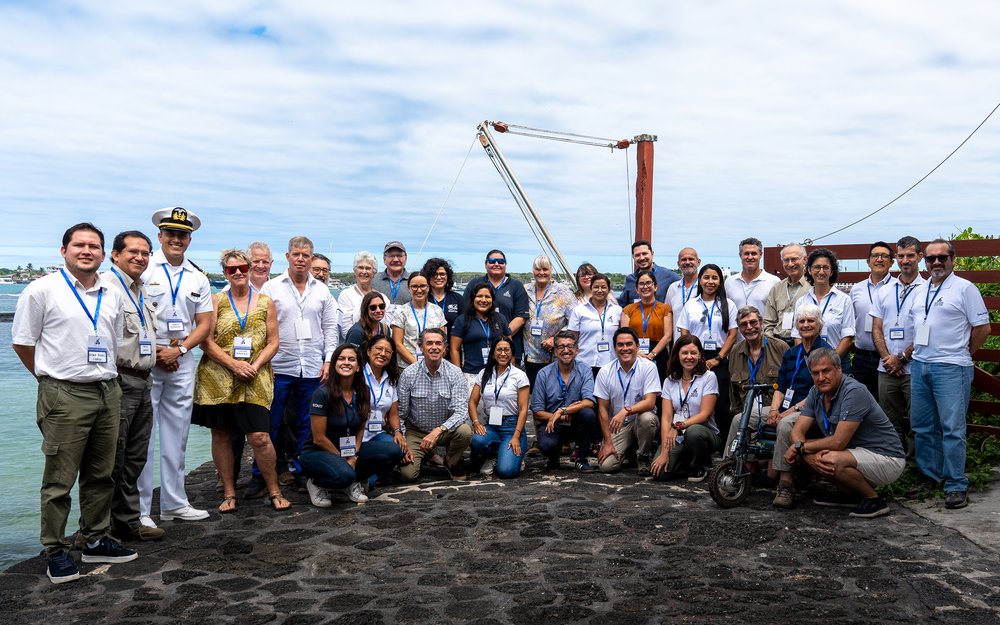
The Assembly brought together members of the international scientific community, representatives of national and local governments of the State of Ecuador, community members, partners, researchers, and collaborators to officially present the Charles Darwin Foundation’s 2025 Impact Report and review the main scientific, institutional, and conservation achievements of the past year.
Mara Speece / CDF
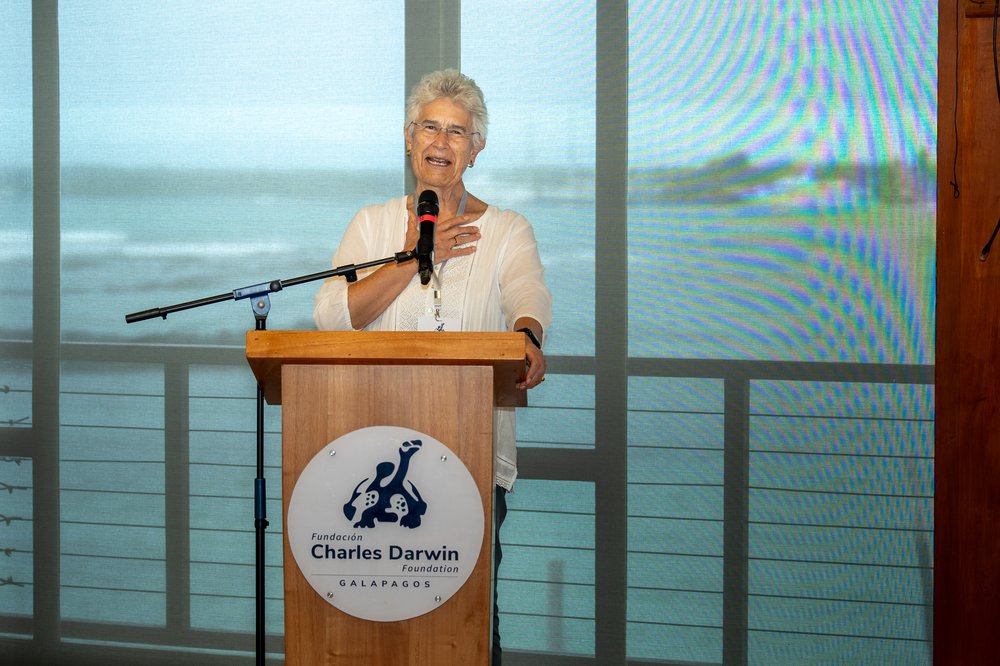
"The progress presented during this Assembly demonstrates that investments in science, ecological restoration, and institutional strengthening generate tangible results for the conservation of Galápagos. Protecting the future of the Archipelago requires strong partnerships, local capacity, and a long-term vision grounded in science and collaboration," said Yolanda Kakabadse, President of the Charles Darwin Foundation General Assembly.
As part of the Assembly, the Foundation appointed Mr. Wijnand Pon and Dr. Gunther Reck as Honorary Members, recognizing their extraordinary long-term contributions to conservation and science in Galápagos.
"Wijnand Pon and Gunther Reck have supported the Charles Darwin Foundation and Galápagos for many years. Their vision, support, and commitment to science and conservation have left a significant mark on the islands. We are honored to recognize their contributions today and to continue benefiting from their trust and support," added Yolanda.
A Year of Scientific Advances and Evidence-Based Conservation
2025 was marked by scientific and conservation achievements that continue to demonstrate Galápagos’ contribution to environmental research and conservation worldwide. During the year, important discoveries were made, historic species records were documented, ecological restoration efforts advanced, and new tools were developed to strengthen marine and terrestrial conservation across the archipelago.
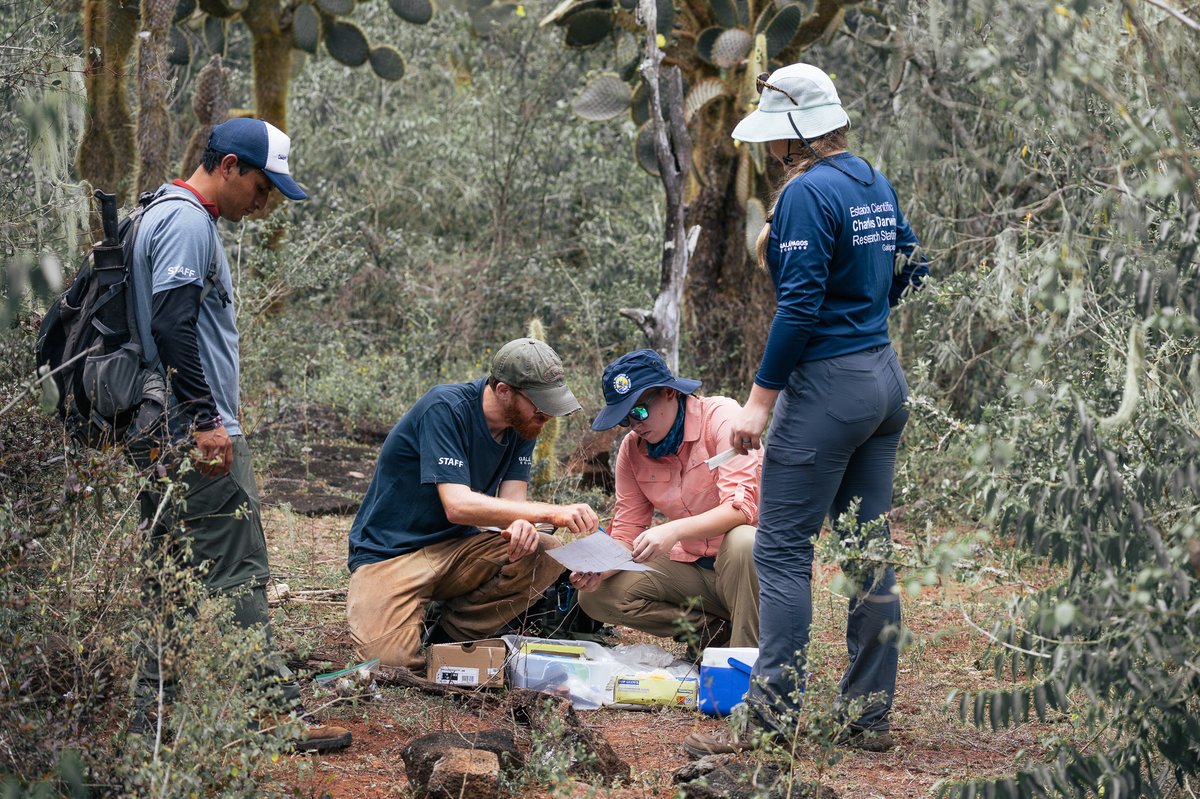
The Foundation worked in more than 80 study sites within the Galápagos National Park and Marine Reserves, produced 72 scientific publications, and participated in 97 scientific and public policy forums, including international platforms such as the IUCN, CITES, and the United Nations, helping position Galápagos and Ecuador within the global environmental agenda.
At the same time, CDF continued advancing ecological restoration, environmental monitoring, biosecurity, invasive species management, and the protection of the Archipelago’s iconic species, ensuring that scientific evidence continues to support conservation actions and decision-making processes both in Galápagos, as well as throughout the Eastern Tropical Pacific region.
Mara Speece / CDF
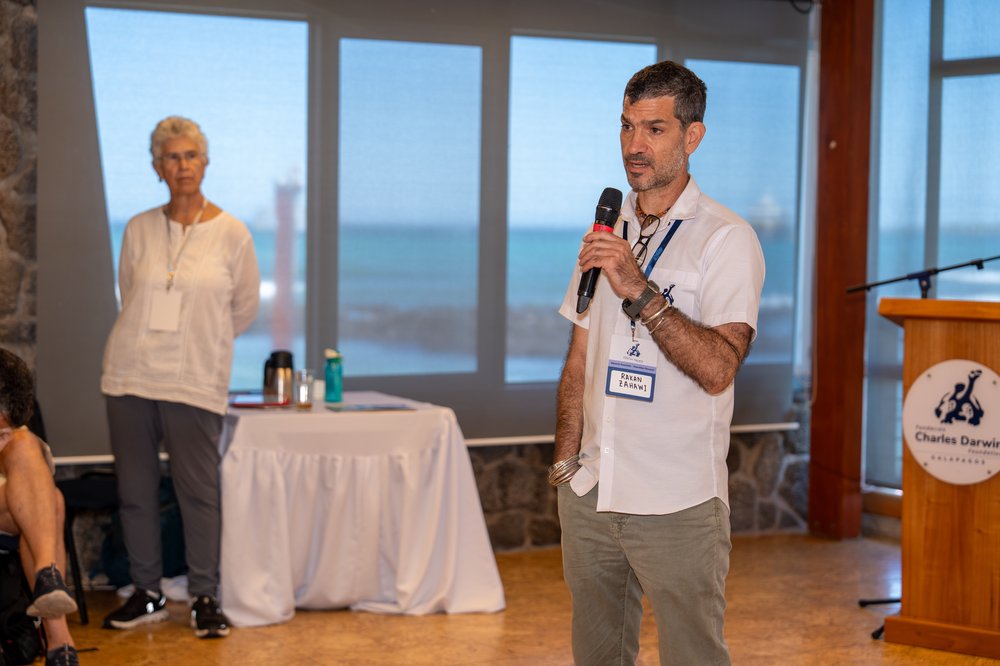
"The results presented this year demonstrate how long-term science generates tangible impacts for Galápagos conservation. From the rediscovery of the Galápagos Rail on Floreana Island after nearly 190 years, to the reappearance of the endemic coral Rhizopsammia wellingtoni, once thought lost, and the submission of the biological control dossier for Philornis downsi, 2025 showcased the value of sustained scientific investment. These achievements, alongside progress in ecological restoration, marine conservation and environmental monitoring, underscore the value of collaborative science in understanding, protecting and restoring Galápagos’ unique ecosystems,” said Dr. Rakan Zahawi, Executive Director of the Charles Darwin Foundation.
New Capacities for Science and Conservation
The Assembly celebrated the completion of the new “Wijnand Pon” Natural History Collections Building, a state-of-the-art facility designed to safeguard one of the world’s most important scientific collections on Galápagos biodiversity. The collection houses more than 137,000 specimens representing over 7,500 endemic and introduced species and the new building provides the space, infrastructure and conditions needed for the collection to grow significantly in the years ahead.
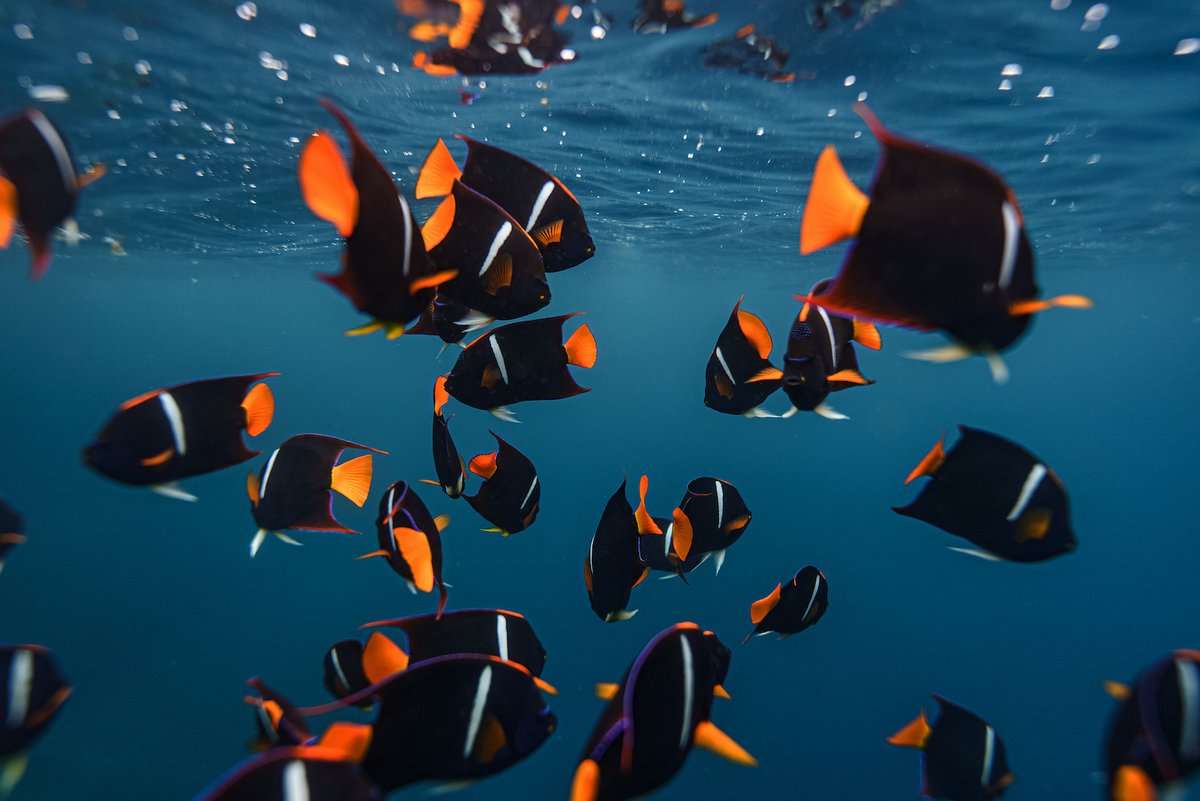
The CDF further highlighted that 2025 was a particularly important year for marine conservation, with science, international collaboration and technical engagement helping advance the protection of Galápagos’ marine ecosystems and the Eastern Tropical Pacific Marine Corridor.
Large-Scale Ecological Restoration
The Assembly also highlighted CDF’s new role as an official co-implementing partner of the Floreana Ecological Restoration Project, an ambitious initiative with the potential to become a global model for comprehensive island ecosystem restoration.
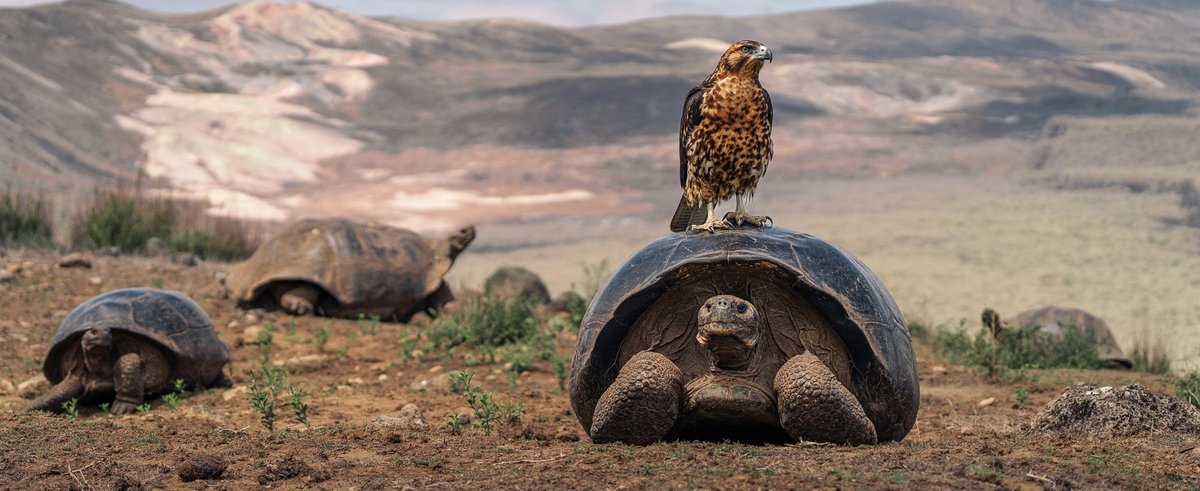
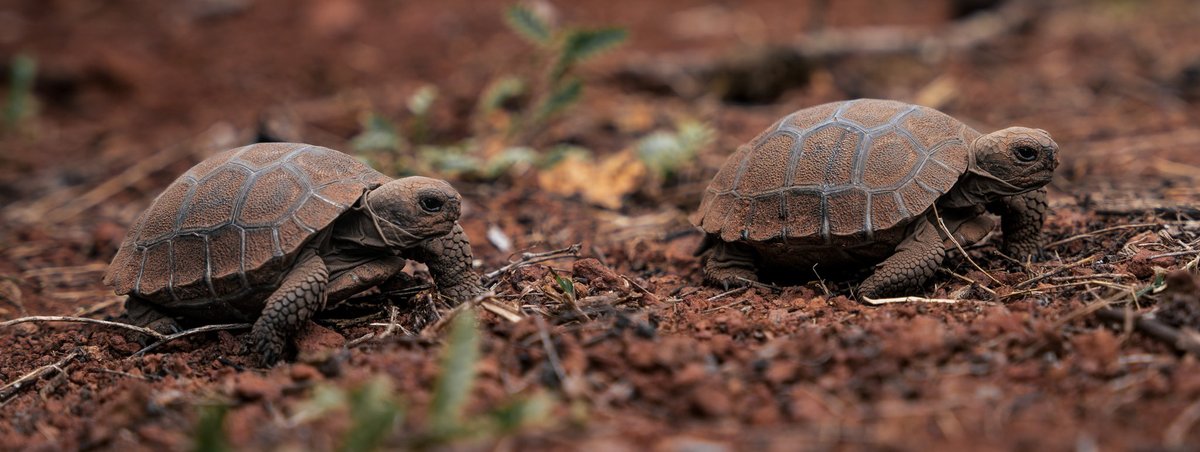
Following years of scientific and technical collaboration on the project, the Galápagos National Park Directorate formally recognized the Foundation in 2025 as a co-implementing partner alongside Fundación Jocotoco and Island Conservation, strengthening CDF’s role in ecological monitoring, habitat restoration, invasive species management, and preparation for the reintroduction of locally extinct species.
Mara Speece / CDF
Mara Speece / CDF
Mara Speece / CDF
Institutional Strengthening and Commitment to Galápagos
During the General Assembly, important institutional achievements were also highlighted, including new international partnerships, the higher education program, and the support of the more than 1,000 donors who helped sustain the Foundation’s Ocean, Land, and Community programs.
CDF further reaffirmed its long-standing commitment to developing local talent in Galápagos. Since the establishment of the Charles Darwin Research Station in 1964, the Foundation has actively contributed to the training and development of Galápagos and Ecuadorian professionals. Today, 87% of the Foundation’s workforce is Ecuadorian, including 65% Galápagos residents and 22% Ecuadorian nationals from mainland Ecuador, reflecting the institution’s long-standing commitment to local employment, scientific capacity development, and professional growth on the islands.
Looking Ahead
Looking ahead to 2026, the Charles Darwin Foundation’s strategic priorities include expanding large-scale restoration efforts on Floreana, continuing to strengthen local scientific capacity, developing a new world-class museum experience, and consolidating Galápagos as a global hub for research, innovation, and conservation.
"The conservation of Galápagos and the well-being of its communities will increasingly depend on our ability to work together — institutions, communities, scientists, and government — to generate knowledge-based solutions, strengthen local capacities, and respond to the challenges facing the archipelago. This Assembly reaffirmed the importance of continuing to invest in science, collaboration, and a long-term vision to secure the future of Galápagos," concluded Yolanda Kakabadse.
Mara Speece/CDF
— ENDS —
Notes to Editors
For media inquiries, please contact:
Charles Darwin Foundation
Ambre Tanty-Lamothe or Daniela Ibarra
comunicacion@fcdarwin.org.ec
About the CDF General Assembly
The Charles Darwin Foundation General Assembly has been held annually since 1971, providing the organization’s highest governing body with the opportunity to review the year’s achievements and make decisions regarding the implementation of projects and strategic plans for the upcoming period.
About the Charles Darwin Foundation
The Charles Darwin Foundation for the Galápagos Islands (CDF) is an international non-profit organization that has operated in Galápagos since 1959 under a special agreement with the Government of Ecuador. The mission of the Foundation and its Research Station is to address the greatest threats and challenges facing Galápagos through scientific research and conservation action, helping protect one of the world's most important natural treasures. Today, CDF carries out more than 25 research and conservation projects and curates over 135,000 specimens within its Natural History Collections. Its diverse team of more than 140 staff members is primarily composed of Ecuadorian nationals, with more than 60% being residents of the Galápagos Islands.
For more information, visit: www.darwinfoundation.org