
Three Allies for Galapagos
Detection dogs strengthening the protection of unique species
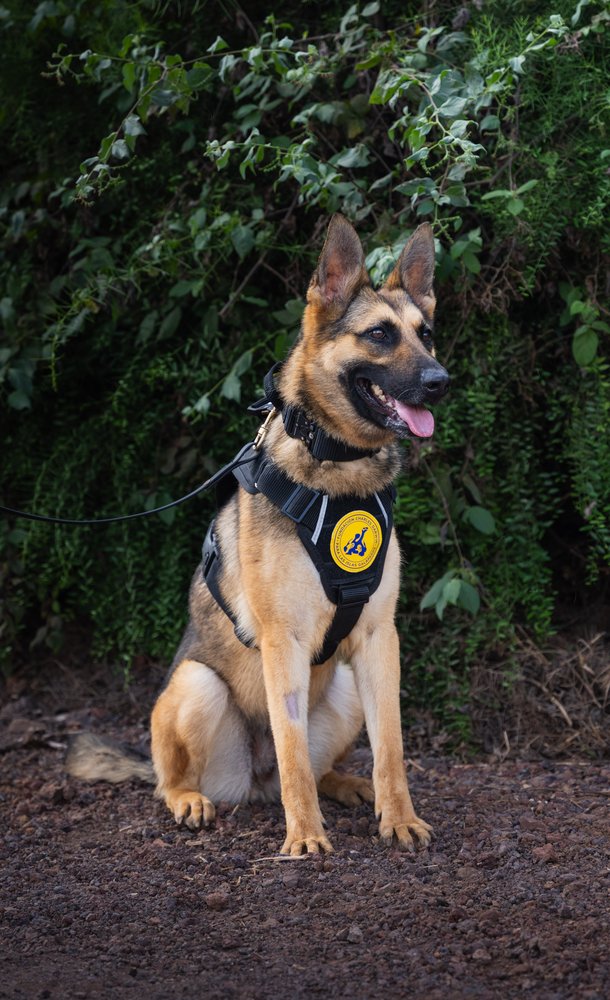
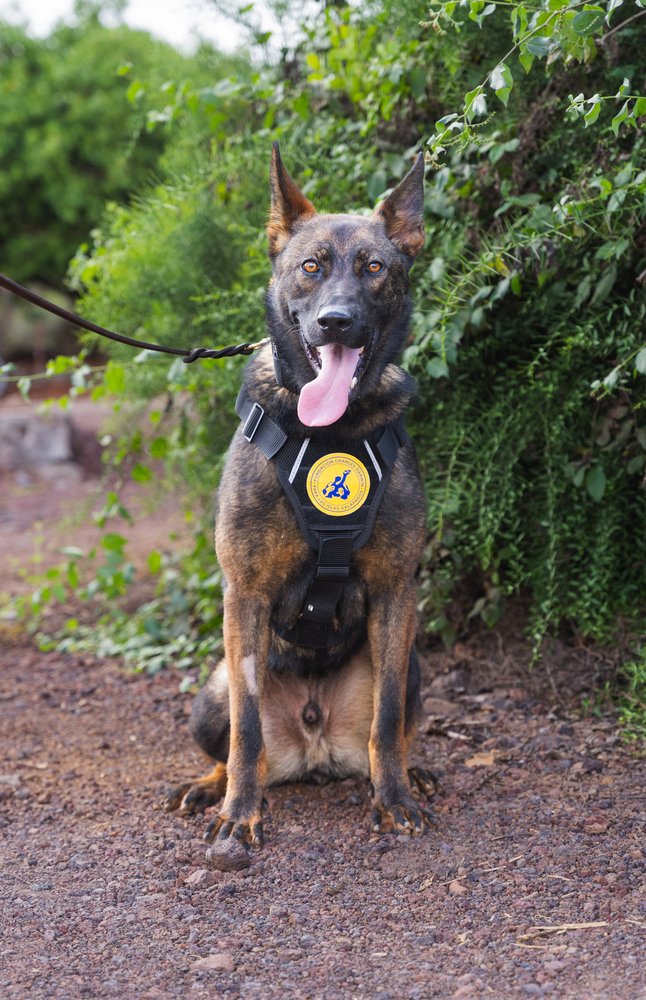
Not all conservation tools come in the form of satellites, drones, or laboratory equipment. Some come with four legs, wet noses, and an extraordinary sense of smell. Meet Wolf, Kup, and Pinta—three detection dogs trained specifically to help stop the illegal trafficking of protected species from the Galápagos Islands.
Their incorporation into control operations marks an important step in efforts to combat illegal wildlife trafficking, one of the most persistent threats to island ecosystems. From illegally transported wildlife products to organic material that could introduce invasive species, dogs can be trained to detect biological material that might otherwise go unnoticed.
This initiative was led by the Charles Darwin Foundation, which donated the dogs to Ecuador’s National Police Academy in 2025. Funding support came from our longstanding donor Mr. Wijnand Pon, through the COmON Foundation. His commitment, driven by a deep love for the archipelago, was instrumental in making the project possible.
The initiative was developed in close coordination with the Ministry of the Interior, under which the Canine Unit operates, as well as the Galápagos National Park Directorate. Together, these institutions established the legal and operational framework needed to integrate the dogs into conservation and control efforts across the archipelago.
The origin of a concrete solution
The story of these three dogs began with the identification of a critical gap: while the National Police had canine units trained for operations such as narcotics detection, there were no specialized units to detect illegal trafficking of protected species.
To address this gap, the Charles Darwin Foundation promoted a concrete solution, channeling resources and coordinating with relevant institutions to strengthen control and surveillance at key points in the archipelago through the development of a canine detection program specifically designed to combat illegal trafficking of biodiversity.
Mara Speece CDF
Where do Wolf, Kup, and Pinta come from?
Wolf, Kup, and Pinta were selected from a specialized breeding center in Europe, experienced in supplying canines for police units. The origin ensures appropriate health, temperament, concentration, and responsiveness needed for demanding operational environments.
Selection was carried out by personnel from Ecuador’s National Police, who evaluated different dogs based on behavioral and detection potential. Wolf, Kup, and Pinta were chosen for their high potential for specialized training. After arriving in Ecuador in June 2024, the dogs were taken to Quito to begin their basic training in obedience and general detection techniques.
A two-phase training process
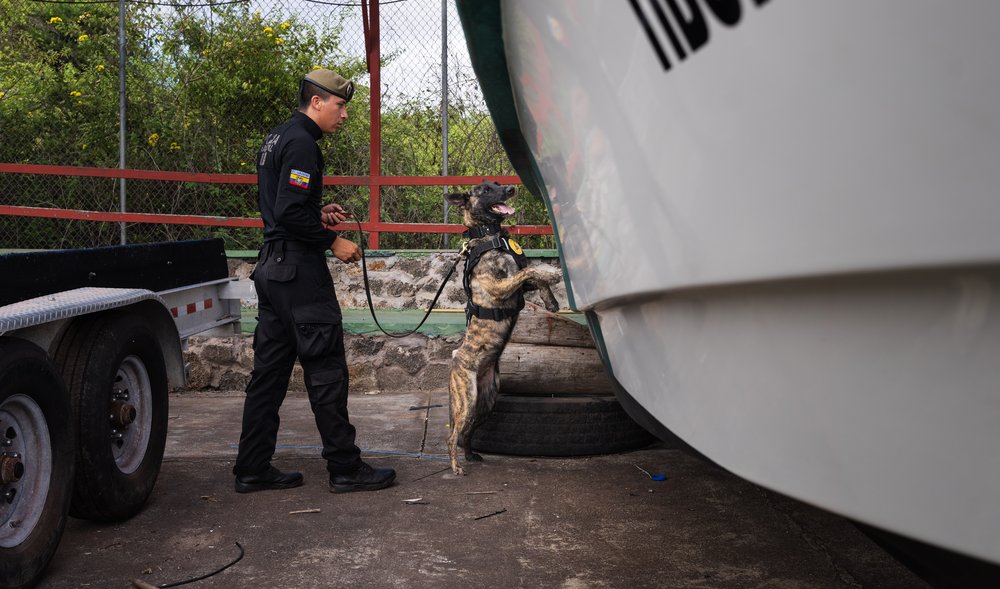
Training took place in several stages. During the first phase in Quito, the dogs developed the foundational skills needed for operational work, including obedience, socialization, and detection exercises.
Mara Speece CDF
Mara Speece CDF
Mara Speece CDF
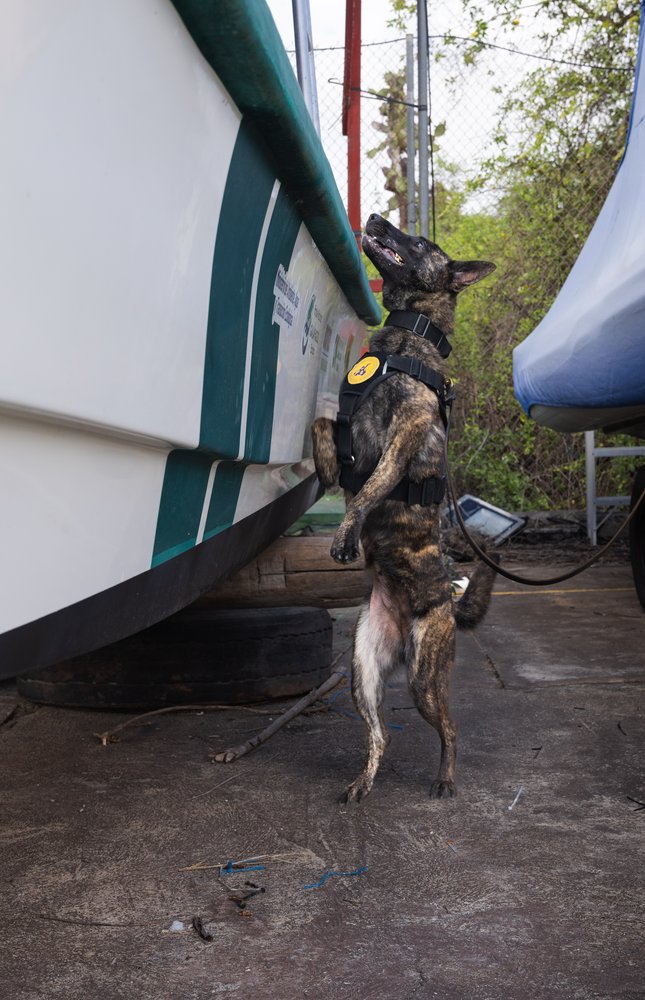
The second phase brought the dogs to Galápagos under strict legal and biosecurity protocols—an exception granted for training of professional dogs, as Galapagos does not allow the importation of dogs or any animal to the Islands. Here, they underwent specialized training to learn to detect priority protected species such as marine iguanas, land iguanas, giant tortoises, shark fins, and sea cucumbers. This training is based on scent association, through which dogs learn to identify and signal recognition to very specific odors.
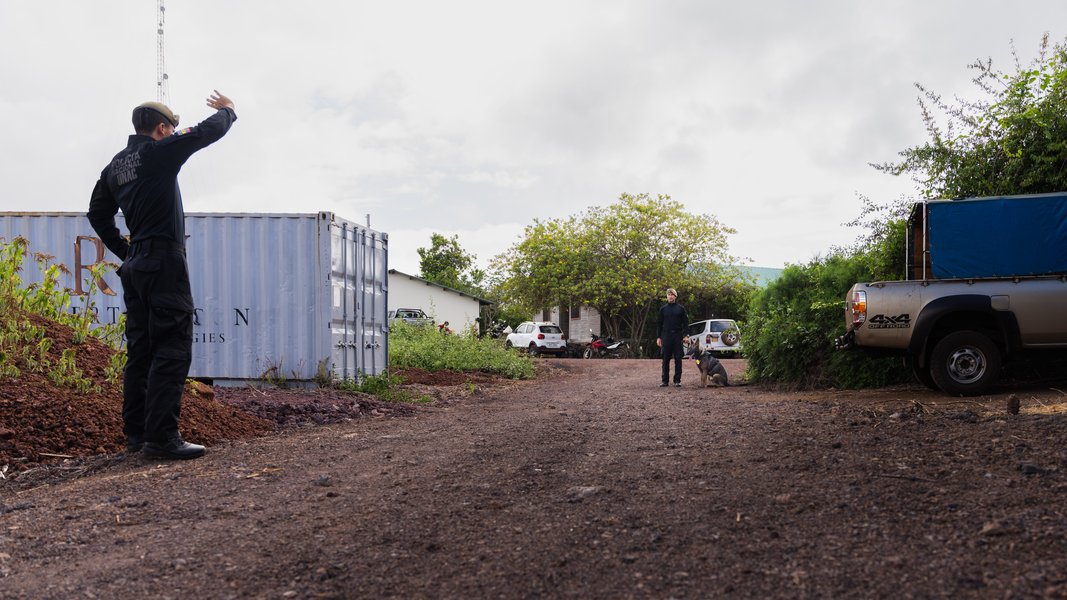
In the third and final phase of training, the dogs worked under real-world conditions for approximately two and a half months, carrying out simulated inspection of luggage, cargo, and of people, replicating operational conditions at airports and docks.
A strategic role in the field
Today, Wolf, Kup, and Pinta operate at strategic exit points from the archipelago and mainland Ecuador, where they help authorities detect signs of illegal wildlife transport before protected species leave the islands or the country.
Their extraordinary sense of smell allows them to identify even minimal traces of biological material hidden inside luggage, cargo, or shipments, making them a fast, efficient, and non-invasive inspection tool. Their presence also acts as a deterrent, helping reduce the likelihood of wildlife trafficking attempts.
One recent case demonstrated just how effective these canine units can be. In April 2026, during an operation in Guayaquil, one of the dogs alerted officers to a suspicious shipment declared as “fish maw.” Upon inspection, authorities discovered more than 21,800 concealed shark fins intended for international markets without the required permits.
This type of intervention shows that detection dogs can uncover sophisticated concealment methods that might otherwise evade conventional inspections. In the context of Galápagos, they represent another tool in the toolbox to combat the illegal extraction of protected species, strengthen traceability in control systems, and enable early action against trafficking networks.
Mara Speece CDF
The work of Wolf, Kup, and Pinta represents the integration of applied science, institutional cooperation, and a commitment to conservation. Their contribution directly supports the protection of endangered species while reinforcing control and monitoring systems in Galápagos.
This achievement also highlights the value of partnerships between scientific organizations, authorities, and committed donors. The Charles Darwin Foundation would like to thank the support and trust provided by the COmON Foundation, whose contribution made this initiative possible, underscoring the importance of continuing to strengthen such collaborations to address conservation challenges in the archipelago.