Home

Results

Plántulas de Lecocarpus lecocarpoides creciendo “en casa” de Patricia Jaramillo Díaz desde marzo a noviembre de 2020, durante la cuarentena por la pandemia por la Covid-19.
Andres Cruz
Microbiology arrived at the Galapagos Verde 2050 Program

Microbiology arrived at the Galapagos Verde 2050 program

Boris Herrera/CDF
Hands-on: Educating and Learning at the Charles Darwin Foundation as a volunteer

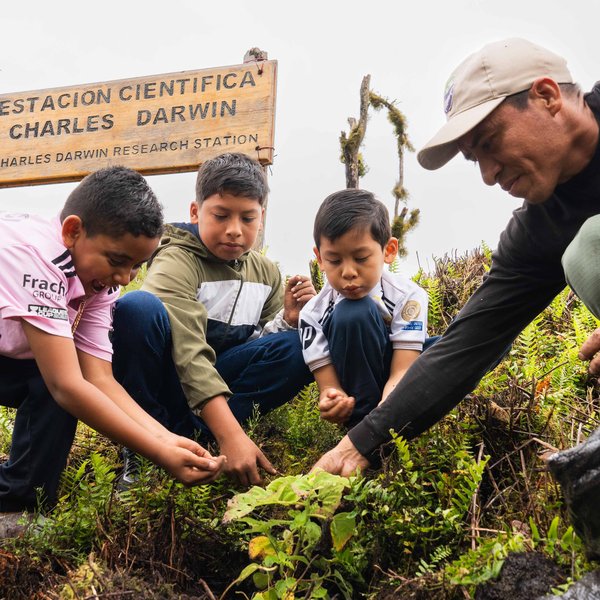
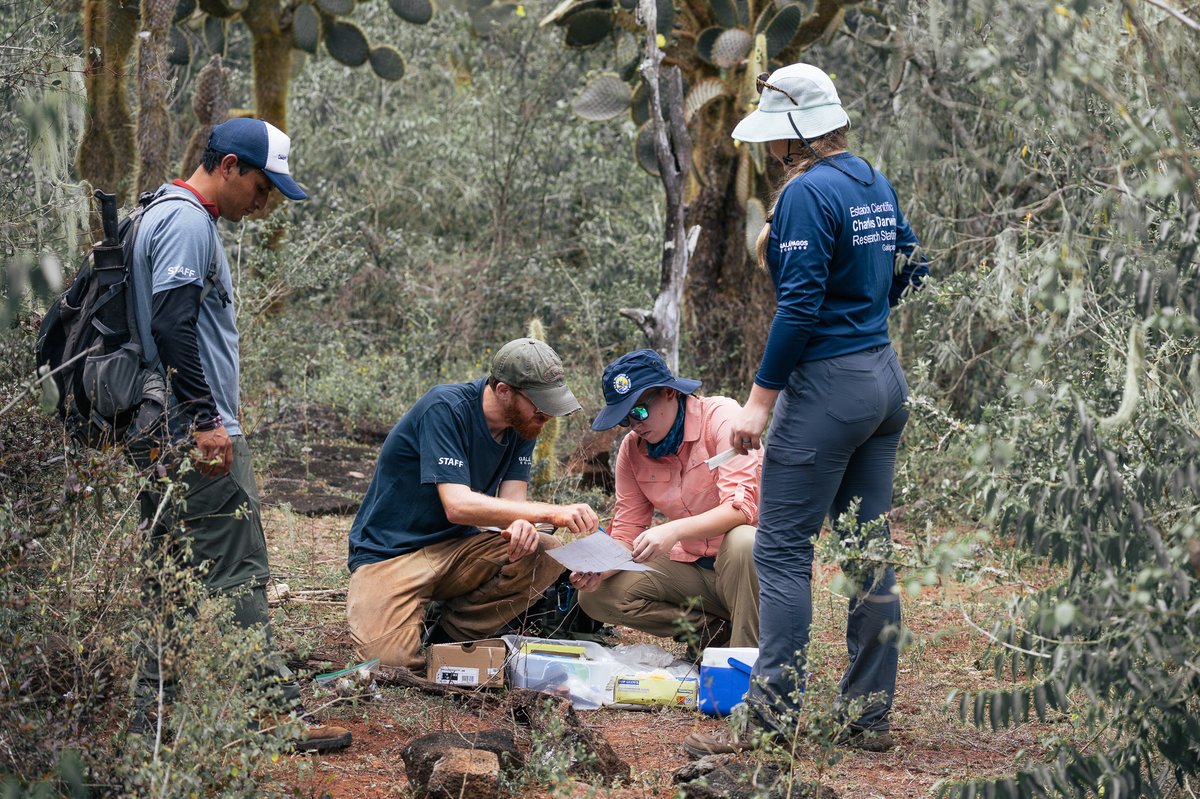
Being a volunteer at the Charles Darwin Foundation was one of the most enriching experiences of my life. For two months, I had the privilege of participating in various projects that allowed me to witness firsthand the incredible work being done to protect the natural environment of the Galápagos Islands. From guiding visitors in the Exhibition Hall, collaborating with the Communications and Marketing team, to joining scientists in the field, I experienced a full immersion in the CDF’s conservation efforts.

Boris Herrera/CDF
Hands-on: Educating and Learning at the Charles Darwin Foundation as a volunteer

Being a volunteer at the Charles Darwin Foundation was one of the most enriching experiences of my life. For two months, I had the privilege of participating in various projects that allowed me to witness firsthand the incredible work being done to protect the natural environment of the Galápagos Islands. From guiding visitors in the Exhibition Hall, collaborating with the Communications and Marketing team, to joining scientists in the field, I experienced a full immersion in the CDF’s conservation efforts.

Juan Manuel Garcia-CDF
Adopt a Galapagos Prickly Pear

The population of the Galapagos pricky pear cactus declined during the 1960s and 1970s due to the impact of invasive species and human activities. By adopting a Galapagos prickly pear cactus you will support the Charles Darwin Foundation’s Galapagos Verde 2050 program, which works to restore the populations and enhance the conservation process of the Galapagos ecosystems by using ecological restoration tools.

Carlos Espinosa/CDF
Esteban Barrera
Sustainable Fisheries

The artisanal fishing sector is vital to the Galapagos Islands, but it is facing increasing challenges such as climate change, unfair value chains, and over-exploitation. Our program seeks to create a more prosperous, autonomous, and fair seafood system that is respectful of the natural environment, and fosters resilience against environmental, socio-economic, and climate change.

Rashid Cruz-CDF
Carlos Espinosa/CDF
Women in Science

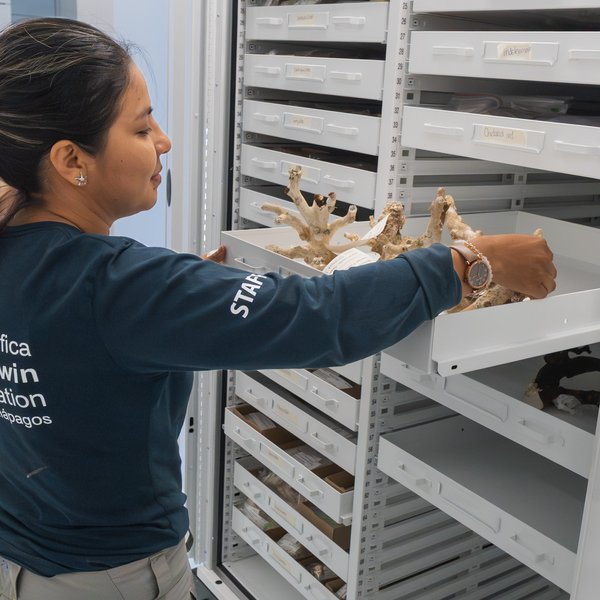
On February 11, we celebrate the International Day of Women and Girls in Science, a day to recognize the importance of strengthening female participation in science, especially in places like the Galapagos Islands. This archipelago, iconic for global conservation, has become a living laboratory where women and men work together to protect this unique ecosystem. The women of Galapagos, with their talent and dedication, demonstrate that conservation is stronger when everyone joins forces.

Rashid Cruz-CDF
Research Data Repository Scalesia Informe Ejecutivo DPNG 2023
Mara Speece/CDF
The CDRS Library: The Most Complete on Galápagos

The G.T. Corley Smith Library at the Charles Darwin Foundation holds the world’s most comprehensive collection of publications on the Galápagos Islands. Its “Galápagos Collection” includes both scientific and grey literature, making it an invaluable resource for research and conservation. A digitization effort is underway to expand global access to this knowledge.