

Do All Sharks Behave the Same?
Underwater Stories from Galápagos
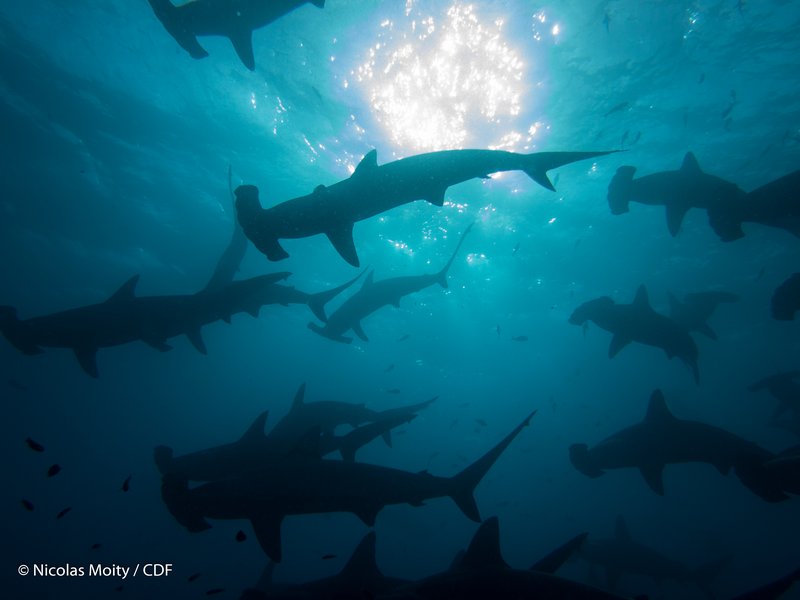
Every dive with sharks tells a different story. On one dive, dozens of scalloped hammerhead sharks move together along a rocky wall. On another, several whitetip reef sharks lie motionless on the seafloor. Farther away, a tiger shark appears alone, patrols the area for a few minutes, and disappears into the blue. Although these scenes look very different, they reflect the remarkable diversity of shark lifestyles. Each species has evolved its own way of feeding, resting, reproducing, and using the ocean.
After participating in shark research in the Galápagos Marine Reserve and other regions of the Eastern Tropical Pacific, one question keeps coming back: why do some species aggregate while others spend most of their lives alone?
When people think about sharks, they often assume they all behave in similar ways. The reality is very different. More than 500 shark species inhabit the world's oceans, and each group has evolved unique strategies to survive in its environment.
Nicolas Moity CDF
The Scalloped Hammerhead Shark
Watching a school of scalloped hammerhead sharks around Darwin and Wolf Islands is one of the most iconic wildlife experiences in Galápagos. These islands host large aggregations of hammerheads, especially in areas where ocean currents concentrate food.
During the day, hammerheads gather at specific sites that researchers believe function as cleaning stations, social gathering areas, refuges, or places with favorable oceanographic conditions. At night, many disperse and move between Darwin, Wolf, and other parts of the Galapagos Marine Reserve.
Their abundance also changes throughout the year. A recent CDF study shows that hammerhead biomass around Darwin and Wolf is up to four times higher during the cool season than during the warm season. Some individuals travel extraordinary distances. In 2023, the Shark Ecology Program, in collaboration with a group of researchers tracked a tagged female for almost 6,000 kilometers as she moved from Galapagos to Panama and into international waters.
The Whitetip Reef Shark
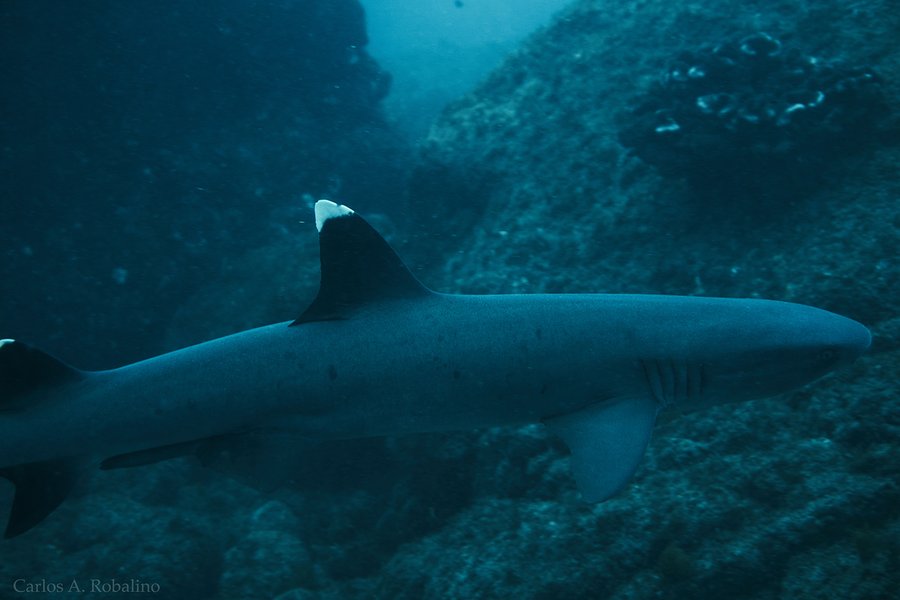
The whitetip reef shark follows a completely different routine. During the day, it rests on the seafloor, beneath rocks, or inside caves. Although it may appear sick -or even dead- it continues breathing by pumping water across its gills without having to swim.
A study conducted in a tidal channel south of Academy Bay, on the Galapagos island of Santa, found that these sharks spend most of the day inside the channel before moving into nearby waters at night, dawn, and dusk. During those hours, they actively hunt fish, octopuses, and crustaceans while moving among several shelters within their home range.
Carlos Robalino CDF
The Tiger Shark
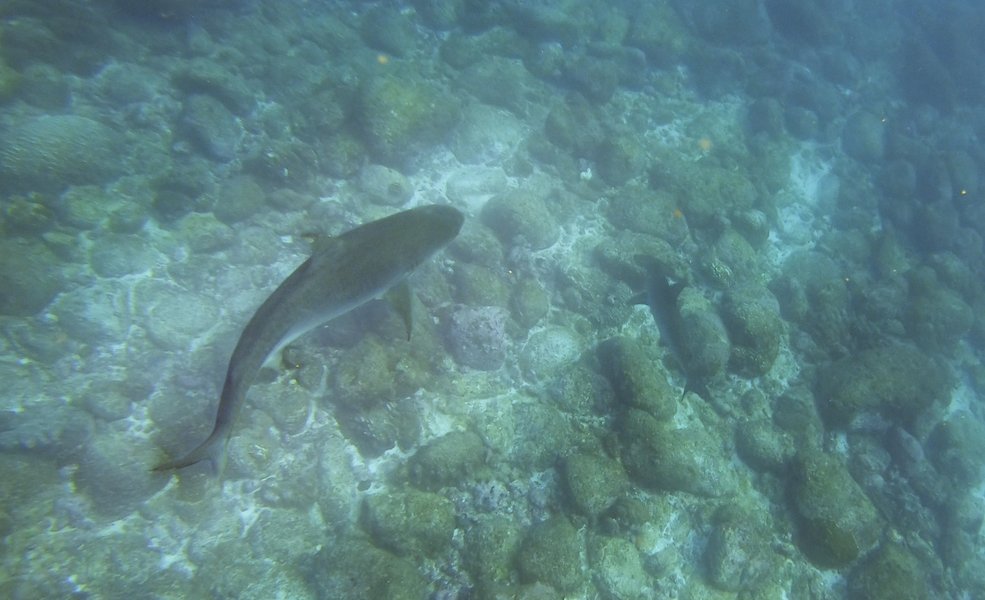
Tiger sharks usually travel alone. They patrol reefs and coastal habitats as opportunistic predators, but their movements are far from random.
CDF telemetry studies show that many tiger sharks remain within the Galapagos Marine Reserve and repeatedly return to the same locations. Medium and large individuals frequently visit sea turtle nesting beaches, including the Bachas–Salinas area in northern Santa Cruz, especially at night.
Stable isotope analyses reveal that green sea turtles are one of the main preys of larger tiger sharks, while smaller individuals feed mostly on pelagic fish. By identifying where these sharks spend their time and what they eat, researchers can pinpoint habitats that are essential for their conservation.
The Whale Shark
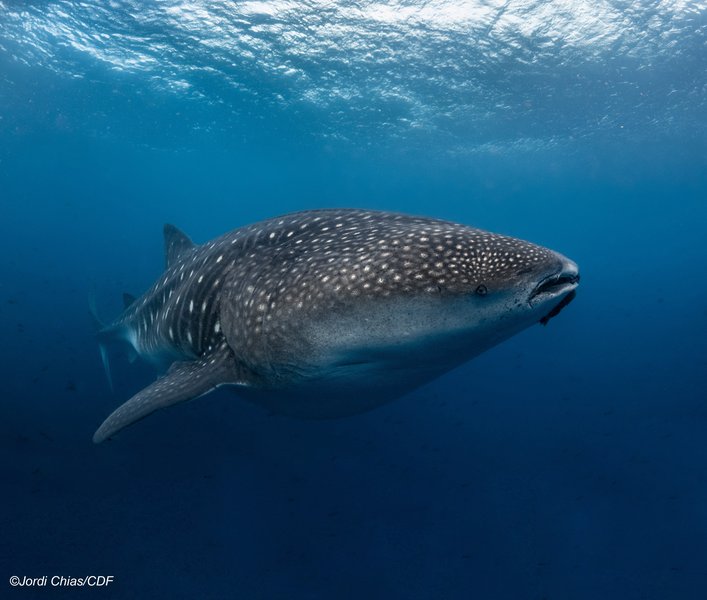
The whale shark, the largest fish on Earth, survives by filtering plankton and other tiny organisms from the water. In Galapagos, it appears seasonally around Darwin Island and less regularly around other islands.
Between 2011 and 2013, researchers identified 82 whale sharks in the area. More than 91% were adult females, many showing signs of pregnancy. Most sharks remained around Darwin for only two days before continuing their journey.
Scientists still do not know why these females visit the island. Satellite tracking has shown that they can travel more than 2,700 kilometers, into the open ocean and along the coasts of Ecuador and Peru, often following productive oceanographic fronts. For whale sharks, Galapagos appears to be a brief stop along a much larger migration.
Gabriel Vianna FCD
Jordi Chias
Understanding Behavior to Improve Conservation
Hammerhead sharks gather around islands. Whitetip reef sharks spend the day resting beneath rocks. Tiger sharks repeatedly return to feeding areas. Whale sharks cross entire ocean basins. Together, these species demonstrate that there is no single way to live as a shark.
Their different behaviors also require different conservation strategies. Reef-associated species depend on healthy reefs, shelters, and feeding grounds. Highly migratory species need safe migration routes that extend well beyond the boundaries of a single marine reserve.
The next time we encounter a shark, we can look beyond its identity and ask different questions: What is it doing? Why is it using this place? Where will it go next? Answering those questions not only helps us better understand sharks, it also provides the knowledge needed to protect them.
Carlos Robalino Mejía is a researcher with the Charles Darwin Foundation's Shark Ecology and Conservation Program, where he participates in shark monitoring and research throughout the Galapagos Marine Reserve. His work helps improve our understanding of shark diversity, behavior, and habitat use, providing scientific knowledge that supports their conservation.