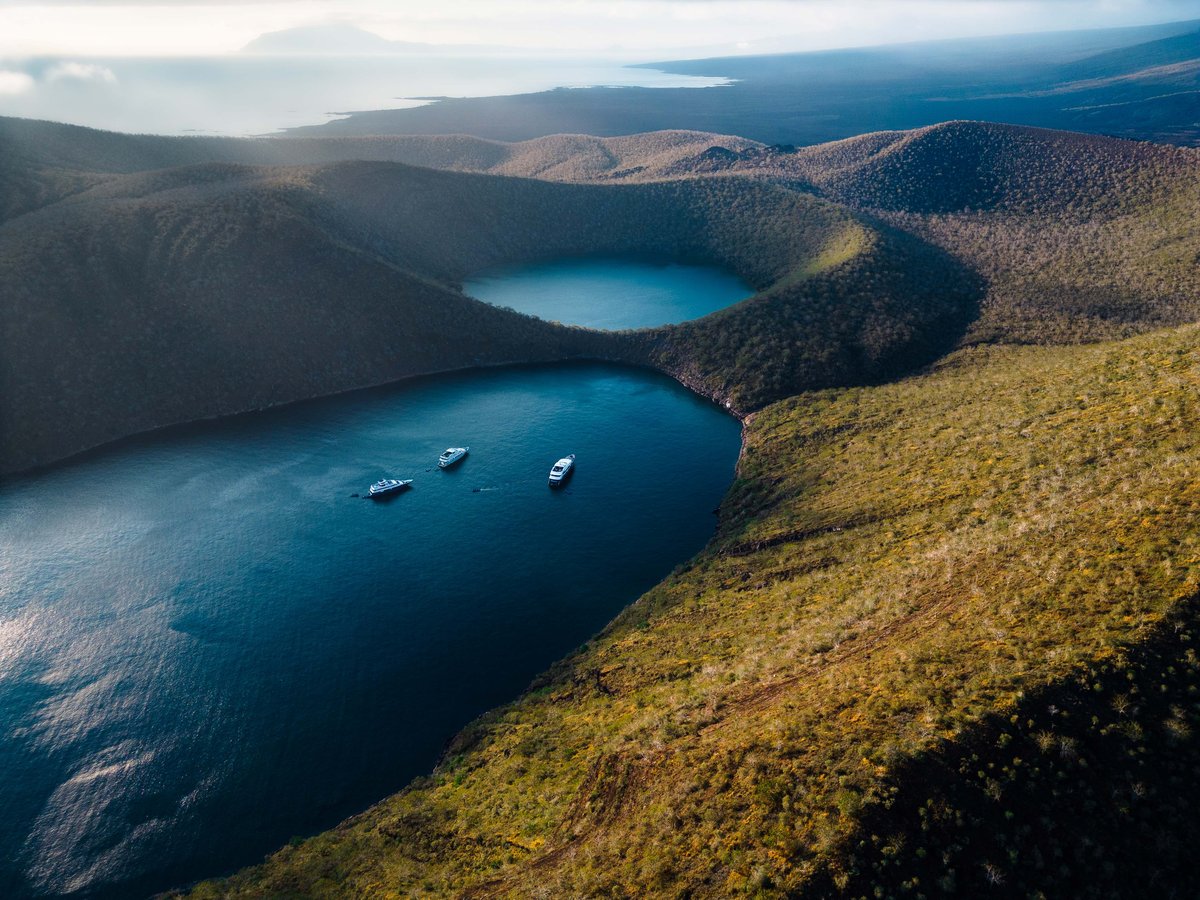
Santa Cruz Population of Galápagos Little Vermilion Flycatcher Records Best Breeding Season Yet
After more than a decade of conservation work, researchers have documented 56 fledglings so far in 2026 — with more nests still active
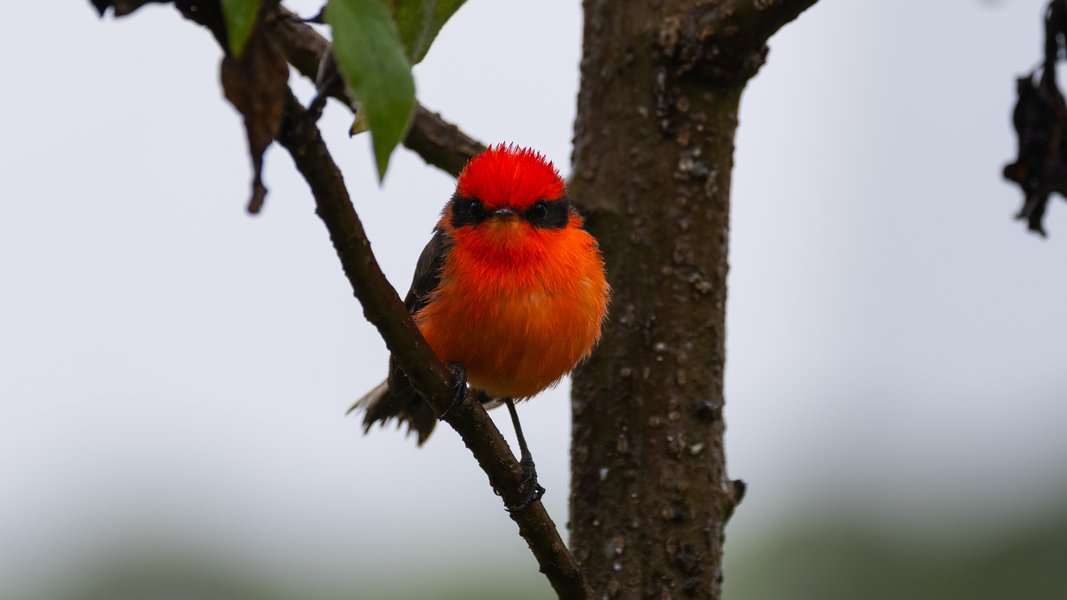
Puerto Ayora, Galápagos, 09 June 2026 — Flashing bright red through the misty Scalesia forest of Santa Cruz, the Little Vermilion Flycatcher — known locally as the “pájaro brujo” — was once a common sight across the island’s agricultural highlands. Today, however, the bird survives only within approximately 19 hectares of actively managed Scalesia forest, where scientists and park rangers have spent years working to protect the remaining population from invasive species and habitat degradation.
Now, after more than a decade of intensive conservation work, researchers from the Charles Darwin Foundation (CDF), together with the Galápagos National Park Directorate (GNPD), are reporting the most successful breeding season ever recorded for the Santa Cruz population.
Mara Speece / CDF
Since the beginning of the 2026 breeding season (traditionally goes December to May), scientists have documented 56 fledglings, already surpassing the 39 recorded during the entire 2025 season. With some nests still active with nestlings, researchers expect the total number to increase further in the coming weeks. The results offer an encouraging sign for the Santa Cruz population, which has faced long-term pressures from invasive species, habitat alteration, and parasitic insects.
While Little Vermilion Flycatchers remain relatively common on islands such as Isabela, Pinzón, and Pinta, their range on Santa Cruz is now much smaller and more fragmented than it was historically. As a result, the population has fallen to critically low levels, prompting targeted conservation efforts by the CDF and the Galapagos National Park.
“This season is especially encouraging because it reflects years of persistent fieldwork, experimentation, and adaptive management,” said Birgit Fessl, Principal Investigator at the Charles Darwin Foundation. “The Santa Cruz population remains vulnerable, but we are now seeing clear evidence that targeted conservation actions can improve breeding success and help the population recover.”
The Little Vermilion Flycatcher (Pyrocephalus nanus) is endemic to Galápagos and depends on native vegetation ecosystems to promote prey abundance and diversity to survive. For this flycatcher, survival depends on healthy understory habitat. The birds feed by darting through open spaces beneath the forest canopy, catching moths, flies, caterpillars, and spiders, on the ground and mid-air. But invasive plants — especially blackberry bushes — rapidly cover the forest floor, creating dense tangles that make hunting difficult and reduce the birds’ ability to feed themselves and their nestlings.
“The Little Vermilion Flycatcher needs an open forest understory to hunt effectively,” explained David Anchundia, ornithologist of the project at the Charles Darwin Foundation. “If invasive plants take over, the birds struggle to forage, incubate eggs, and raise nestlings successfully. Maintaining these areas requires constant work in the field.”
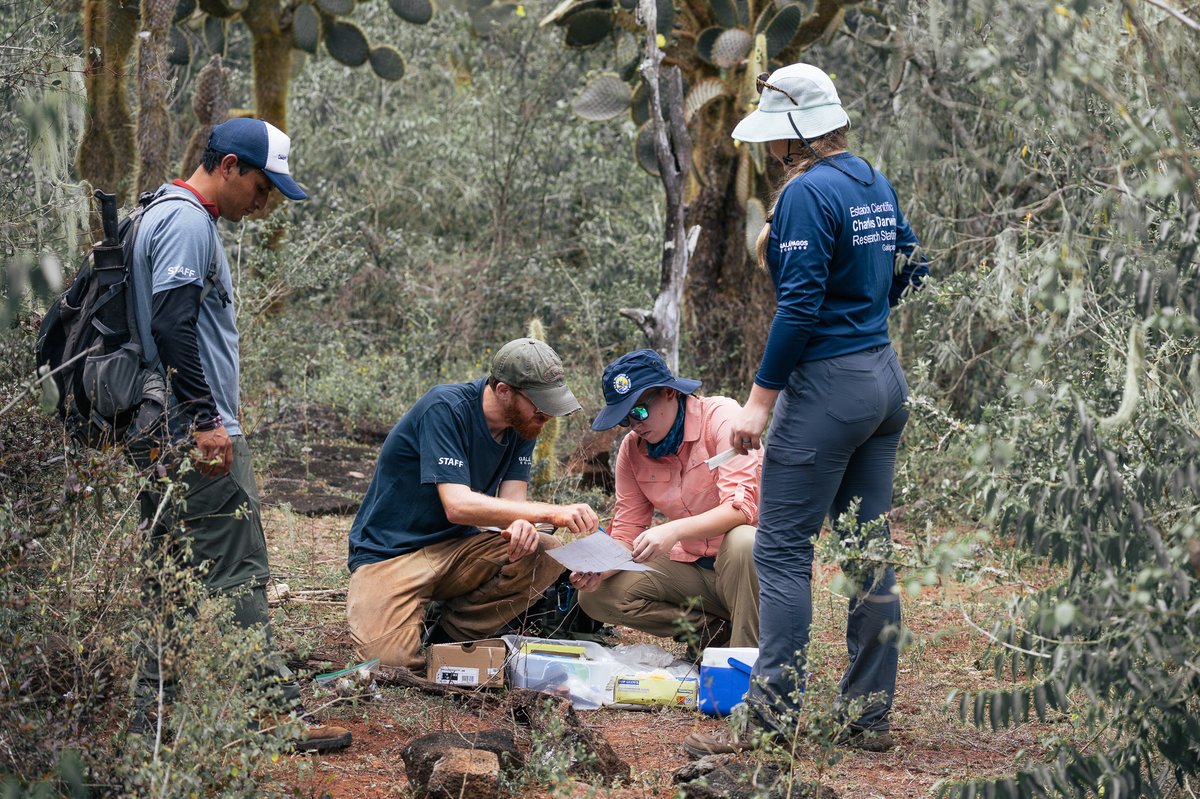
Managing that habitat is painstaking work. CDF field assistants and park rangers spend long days manually and mechanically cutting invasive plants throughout the year, often in muddy and difficult conditions. Behind the flycatcher’s rebound lies years of hands-on restoration efforts, because blackberry regrows quickly, this requires constant work and maintenance. Today, around 19 hectares of Scalesia pedunculata forest are actively managed and restored through the collaborative efforts of the CDF’s Scalesia Forest Restoration Program and the National Park.
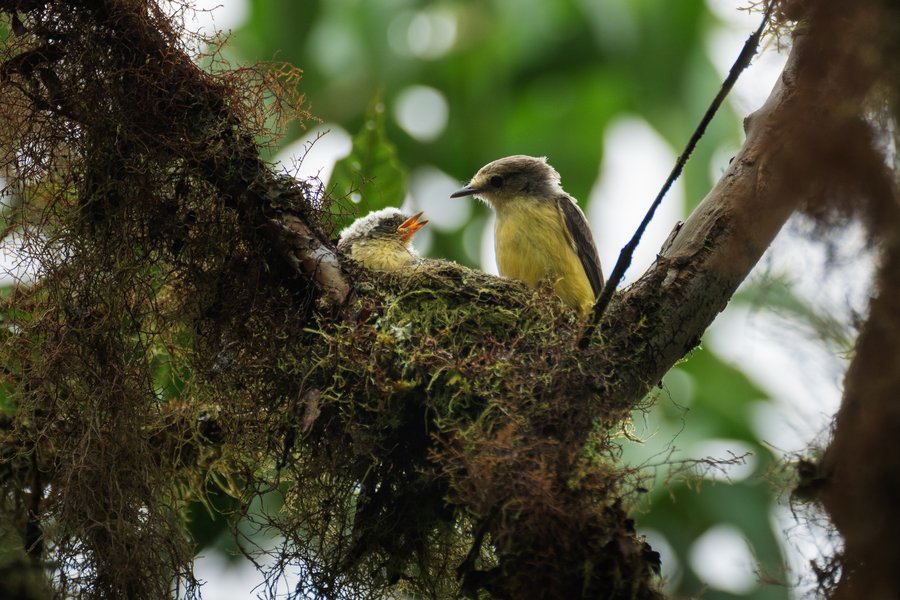
At the same time, the birds face another major threat: Philornis downsi, the invasive “Avian Vampire Fly.” The parasite lays eggs inside bird nests, and its larvae feed on the blood and tissues of nestlings, causing extremely high nestling mortality across multiple Galápagos bird species.
For years, conservation teams treated individual nests by hand or long poles using bird-safe insecticides — a highly labor-intensive process that required carrying long ladders to get as close as possible to the nest to apply the treatment. But in recent years, researchers developed and refined a less invasive and more effective solution known as the “self-fumigation” technique.
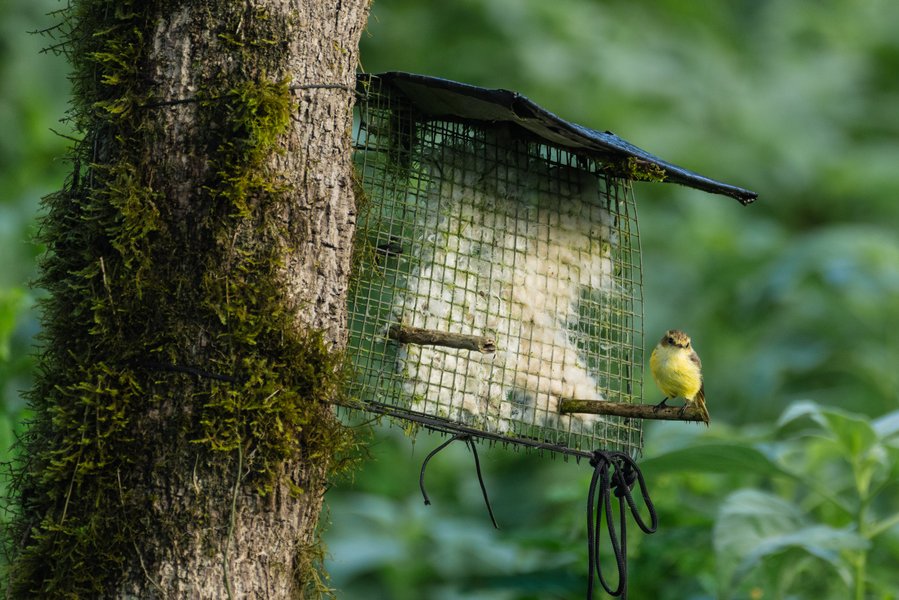
The method uses dispensers containing cotton, feathers, and other natural fibers treated with a bird-safe insecticide. The flycatchers collect the material themselves and weave it directly into their nests, protecting nestlings from the parasite without requiring scientists to intervene during nesting.
Over time, researchers adapted the technique to better match the birds’ nesting behavior, dramatically improving its success.
Mara Speece / CDF
Mara Speece / CDF
Einar Klum / CDF
“Not all bird species respond to materials in the same way, and it took years for us to understand how Little Vermilion Flycatchers preferred to ‘receive’ the treated material,” added Fessl. “We discovered that placing the material in dispensers throughout the breeding area worked remarkably well, and today nearly every nest we check after fledging contains treated material and shows no signs of Philornis infestation.”
Researchers say the combination of habitat restoration, invasive species management, and improved nest protection strategies is helping create safer breeding conditions for the species on Santa Cruz — though significant challenges remain.
Lorena Sánchez, Director of the Galápagos National Park, highlighted that “The commitment of our conservation teams and the collaboration with scientific partners have been fundamental in achieving these results, which today represent an encouraging sign for the recovery of the Little Vermilion Flycatcher population on Santa Cruz Island. Behind every fledgling recorded lies ongoing ecological restoration, field monitoring, and applied research that strengthen the protection of this species and the ecosystems upon which its survival depends.”
While the 2026 breeding season marks a major milestone, scientists emphasize that long-term conservation efforts remain critical. The Santa Cruz population still occupies a highly restricted habitat and remains vulnerable to environmental change, invasive species, and fluctuations in breeding conditions.
For now, though, flashes of bright red moving through the recovering Scalesia forest provides hope that in the near future these birds might be flying all over Santa Cruz again.
About the Little Vermilion Flycatcher
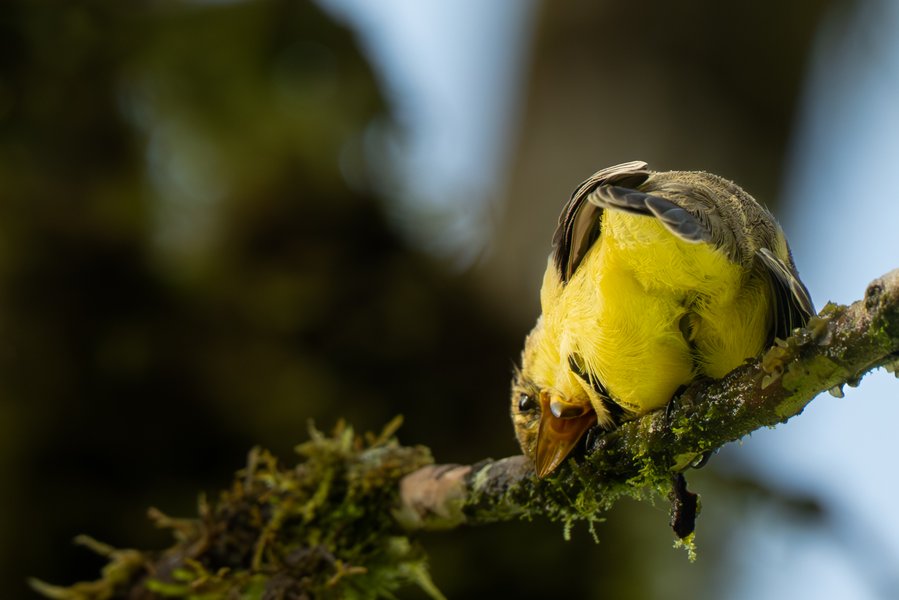
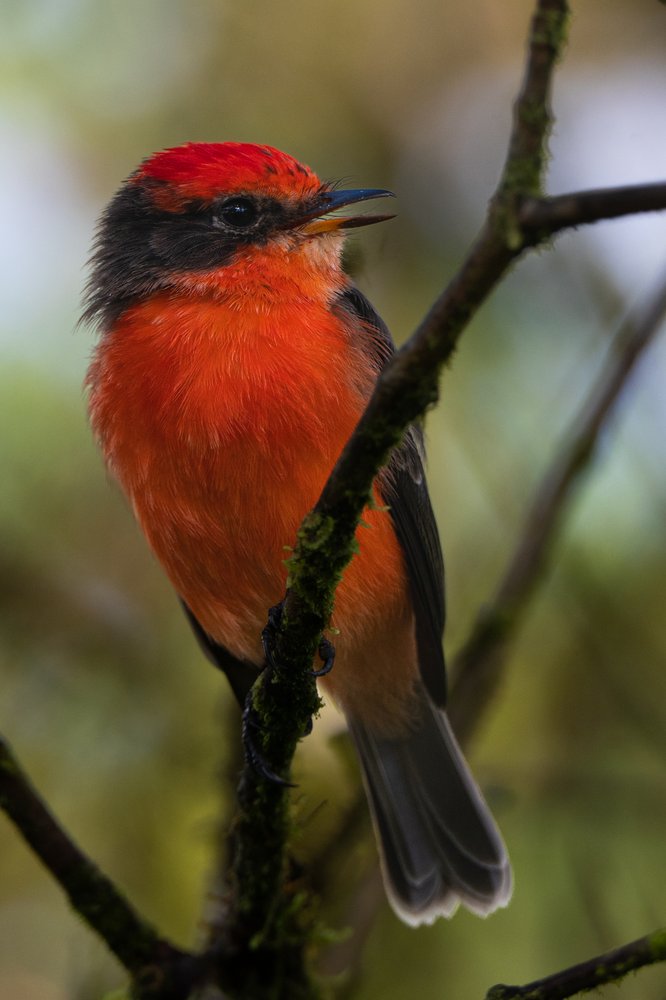
The Little Vermilion Flycatcher (Pyrocephalus nanus) is a small insect-eating bird endemic to Galápagos and one of the archipelago’s most charismatic land birds. Males are known for their striking bright-red plumage, while females display yellow and softer brown colors. The species feeds by catching invertebrates on the ground and mid-flight and depends on semi-open habitat to hunt effectively.
Although populations on islands such as Isabelas’ especially remote volcanoes remain stable, the Santa Cruz population has declined over recent decades due to habitat degradation and a reduction of food sources produced by invasive plant species and mortality caused by the invasive parasitic fly Philornis downsi. Today, the remaining Santa Cruz population is restricted to approximately 19 hectares of managed Scalesia forest in the island’s highlands.
The conservation program led by the Charles Darwin Foundation and the Galápagos National Park Directorate combines habitat restoration, invasive species management, long-term monitoring, and innovative nest protection techniques aimed at improving breeding success and supporting the recovery of the Santa Cruz population.
-ENDS-
Einar Klum / CDF
Notes to editors:
For media enquiries please contact:
Charles Darwin Foundation
Ambre Tanty-Lamothe or Daniela Ibarra |comunicacion@fcdarwin.org.ec
About the Charles Darwin Foundation
The Charles Darwin Foundation for the Galápagos Islands (CDF) is an international non-profit organization that has operated in Galápagos since 1959 under a special agreement with the Government of Ecuador. Its mission, and that of its Research Station, is to address the greatest threats and challenges facing Galápagos through scientific research and conservation actions, to protect one of the world’s most important natural treasures. Today CDF supports more than 25 research, conservation, and education projects across land and sea, and is the custodian of over 137,000 specimens in its Natural History Collections. Its diverse team of more than 140 scientists, educators, and support staff is composed primarily of Ecuadorian citizens, with over 60 % from Galápagos. For more information, please visit: www.darwinfoundation.org