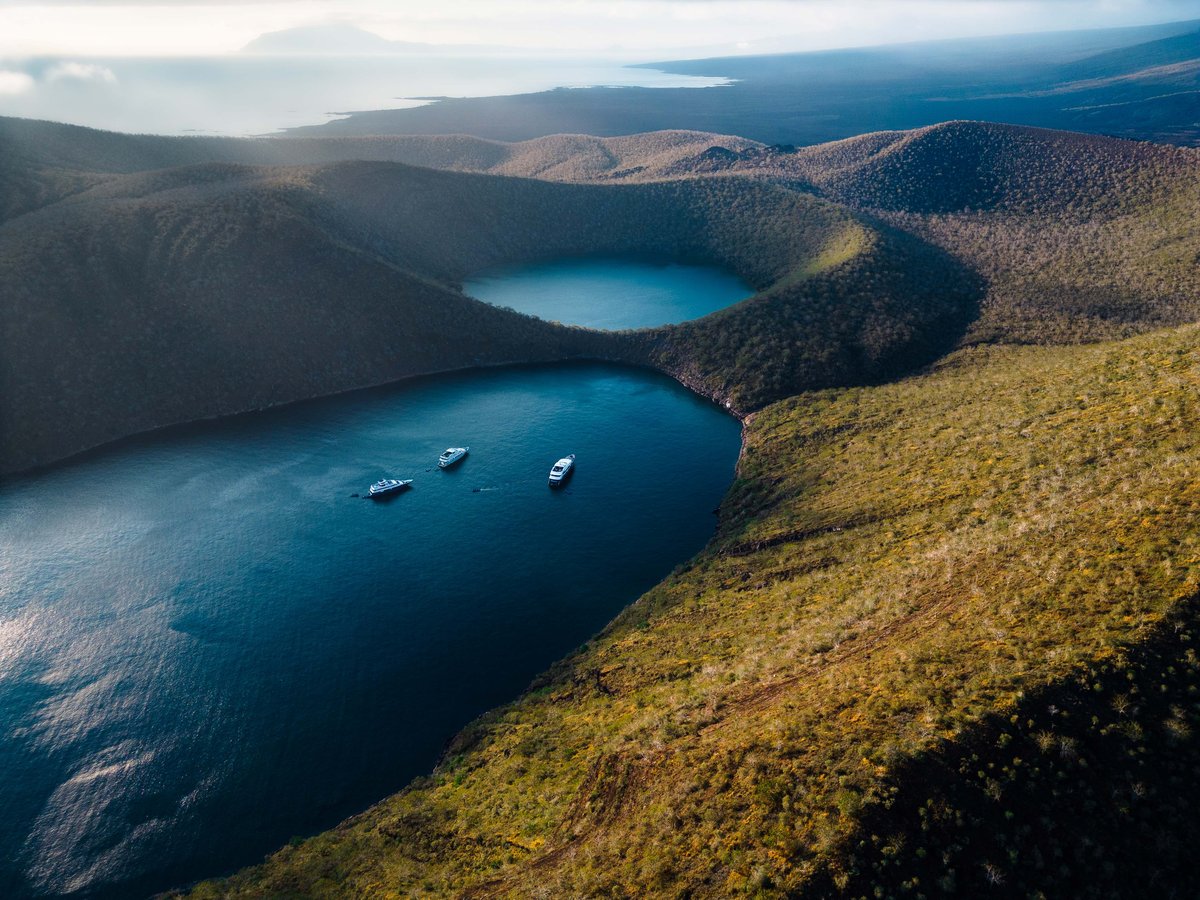

The Blue Galapagos Octopus That Reveals the Secrets of the Deep Sea
Nearly 1,800 meters below the surface, in the perpetual darkness of the Galapagos deep sea, a tiny blue octopus remained unknown to science until recently. Today, that species has a name: Microeledone galapagensis. Its discovery not only expands our understanding of the islands’ marine biodiversity, but also highlights the importance of marine collections in advancing scientific knowledge.
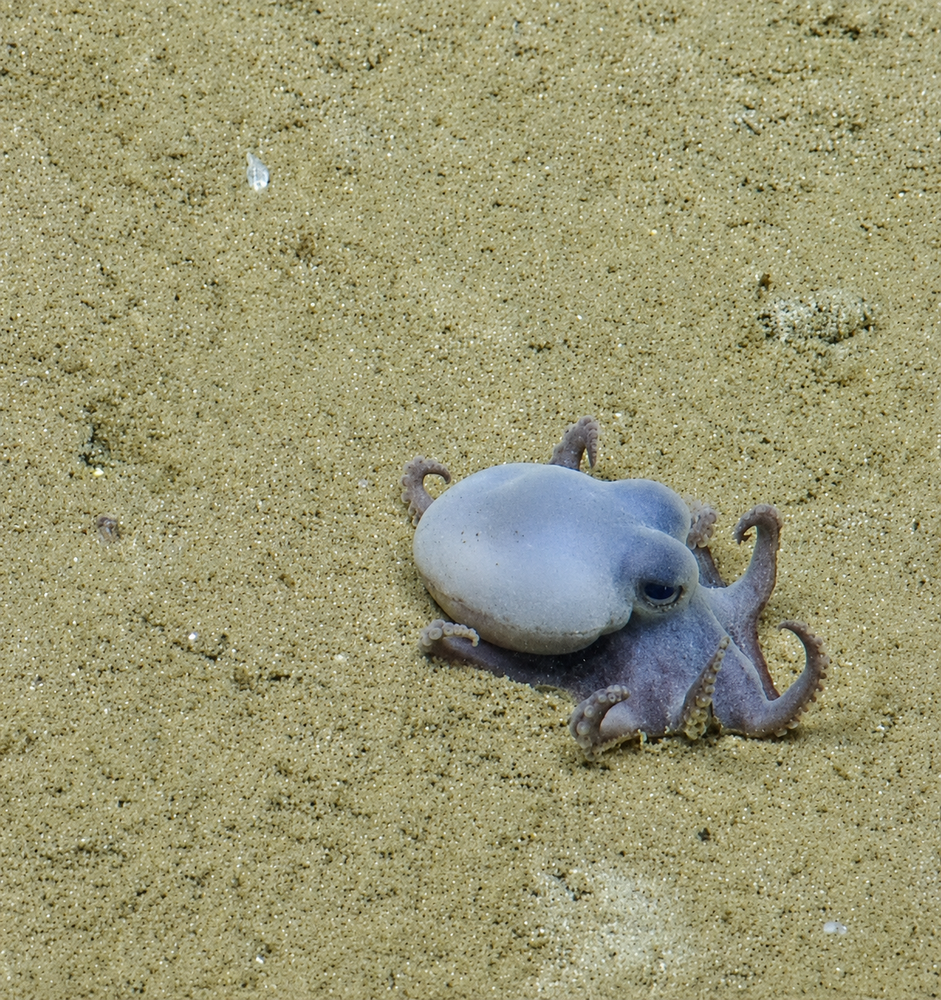
The story of Microeledone galapagensis began in 2015 during a deep-sea exploration expedition aboard the E/V Nautilus, north of Darwin Island. Among hundreds of organisms collected at depths of nearly 1,770 meters was a tiny blue octopus. At the time, no one imagined it represented a species new to science.
When researchers later reviewed footage captured by the remotely operated vehicle (ROV), the little octopus immediately stood out. In an environment where many deep-sea organisms appear unusual and difficult to identify, its striking blue coloration and distinctive appearance suggested it could be something exceptional.
According to Stuart Banks, Principal Investigator of Deep-Ocean Exploration & Conservation at Charles Darwin Foundation: “We know so little about an immense hidden underwater world that operates under a very different set of rules from our own, yet it covers most of our planet. Every ROV dive is just a small window into that world, and even so, we continue to make discoveries like this.”
Archivo CDF
The octopus’s unusual blue coloration is one of the features that most intrigued scientists. Although its exact function remains uncertain, deep-sea organisms often evolve adaptations linked to the limited availability of light. At depths approaching 1,800 meters, the only natural illumination comes from bioluminescent organisms emitting blue-green light. Researchers believe the pigmentation pattern observed in Microeledone galapagensis may help it remain concealed on the seafloor or while hunting bioluminescent prey.
Beyond its striking appearance, this small octopus is scientifically unusual. It belongs to a group whose closest relatives are typically found in cold, deep waters, including lineages associated with the Southern Ocean. Finding a member of this group in the Eastern Tropical Pacific raises new questions about how these animals evolved, dispersed, and adapted to tropical deep-sea ecosystems. The specimen studied was also a female carrying eggs, providing valuable insights into the reproductive biology of these cephalopods.
After its collection, the specimen became part of the Charles Darwin Foundation’s (CDF) marine collections, where it was preserved alongside hundreds of specimens obtained through research on seamounts and other deep-sea ecosystems throughout the archipelago.
Contrary to popular perception, the discovery of a new species does not happen solely in the field. Much of the process takes place years later in laboratories, museums, and biological collections. There, specimens are catalogued, preserved, and made available to researchers seeking to answer new scientific questions.
Scientific collections function as living archives of biodiversity. Each specimen preserves unique information about the place, time, and conditions in which it was found. Often, these organisms remain safeguarded for years before new technologies or research questions reveal their true scientific value.
That was precisely the case for Microeledone galapagensis. After years under the care of CDF’s marine collection, the specimen was sent to international specialist Dr. Janet Voight, who dedicated several years to studying and formally describing the species. Because it had been preserved in formalin during the expedition, genetic analyses were not possible. Instead, researchers conducted detailed anatomical examinations and used advanced high-resolution 3D imaging technology to observe internal structures without damaging the specimen. These images allowed scientists to compare its characteristics with those of other deep-sea octopuses housed in collections around the world and confirm that it represented an entirely new species.
Beyond the discovery of a new species, this finding highlights how much remains to be learned about the Galápagos deep sea. Scientists estimate that the world’s oceans may contain more than one million undescribed species. Each new expedition contributes essential pieces to our understanding of the hidden biodiversity that inhabits the seafloor.
However, discoveries like this are only possible through international scientific collaboration and the infrastructure needed to preserve biological material over the long term. Behind every specimen are years of specialized work, including alcohol replacement, container maintenance, environmental monitoring, database management, and cataloguing processes that ensure samples remain available and in good condition for future generations of scientists.
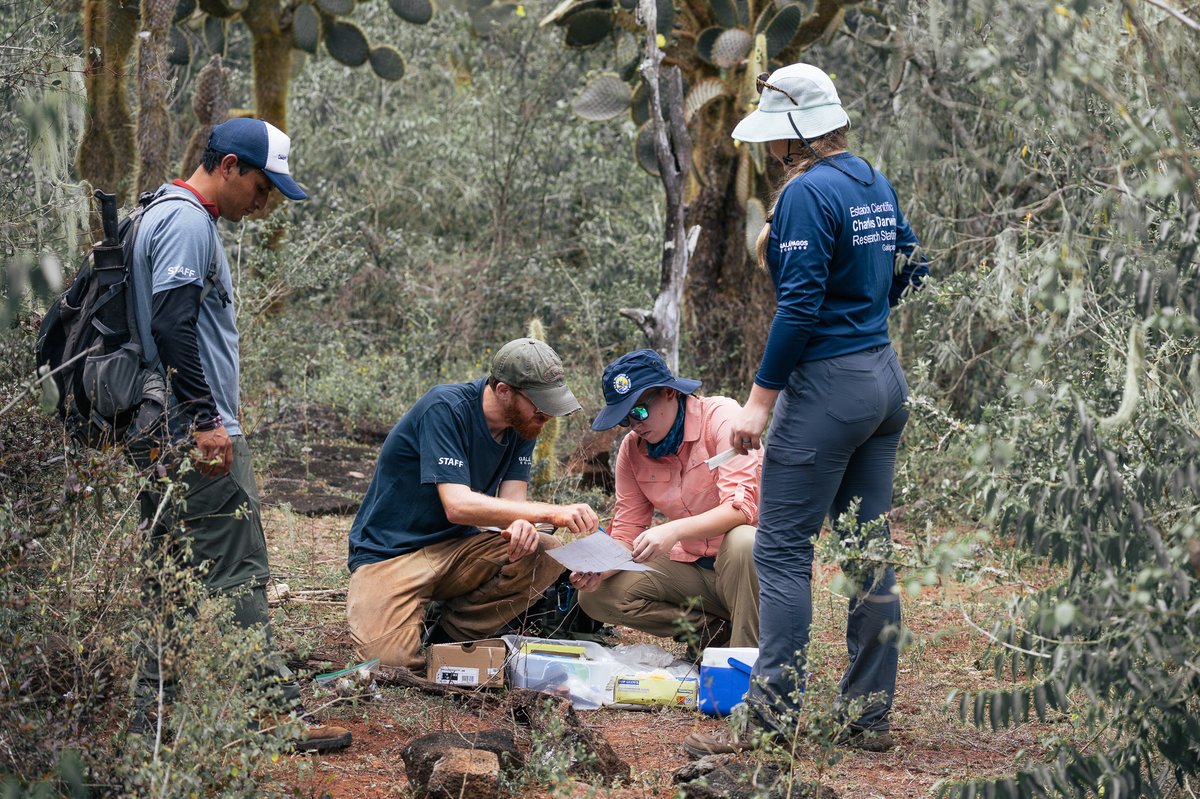
Natalia Tirado and Paulina Sepa participated in the curation and cataloguing of the specimen within CDF’s marine collection.
As Paulina Curator of the Marine Collection at the Charles Darwin Foundation explains: “If that specimen had remained forgotten or uncatalogued, we could simply have lost a new species for science and for the world.”
Thanks to scientific exploration, conservation efforts, and the management of the Charles Darwin Foundation’s marine collections, species such as Microeledone galapagensis continue to expand our understanding of Galápagos marine biodiversity and the life that inhabits the deep ocean of the Eastern Tropical Pacific.
Countless species are still waiting to be discovered. Some remain hidden in the depths of the ocean, while others may already be sitting quietly in a scientific collection, waiting for the right question—and the right scientist—to reveal their secrets.
Know more about our projects