
The Scalesia forest,a hotspot for insect species unique in the world
In the humid highlands of Santa Cruz Island survives one of the rarest and most threatened ecosystems in Galápagos: the Scalesia forest. This ecosystem is composed of Scalesia pedunculata, a species unique in the world, commonly known as the giant daisy tree. Decades ago, this forest covered about 10,000 hectares. Today, following the expansion of the agricultural zone and the invasion of introduced plant species such as blackberry Rubus niveus, only 3% of its original distribution remains (300 hectares). Yet, among its leaves and flowers, beneath tree bark, and hidden within the leaf litter, live hundreds of insects including some found nowhere else on the planet.

Joshua Vela
Unexplored biodiversity
Despite their ecological importance, insects remain one of the least studied groups worldwide. In Galápagos, while many studies have focused on endemic species such as finches, giant tortoises, and iguanas, much less is known about insect diversity, the ecological roles they play, and the threats they face. This lack of knowledge may be excluding species from conservation strategies that are essential for the functioning of Galápagos ecosystems.
Three scientists, an extraordinary discovery
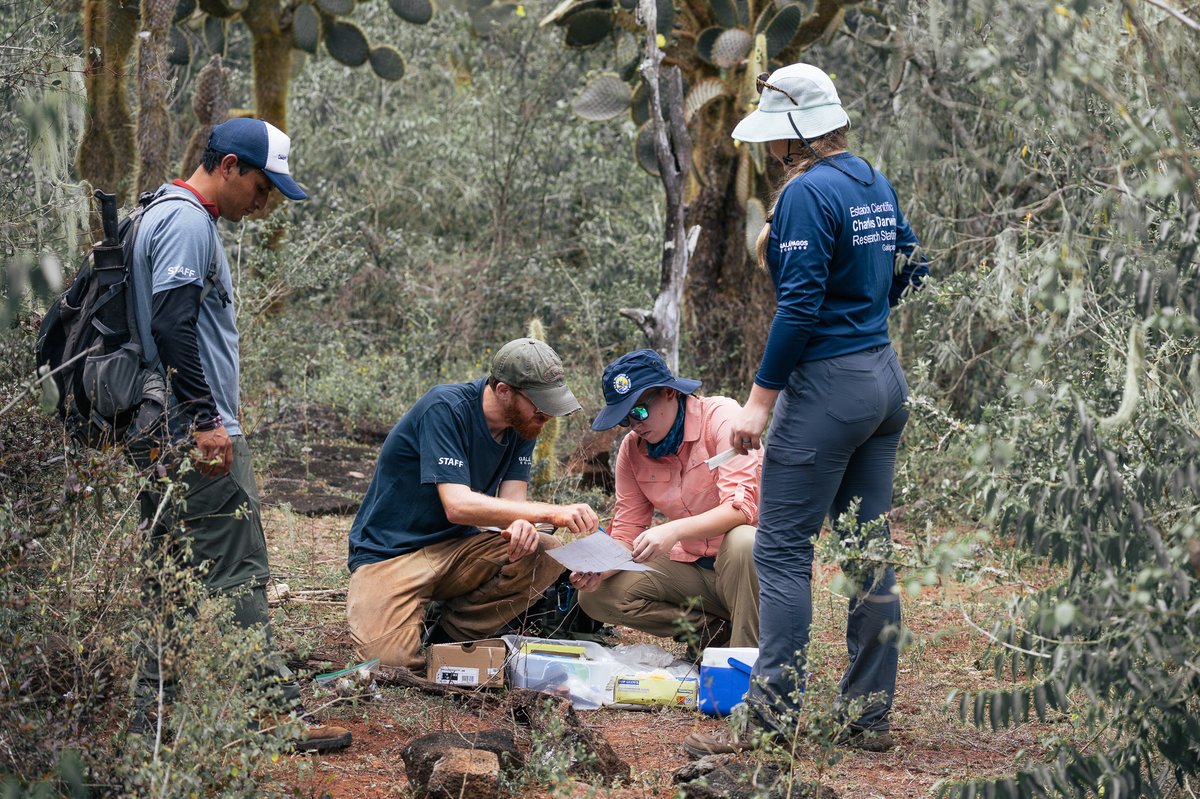
Researchers from the Charles Darwin Foundation, Jacqueline Rodríguez, Charlotte Causton, and Heinke Jäger set out to address this knowledge gap. Their study focused on six of the most diverse and abundant insect groups in the world: beetles (Coleoptera), moths (Lepidoptera), true bugs (Hemiptera), flies (Diptera), ants and wasps (Hymenoptera), and crickets and grasshoppers (Orthoptera). They reviewed nearly a decade of systematic annual monitoring data of terrestrial invertebrates in the Scalesia forest of Santa Cruz, along with historical records and scientific collections, to produce the most complete and up-to-date list of endemic insects recorded in this small forest remnant to date.

Carlos Espinosa/CDF

Juan Manuel García/CDF

Jeremy Squire
A hotspot of endemic insects
The scientists recorded 150 endemic insect species in the threatened Scalesia forest that belonged to the six groups of insects studied, representing 21% of all the species known from these groups in the archipelago! In other words, nearly one quarter of the endemic insects recorded in Galápagos within these groups have been found in this forest remnant. The findings confirm what the researchers had long suspected: the Scalesia forest is not only important for its endemic plants and birds, but also represents a hotspot of unique insect diversity.
Important, tiny, and threatened
Curious to better understand the ecological functions of these insects, the researchers investigated the ecological roles of each of the 150 endemic species. They found that most are pollinators and herbivores.
Pollinators facilitate plant reproduction and help maintain the natural regeneration processes of the forest. Herbivores contribute to nutrient cycling by returning nutrients to the soil and helping maintain the balance of the food web. In addition, many species serve as food sources for birds, reptiles, and even other invertebrates. Although tiny and often unnoticed, insects play a major role in maintaining ecosystem functioning.
The scientists also assessed the impacts of habitat loss and invasive plants on these endemic insect species and determined that at least 36 species could be at risk of becoming threatened, while 12 species are already threatened with extinction.

Jacqueline Rodríguez/CDF
Why restore and conserve the Scalesia forest?
These discoveries provide even stronger justification for the restoration and conservation efforts led by the Charles Darwin Foundation and the Galápagos National Park Directorate to restore and conserve the Scalesia forest and, in doing so, also to protect the subtle but essential interactions that sustain its functioning. When pollinator populations decline, plant reproduction decreases. When herbivore insects decline, nutrient cycling and food webs become disrupted. These findings shed light on the hidden biodiversity of this ecosystem and help these insect species to be considered in future management actions and conservation strategies. They also remind us that protecting Galápagos means protecting the unique and tiny organisms that quietly carry out an important and great job.

Jeremy Squire